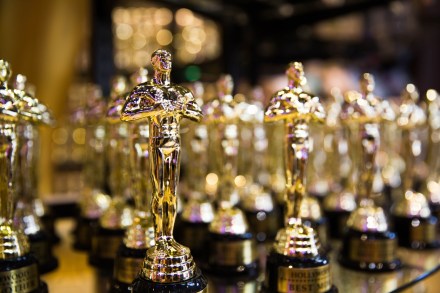
Oscars

The subtly savage world of filmmaker Ruben Ostlund

There is a culty YouTube video shot three years ago on the laptop camera of Ruben Ostlund. It shows the film director listening live as the nominations for the Academy Awards are announced from Los Angeles. The tension mounts as they approach the foreign film category. Alas, Force Majeure from Sweden isn’t nominated. Ostlund disappears off screen to sob and mewl. This year, there was a sequel to the video, but with a happier ending: the director’s latest film The Square was nominated for an Oscar. These mini-movies, like the rest of Ostlund’s oeuvre, are funny but subtly savage. He is a provocateur who trades in discomfort. You watch with

The 2018 Oscars were indulgent, overlong, and weirdly amateurish — again

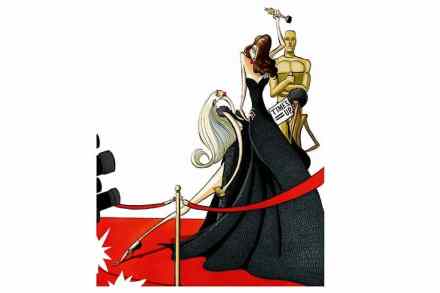
It was always going to be difficult for this year’s Oscars to balance politics and entertainment, the sweeping declaration with the plunging cleavage. The host, Jimmy Kimmel, got through his opening routine well enough, and without showing his cleavage either, but the strain was already showing. The décor and the script were like a moral split-screen. We were told to celebrate ninety years of the Oscars, while disapproving of nine decades of exploitation and sleaze, some of it practised by people sitting in the audience at the Dolby Theater. What we got was easy jokes about Harvey Weinstein and Donald Trump, and pompous announcements that it was time to send

How Hollywood lost its shine

Reading the lip-smacking reports of the latest troubled celebrity relationships  (Jennifer Aniston and Justin Theroux definitely high and dry, Cheryl Cole and Liam Payne allegedly on the rocks) I couldn’t help musing that stars – and more specifically, the place they occupy in our mass psychological landscape – have very much changed since the first mass-market celebrities emerged. The film stars of the fledgling Hollywood truly were worshipped as higher beings; a tribe of Pathan Indians opened fire on a cinema when they were denied entry to a Greta Garbo film while women committed suicide when Valentino died. Their marriages were regarded as heavenly unions; their romantic sunderings as tragedies.

Coffee and cookies with Tonya Harding

The film I, Tonya, has been well-received and is even up for an Oscar or two. I’m pleased about that because I’ve met Tonya Harding and her story has always fascinated me, not least because to watch her skate in the run up to the 1994 Olympics (particularly in Oakland, California in 1991 at the Ladies Free Skate competition) is to witness sport, art and sheer guts come together in an unfathomable holy trinity. It all went terribly wrong, of course, and she became the most reviled ice skater in the world. ust to recap, six weeks before those Olympics, Harding’s bodyguard, acting on instructions from her already ex-husband, Jeff

I liked Shape of Water well enough but Lady Bird is where it’s at

Lady Bird is a semi-autobiographical film written and directed by Greta Gerwig with a plot synopsis that need not detain us as it is basically only this: girl has a mum. (Or: girl has a mum, and sometimes they row and sometimes they don’t.) But thus far it has won near universal critical praise, two Golden Globes and five Oscar nominations, thereby proving there is mileage in girls and their mums, and box office in girls and their mums, and that girls and their mums can be more than mere afterthoughts. In this respect, Lady Bird may, in fact, be quite the rare bird. It’s set in Sacramento, California, in