Oregon

Crunch(y) time in the Rose City

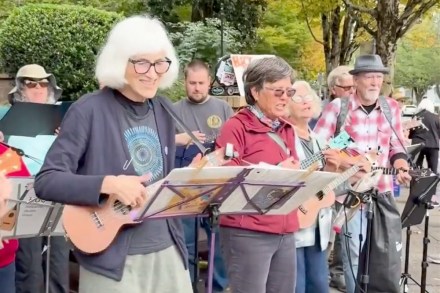
Congresswoman Maxine Dexter of Oregon, who once briefly went viral for saying we have to “fuck Trump,” has posted a cringey video of a gray-haired Portland ukelele orchestra playing and singing the most off-key version of “This Land Is Your Land” imaginable. “Portland is not a military target,” the caption reads. Ah, but it is, and for good reason. Armed leftist radicals have firebombed a courthouse and are regularly attacking an ICE facility. Residents at the Multnomah County Plaid Shirt Senior Center may not see that on MSNBC (soon to be MS NOW!) or in their daily Heather Cox Richardson newsletter, but it’s happening.

Oregon

Splitsville: separatist movements are gaining steam in blue states

Matt McCaw doesn’t want to live anywhere but in Oregon. But during the pandemic he felt like he was living under tyrannical rule imposed by the state’s progressive majority in metro Portland. The school that his six children attended closed for more than a year due to a state mandate — and they received just four hours of online instruction per week. His church was forced to close, and his business selling textbooks suffered because school districts were buying online curricula, not physical books. Mask and vaccine mandates were ubiquitous; McCaw couldn’t even take his wife out to dinner to break the monotony, because all the restaurants were takeout-only. “I thought there would be a huge political backlash against all that,” he says.

separatist

Climate warriors are trying to make parking more difficult

Progressives have long sought ways to get us out of our cars. In recent months, a little-reported trend has emerged in furtherance of this goal: the elimination of parking minimums for new housing developments. A host of cities has done this, either citywide or in select districts, among them Anchorage, San Jose, Raleigh, Minneapolis, Nashville, and Sacramento. California’s Gavin Newsom recently became the first governor to sign legislation prohibiting parking minimums statewide for projects within a half mile of a major transit stop. Liberal policymakers contend that parking minimums are bad for the climate and make housing needlessly expensive by forcing everyone, including those who don’t own cars, to pay for parking.

Decriminalizing fentanyl is a dangerous experiment

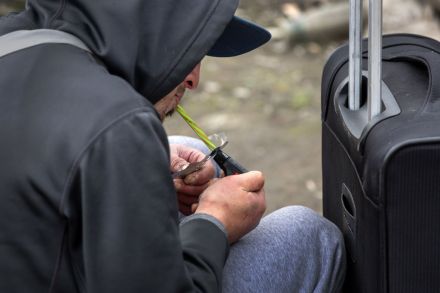
Last week, British Columbia became the first province in Canada and the second jurisdiction in North America to decriminalize the possession of small amounts of hard drugs for personal use. Those drugs include heroin, cocaine, methamphetamine, and even fentanyl, a synthetic opioid more than 50 times more powerful than heroin. British Columbia follows Oregon, which decriminalized all drugs in 2020, taking a more proactive — if controversial — approach to address the alarming number of overdose deaths across the region. Under the state's new guidelines, adults 18 years and older caught with less than 2.5 grams of an illicit substance will not be arrested or charged with a criminal offense.

A postcard from Portland

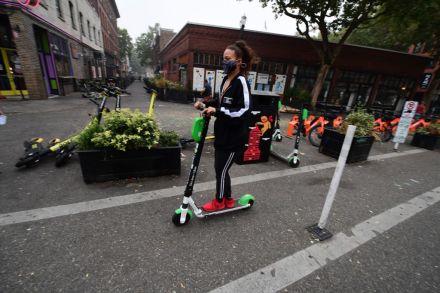
Portland is one of the nation’s most beautiful cities, positioned at the confluence of the Columbia and Willamette rivers. But fading livability hangs over it like a raw gray drizzle. After years of political mayhem and an explosion of drug-related homelessness and crime, the city’s fabled quality of life is plunging. Every taxpayer in the 2.5 million metro area knows it. Portlandia had its lure and charms, and yesterday’s salons and eateries still look modish. But they’re closed, chairs stacked, thank you for your patronage. Those Patagonia-clad tourists and corporate executives on generous expense accounts won’t be coming back soon. On a warm, cloudless autumn day, the city’s once spotless downtown should be bustling but...and it takes a while for this to click...

Oregon’s nasty woman

Tina Kotek could be well on her way to being the thirty-ninth governor of Oregon. The Democrat, who previously served as speaker of the state’s House of Representatives, won her party’s primary this Tuesday. And with a Democratic supermajority in the legislature and a governor’s mansion that hasn’t housed a Republican since 1979, that’s likely a one-way ticket to victory in November. Kotek is, in many ways, a creature of the state Democratic establishment. Yet in Oregon — and in blue states like it — “establishment Democrat” means something very different than it once did.

Nick Kristof and a tale of two Oregons

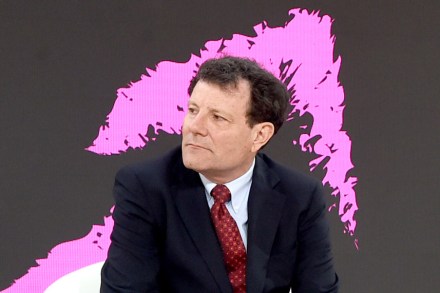
The long-serving New York Times opinion writer Nick Kristof apparently now wants to be governor of Oregon. The 62-year-old media superstar seems to be a rather changeable sort of chap. It might almost seem he’s one of the many New York-area residents to have had their identities stolen. Perhaps it was an old platinum credit card, carelessly tossed in a Midtown trash can, which allowed the criminals to strike, or perhaps the purchase over the phone of a first-class air ticket to one of the exotic locales his business frequently takes him. Whatever it was, it’s difficult to reconcile the superbly cerebral, crusading double Pulitzer Prize-winner and regular CNN contributor with the self-styled ‘Oregon farmboy’ with his finger firmly on the Beaver State’s troubled pulse.

nick kristof

Who wants a Greater Idaho?

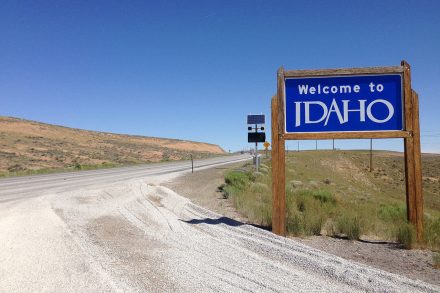
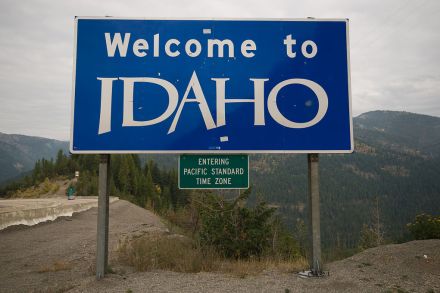
For many conservatives in liberal states, 2020 was the year they finally upped sticks. Stringent lockdowns, Democratic commitments to defund the police and a bad-blooded presidential election combined to make a compelling case for relocation. Californians have fled to Texas; Florida has become a year-round home, and not just a seasonal destination, for a flock of north-eastern exiles. In Oregon, conservatives are taking things a step further. Rather than moving themselves to a red state, they want to bring a red state to them by redrawing the borders of neighboring Idaho.

idaho

The fight for Greater Idaho

A nonbinding, off-season ballot initiative in rural Oregon isn’t normally the most viscerally exciting of events, couched as they generally are in terms agonizing over whether to ‘note’ or ‘reaffirm’ a past proposal, or to ‘endorse’ or ‘refer’ a more recent one for further consideration. But just the other day, out of the tepid depths of yet more interminable debate on local timber-harvest regulations, or supplemental sport-fishing laws, something of genuine significance happened. The voters of five Oregon counties let it be known that they would like to secede from their state and join Idaho instead. ‘This election proves that rural Oregon wants out of Oregon,’ Mike McCarter, spokesman for the Greater Idaho movement, said in a statement.

greater idaho

Gone to pot: drugs in the Pacific Northwest

It is two o’clock on an unusually mild December afternoon here in suburban Seattle, and I’m sitting on my back porch smoking marijuana.Passively smoking, I should add, lest I shock any reader by this lapse, but smoking nonetheless. Since 2012, when the voters of Washington State chose to decriminalize it, my part of town has been especially fragrant with the acrid smell of pot. A thick haze of the stuff lingers long in the air these quiet lockdown days.

drugs

How democracy dies

What would happen if Americans voted on different days? Suppose Republicans voted on Tuesday and Democrats voted on Wednesday. Would this be better than everyone voting on the same day? Would it be more fair and less confusing? Like hell it would! One reasonable complaint Republicans had about the 2000 presidential elections — famously decided, in the end, at the Supreme Court — was that some television networks called the State of Florida for Al Gore before polls had closed in the westernmost Florida Panhandle, which lay in the Central Time Zone, an hour behind the rest of the state in the Eastern Time Zone. Declaring a winner prematurely amounted to telling Panhandle voters not to bother casting their ballots.

mail

Playing with fire

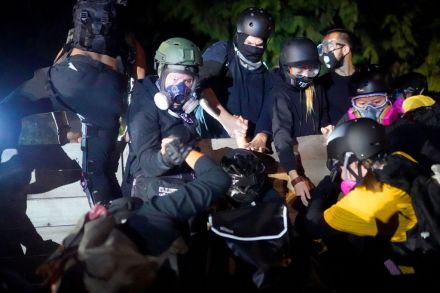
Some conflicts begin with clear aims but morph into endless battles, the original motives forgotten. The timeless metaphor for self-sustaining battles is Jarndyce and Jarndyce, the inheritance case at the heart of Charles Dickens’s Bleak House. ‘Jarndyce and Jarndyce drones on,’ he wrote. ‘This scarecrow of a suit has, over the course of time, become so complicated, that no man alive knows what it means... Innumerable children have been born into the cause; innumerable young people have married into it; innumerable old people have died out of it.’ Now we have Portland v. Public Order. What Jarndyce was for the law, Portland is for the lawless. For over two months, young demonstrators have gathered each night in Oregon’s largest city.

portland

Hell in Portland

Portland has had one of the most turbulent histories of any town in America. At the time of the Great Depression it was as rowdy a riverfront port as Shanghai or Marseille, where some shopkeepers still took their payment in gold, women in tight skirts loitered in doorways on Salmon Street, and loggers drank and gambled away the afternoon.Then Portland enjoyed an economic boom, largely thanks to government shipbuilding contracts, and quickly cleaned up its act. If you happened to have visited from around 1945-65, you would have been struck by the long rows of neat clapboard houses, most with a US flag fluttering out front, and a waterfront area conspicuously free of girly bars and vomit.

portland