Oppression

A sinister strangeness: City Like Water, by Dorothy Tse, reviewed

In Dorothy Tse’s City Like Water the location is never named. Anonymous, mutable, it slips from normal into nightmare, strangeness signalled from the opening lines: ‘In the place I used to live, my rusty top bunk rocked like a boat. Night after night, it carried me off towards a secret crevice.’ This is a novel written out of sorrow and anger: the pain of recalling sweeter times. It’s not the boy narrator who is unreliable; it’s the city itself. When, in Invisible Cities, Italo Calvinodescribed Marco Polo’s travels, he named 55 settings – each delineating an aspect of Venice. Tse has acknowledged Calvino as a major influence, and the locus

The power of the brown American diva

‘Please don’t let this be a scolding!’ I thought as I moved past this book’s tempting title to read the author’s bio, noting that she is ‘the chair of the Writing Programme at Columbia University’. Sure enough, the very first line of the prologue – ‘The sound of a diva’s voice was how I knew we were Mexican’ – made me fear that this might be the case. Funnily enough, my mother was also fond of the diva in question, Vikki Carr – especially the sob-fest ‘It Must Be Him’ – and my family weren’t Mexican as far as I know. My scolding radar flared up even further on seeing

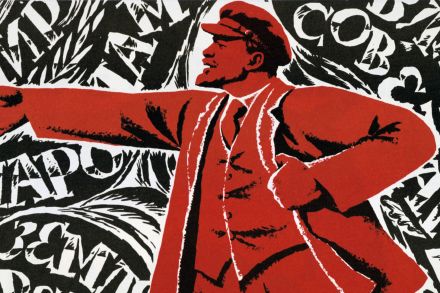
In seven years, Lenin changed the course of history

The upheavals convulsing the Russian empire in 1917, Victor Sebestyen argues convincingly, were the seminal happenings of the past century. From them directly stemmed the second world war, the Cold War, the collapse of European imperialism and the dangerous world we inhabit today. There are many weighty modern accounts of these epochal events by historians such as Richard Pipes, Robert Service and Orlando Figes, and it is these that Sebestyen chiefly relies on in this brisk, well-informed and chilling account. He makes no pretence of original research. How did Trotsky’s childlike vision become a nightmare system, dependent on evil, oppression and violence?  ‘The Russian Revolution’ is something of a misnomer