Opera

Jonas Kaufmann’s illness, a muddled production – nothing can stop Bavarian State Opera’s La forza del destino

From our UK edition

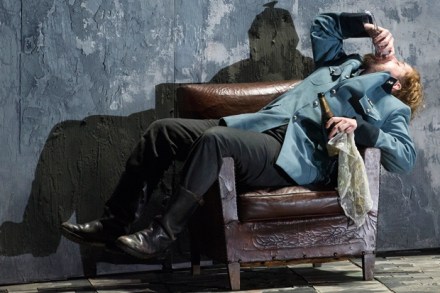
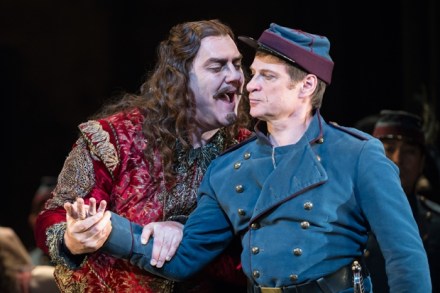
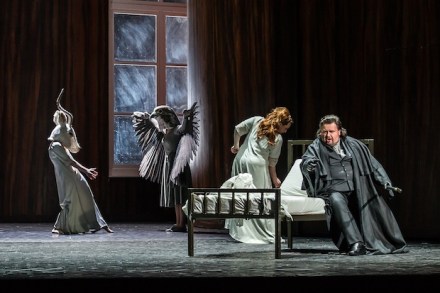
Rather than brave the boos and the first reprise of Frank Castorf’s half-hearted Ring at Bayreuth, I decided to pay a visit to Munich and catch the last two days of its annual opera festival. Less of a festival, as one usually understands the term, than a ramping-up of activity in the final month or so of its regular season, it mixes new stagings with starrily cast revivals. I caught one of each: a new production of Monteverdi’s L’Orfeo, with Christian Gerhaher in the title role, and a revival of La forza del destino that was rendered a little less starry by the last-minute illness of Jonas Kaufmann — that’s destino for you, I suppose.

I think I’ve found the new Maria Callas

From our UK edition

Some of my most enjoyable evenings, when I reviewed opera weekly for The Spectator, were spent at the Royal College of Music, in the tiny but elegant and comfortable Britten Theatre. The performers, onstage and in the pit, are mostly current students of the RCM, led by one or another expert but puzzlingly little-known conductor. Repertoire is reasonably adventurous, but Handel, Mozart, Britten are perhaps the backbone. One of the pleasures of those performances is spotting the singers that one is sure will go on to big operatic careers, if they choose to. I spent a lot of time doing that, and almost always got it wrong. You have to remember that voices that sound well there may not prosper in Covent Garden or other theatres of comparable proportions.

Farewell, Speccie

From our UK edition

So we are all going to have to pay for fatties to have stomach bands and bypasses, are we? It may be ‘cost-effective’ to treat the obese before they go on to develop diabetes and other medical problems, but I’m not sure how much sympathy they will get when we already hear about cancer patients having operations delayed and drugs withheld because of stretched NHS budgets. According to the OECD, Hungarians are the most obese people in the EU, followed by Brits. Rather surprisingly, Romanians are the least fat. Surprising, because on a recent holiday to the island of Lefkada, there were a huge number of Bulgarians, Serbs and Romanians. And, yes, most of them were huge.

Tilting at metronomes: Massenet’s Don Quichotte opens at Grange Park Opera

From our UK edition

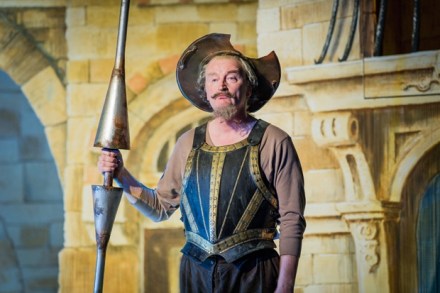
To suggest that the ageing Jules Massenet identified himself with the title character of his Don Quichotte is nothing new — and late works such as this by definition encourage biographical interpretations. One of the main liberties of the opera, premièred in 1910 and very loosely based (via a contemporary verse play) on Cervantes, was to bring the character of Dulcinea (here ‘La Belle Dulcinée’) out of the realm of the imagination and to embody her as a distinctly flesh-and-blood mezzo-soprano. That the first singer to perform Dulcinée, Lucy Arbell, was the object of Massenet’s infatuation only emphasises the biographical parallels, all of which give extra layers to a gently wise and touchingly melancholy work.

Picnics are ridiculous. Don’t expect me or my dog to have any respect for them

From our UK edition

In the past few weeks my poor dog Maisie has been screamed at, threatened, vilified and monstered, just as she is every summer. Why? Because as soon as the weather promises to be nice a significant number of idiots dust down their Tupperware and schlep a picnic to a public park. Why is it, then, that dogs who make a dash for the chicken drumsticks laid out within sniffing distance and on their own turf are accused of theft and bad behaviour? In what way can we possibly blame scavenging animals from taking food from the ground? And this is in a world where women who go out late at night/take a taxi when drunk/wear a short skirt/indulge in flirtatious behaviour are told that if they are raped they have brought it on themselves!

Why is the opera world so damn uptight?

From our UK edition

God, opera singers are touchy. You dare to analyse how they look, you dare to criticise the enormous subsidies they get, you have the temerity to call someone an opera singer who hasn't been vetted by an opera commissar and they go all Al-Qaeda on you. Yesterday the Today programme had an interview with Russell Watson, a decent, popular singer whose shtick includes shouty renditions of opera arias. The presenter introduced him as an opera singer and the poncey opera world went ballistic. 'He’s not an opera singer!' they bleated, 'He’s just a singer!’ Note that twatty 'just'? No art form that was confidant about what it does would ever feel the need to puff up their chests like this.

Expecting opera critics to be uniformly kind to singers defeats the point of their existence

From our UK edition

Should fat be an issue in opera? Are our opera critics overgrown schoolboys with a body fixation? To judge from reports and editorials in print and online over the last two days, you can answer ‘no’ and ‘yes’ respectively. Simple? No, not really. On Monday morning, the critics of various national newspapers published reviews of Glyndebourne’s new production of Der Rosenkavalier. These reviews included comments about the physical appearance of Tara Erraught, the young mezzo-soprano cast as Octavian. These comments have been widely disparaged and taken as evidence of ‘body shaming’ on the part of ‘male, middle-aged critics’.

The rich have given up their freedom

From our UK edition

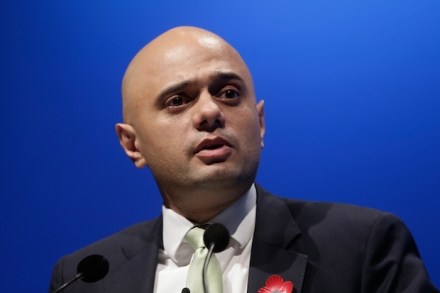
The appointment of Sajid Javid as the new Secretary of State for Culture has been much criticised on the grounds that culture is not his forte; and in an interview with the Times the other day he confessed that he had never been to the opera. This is a little surprising because, as a former banker in the City earning an estimated £3 million a year, he is just the kind of person you might expect to go to the Royal Opera House if only to flaunt his wealth. However, Javid has never seen an opera; and the reasons he gave for this in his interview were that when he was young he was too poor, and that once he had become rich there was ‘not much time outside work’. Not much time outside work?

Khovanskygate is about the dreadfulness and possible glory of being Russian

From our UK edition

Within the space of a few weeks we have had the rare chance of seeing the two great torsos of Russian opera, Borodin’s Prince Igor, unfinished because the composer was often otherwise engaged, and Musorgsky’s Khovanshchina, unfinished because its composer died of drink. Prince Igor at the Coliseum was musically magnificent, and dramatically utterly absurd, ‘self-parody’ that did not do justice to its low-jinks. By contrast, Birmingham Opera Company’s Khovanskygate is musically at least as superb, and dramatically gripping though questionable. As is usual with BOC, the location is unorthodox, in this case an immense tent in the middle of Cannon Hill Park.

Spectator letters: On wind turbines, Churchill’s only exam success, and the red-trousered mayor of Bristol

From our UK edition

When the wind blows Sir: Clare Oxford’s piece (‘Gone with the wind turbines’, 12 April) is both timely and sad. Those who applaud the use of these infernal machines are prone to eulogise their efficiency by saying (in the same annoying, dumbed-down way in which commentators always compare the size of something with the number of football pitches it equates to — presumably on the basis that a normal person is unable to conceive of anything larger) that the number of machines to be erected ‘could provide power for x thousand homes’.

Bryn Terfel lords it over ‘Faust’ magnificently

From our UK edition

There’s a great deal to disapprove of in Gounod’s Faust. It breaks down a pillar of western literature and whisks up what remains into a flouncy French fancy. It turns the hero’s famous striving into mere lust — for a virginal heroine who is cursed by one and all (‘Marguerite! Sois maudite!’, runs the rather-too-catchy refrain), then saved, in a mawkish, tacked-on finale, by celestial powers. It has a ballet, set pieces, jolly choruses and all the unfashionable niceties that Parisian opera in the mid-19th century required.

The snobbery and sweaty brows of watching opera in the cinema

From our UK edition

I remain puzzled that, so far as I know, no daily or weekly paper carries reviews of the New York Met opera relays (I’m not a denizen of the blogosphere, where they may well swarm). To judge from the number of cinemas that show these live relays, and from how crowded most of them are, clearly more people see opera in this form than in any other. And many of those people will be experiencing opera live for the first time in cinemas, and may well never go to an opera house. I suspect there is a strong element of snobbery involved on the part of non-reviewers, as if one hasn’t really been to a performance unless one was actually in the theatre where it was taking place.

Opera tickets are too cheap

From our UK edition

A revival of Anna Nicole will open the Royal Opera House new season, it was announced today. And students will be able to get in for £1, tweeted Kasper Holten proudly. A quid! So that’s an orchestra, an excellent cast of 17, a chorus, a production team of two or three dozen, two hours of words and music and a very good conductor all for less than one pot noodle. The news might baffle. The received wisdom is that opera tickets are too high. Far too high. So high that they are the principal (if not sole) reason why the art form has fallen behind the others in the popularity stakes. But the reality has always been quite different. Even for adults, a portion of Royal Opera House tickets has always been dirt cheap.

Televising theatre and opera will not attract new audiences. It will repel them

From our UK edition

Always try to get the worst seats for the opera. Upper circle. Foyer. Toilet. The nearest bus stop. The further back the better. You’ll regret it if you don’t. There really is nothing more off-putting than being able to see the singers. Opera up close, as Princess Margaret once said, is just two fat people shouting at each other in a large room. And then there’s the clown make-up and trannie costumes to deal with. It all makes much more sense from afar, where it assumes a lovely dreamy abstract fuzz. Was that a smile? Or a stroke? Who knows. The words and music will carry you along. But even 'good’ theatrical acting looks absurd close up. Gemma Arteton knows this. She let the truth slip out during the new arts visiony thing at the Beeb the other day.

Handelian pleasures vs modern head-scratchers

From our UK edition

Opera seems almost always to have been acutely concerned with its own future. These days this is most often manifested in occasionally desperate, sometimes patronising attempts to entice new audiences to the art form. A new three-way initiative between Aldeburgh Music, the Royal Opera and Opera North takes a different tack by enabling a new generation of composers and librettists to try its hand in this most exacting art form. The initiative’s first fruit was a double bill premièred in Aldeburgh before being shown at Covent Garden’s Linbury Studio Theatre and Leeds’s Howard Assembly Room.

Why is Tippett’s King Priam so difficult to love?

From our UK edition

The difference between lovable, likable and admirable is perhaps more significant in the operatic world than in other artistic spheres — and is often, alas, translatable directly into all-important box-office receipts. The most ambitious production in English Touring Opera’s spring season provides an opportunity to see where Michael Tippett’s second opera, King Priam, fits on the spectrum. Premièred in Coventry in 1962, one day before Britten’s War Requiem, it’s rarely staged but often spoken of in tones of hushed awe; and it is undoubtedly a remarkable work: spare, concise, fierce and often irresistible in its conviction.

Opera takes on Islam

From our UK edition

You know how it is. You’re finishing off Friday prayers, wondering what to do with your evening. You notice some women in a cattle truck and decide to engage in a spot of ritual humiliation, bunging the women into burkas and forcing them to distribute petals in front of your feet. Critiques of Islam don’t get much more savage than the one delivered by a new French production of Rameau’s 18th century opéra-ballet Les Indes galantes. The third act assault on Iran's patriarchy drew gasps from the audience – and even a protest at the Toulouse premiere. The idea of casting Islam as an oppressor is a concept almost completely unknown to the art world. In Britain, the only fictional role open to Muslims is that of harassed victim.

France’s cultural excess is immoral (but I still love it)

From our UK edition

For a committed, if unsuccessful, capitalist, I enjoy French culture an embarrassing amount - every last state-funded drop of it. Give me five-act operas with cast lists the size of a small Chinese city, give me obscenely expensive works of public art, give me inhumane concrete estates, give me unintelligible modernist music and I’ll be drooling with pleasure all night. In fact, I'm seeing a five-act French opera with a cast list the size of a small Chinese city tonight in Bordeaux. That’s the kind of disgusting thing I like to do. In my defence, I am aware that what I am doing is immoral and what is being created should be consigned to hell.

Leipzig and Dresden are both staging Elektra. Which city wins?

From our UK edition

Yet more performances of Elektra, Richard Strauss’s setting of Hugo von Hofmannsthal’s ramped-up, neurosis-riddled 1903 reworking of Sophocles, are unlikely to force any anniversary-year reassessments of the composer. But the piece’s current ubiquity does reflect the fact that we’re now relatively well off for singers equipped to tackle the fearsome title role. At their head, arguably, stands the German soprano Evelyn Herlitzius. She’s yet to make her Covent Garden debut, inexplicably, but her riveting performance galvanised the opening night of the first high-profile new production of the work in 2014, at Dresden’s Semperoper, where it shocked and awed its first audience 105 years ago.

Opera review: The Barbican’s Albert Herring was a perfect evening

From our UK edition

Of this year’s three musical birthday boys, Wagner has fared, in England, surprisingly well, Verdi inexplicably badly, and Britten, as was to be expected, has received the royal treatment. No one could have predicted, though, that the culmination of the celebrations would be as glorious as it was: a single semi-staged performance at the Barbican of what, in my minority opinion, is his operatic masterpiece, Albert Herring. Surely after attending it, or hearing it on Radio 3, that might become a majority opinion.