Occult

How the occult captured the modern mind

The British science-fiction writer Arthur C. Clarke, author of 2001: A Space Odyssey, proposed a "law of science" in 1968: "Any sufficiently advanced technology is indistinguishable from magic." Clarke’s proposition had a quality of rightness, of stating the obvious with sparkling clarity, that propelled it into dictionaries of quotations. The timing was perfect: Concorde would soon be flying over rock festivals packed with hippies obsessed with "magick." Naturally Clarke’s readers understood the difference between aerodynamics and sky gods. But African tribesmen gawping at an early airplane, or Pacific Islanders watching an atomic explosion, could only conclude that they were witnessing a supernatural event: for them, a scientific explanation was literally inconceivable.
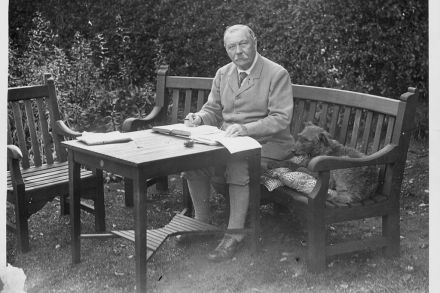
How Houdini and Arthur Conan Doyle invented the modern celebrity feud

1922 saw its fair share of shocks in the literary world, among them the publication of James Joyce’s Ulysses, Sinclair Lewis’s Babbitt and T.S. Eliot’s The Waste Land. But perhaps the strangest book-related event of the year didn’t involve any writing at all, at least not as performed by human agency. Instead, the author was a ghost. The setting was a darkened room at the Ambassador Hotel in New Jersey’s Atlantic City, where on the warm Sunday afternoon of June 18, 1922, Arthur Conan Doyle of Sherlock Holmes fame sat down between his wife Jean and the celebrated escapologist Harry Houdini to hold a séance. The first two of these individuals were advocates of spiritualism, the last of them a skeptic.

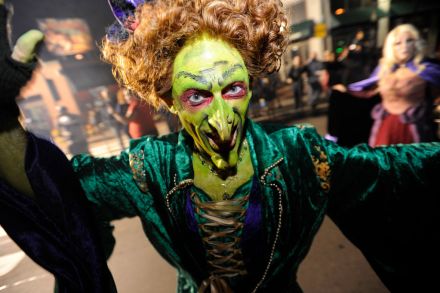
Witchcraft is not Gen Z’s new religion

Everyone’s ringing the alarm bell: is witchcraft the new religion for Gen Z? If #WitchTok, the named used to describe witchy content on TikTok, is any indication — no. #WitchTok is a digital fortune-teller; it’s a place to find aesthetic inspiration; it’s sometimes a stand-in for political engagement. For some, it’s even a hobby. But it’s not a replacement for religious faith. On TikTok, witchy content falls under three broad categories. There is predictive content like tarot card readings, manifestation instruction and “good luck” videos, and there’s #WitchTok. The first two categories of video almost exclusively cater to people who are looking for something — usually good news.

witchcraft