Northern ireland

Northern Ireland’s sink estates are fertile ground for fundamentalists

From our UK edition

Northern Ireland is routinely voted one of the happiest places to live in the UK. A few weeks ago, a survey revealed that Belfast was the best city to raise a family in Britain. The Province is in the top ten digital economies of the future. A world-class film production industry is transforming it into the Hollywood of Europe adding tens of millions of pounds to the local economy. It's a stark contrast to the ugly scenes from over the Irish Sea flashing across our screens this week. Working-class loyalist communities are in a dangerously mutinous mood that is hard to square with this parallel world. Alienation and opportunity often exist in the same postcode, literally a stone’s throw away.

Portrait of the week: Vaccine passports, Northern Ireland riots and a cocaine-smuggling kayaker

From our UK edition

Home The government sketched a scheme for a coronavirus passport, or ‘Covid status certification’, to be tried out at the FA Cup Final on 15 May. It would record vaccination, a recent negative test or natural immunity after recovering from Covid and might admit the bearer to public places, such as pubs or soup kitchens. Dozens of MPs opposed the passport, including Jeremy Corbyn, the former Labour leader, who sits as an independent, and Iain Duncan Smith, the former Conservative leader. In the meantime everyone could have two lateral flow tests a week at pharmacies or at home, and would have to self-isolate if the result was positive.

Why is nobody talking about Northern Ireland?

From our UK edition

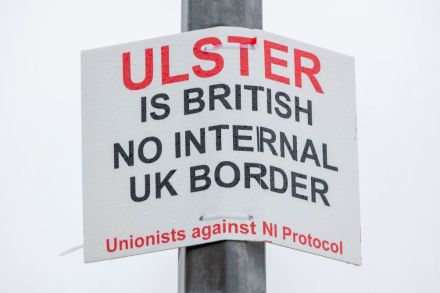
It is depressingly appropriate that a weekend which started on Good Friday was one which illustrated the shaky foundations of the agreement which brought a form of peace to Northern Ireland. Twenty three years on from that landmark deal, discontent among the Province's unionist and loyalist community is beginning to mount. Violence once again erupted on the streets of Derry last night. It was a repeat of the ugly scenes that played out over Easter weekend in Belfast’s loyalist Sandy Row area. Petrol bombs were flung and a total of 32 police officers were injured. The latest spark is mounting unhappiness among unionist pro-British groups at the Northern Ireland Protocol.

Is Biden turning on Brussels?

From our UK edition

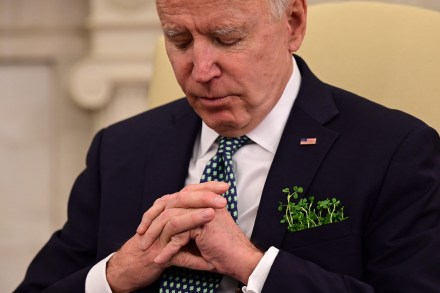
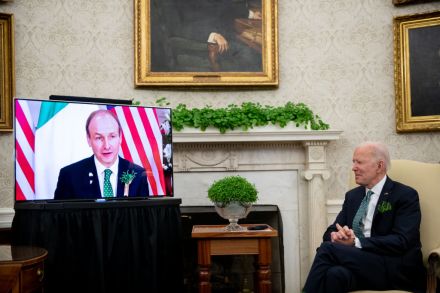
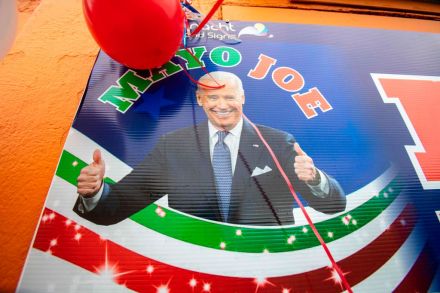
The Joe Biden administration, headed up by a proud son of Ireland, has spent St Patrick's Day briefing reporters in Washington that it will not be taking a side in the latest Irish border dispute. The new President spoke with the Irish Taoiseach on Wednesday in celebration of the two countries' history — just as the EU prepares to take the UK to court over the border row.  Perhaps Micheál Martin was planning on lightly nudging Biden to remind him of the more recent past. Six months ago, the Democratic challenger to Trump blasted Boris Johnson for putting the Good Friday Agreement at risk, saying that he couldn't allow it to become a 'casualty of Brexit'.  https://twitter.com/JoeBiden/status/1306334039557586944?

border

Biden cares about borders — as long as they’re Irish

Joe Biden won’t go to the border, but the border is coming to him. The Northern Irish border, that is. On Wednesday, Biden, Kamala Harris (pronouns: she/her) and Nancy Pelosi marked St Patrick’s Day by talking with Irish politicians from both sides of their border. Afterwards, the Irish prime minister, Micheál Martin, thanked Pelosi for her ‘continued support’ on Brexit. It’s bordering on the ridiculous. Biden’s administration refuses to admit that it has a moral and humanitarian crisis on its southern border, but it makes time to create problems on the border between two close allies, Britain and the Republic of Ireland. The administration insists it isn’t taking sides on Brexit, but the truth is that it already has.

The chilling rise of ‘IRA TikTok’

From our UK edition

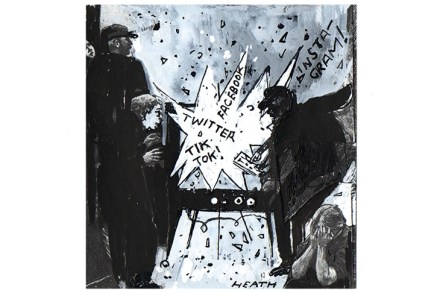
There’s an ever shorter period now, it seems, between the emergence of any new medium and its energetic use for promoting hatred. And no one can accuse the young fans of militant Irish republicanism of not keeping up with the times: the proliferation of ‘IRA TikTok’ is a case in point. The video-sharing network has inspired growing numbers of Irish-American and Irish youth — often those with ‘Up The Ra!’ in their TikTok profiles — to post clips of themselves clad in balaclavas, posing meaningfully with a fake gun, or mimicking planting a bomb by throwing a backpack under a car and racing away. The soundtrack is mostly provided by Irish rebel music or rap.

It is time to make friends with the EU

From our UK edition

On Monday morning, Clément Beaune, Emmanuel Macron’s Europe Minister, clipped out the section of his media interview criticising Britain’s vaccination strategy and posted it on Twitter. He declared: ‘What is happening in the UK is not something I envy. It is a strategy of massive acceleration which also means taking more risks because the Covid situation is much worse there.’ Such remarks are becoming something of a habit for Beaune. He fired off tweets lambasting Brexit in the days after the deal was done and grinned broadly in an interview this year when he was questioned about reports that British cabinet ministers had asked him to tone it down on his Twitter account. Macron has also been critical of the UK vaccination programme.

David Frost will need to learn to work with the EU

From our UK edition

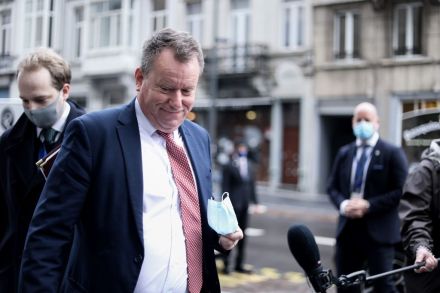
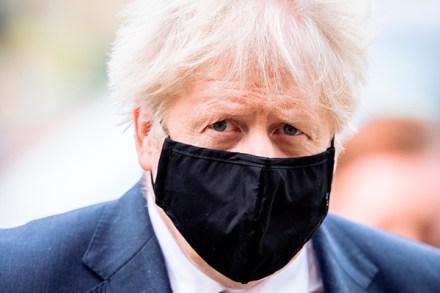
Boris Johnson has made his Brexit negotiator David Frost a full member of the Cabinet and the UK chair of both the partnership council, which manages the UK/EU trade deal, and the joint committee, which handles the Northern Ireland protocol. Frost’s appointment is a recognition that someone is needed at the heart of government to handle the EU relationship – that it can’t be treated as simply a Foreign Office matter, and that it needs to be a full-time job (Michael Gove had previously been the UK chair of these committees). The challenge for Frost will be to get out of the negotiations mindset. The withdrawal negotiations and the trade talks were necessarily tough and Frost pushed hard.

The Northern Ireland conundrum

From our UK edition

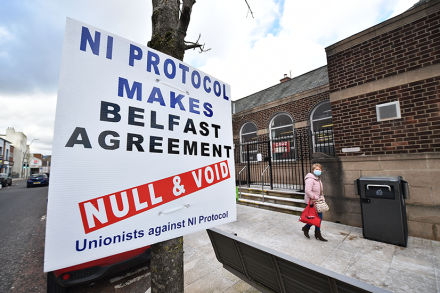
The purpose of the Northern Ireland protocol was meant to be to square the circles of simultaneously protecting the single market and stability in Northern Ireland. But, as I write in the magazine this week, there are signs it is beginning to undermine stability there. The fundamental problem is that Unionists are increasingly against it. The First Minister and DUP leader Arlene Foster tweeted this morning that Northern Ireland must be ‘freed from the protocol’. We could be in a nightmare situation where direct rule from London had to be imposed to fully implement the protocol Now, the EU can say that the checks the Unionists are objecting to are in the protocol that the UK government signed, and they would be right.

The Northern Ireland protocol problem

From our UK edition

Ursula von der Leyen now admits that she overreacted in the EU’s vaccine row with the UK. She has spoken of her ‘regret’ that Article 16 of the Northern Ireland border protocol was triggered by the European Commission in a Friday night fit of pique at the end of last month. But there is a sense in Brussels that the British are still trying to exploit her misstep. This claim is not entirely baseless. The UK is getting increasingly worried about the protocol, and clearly does see a chance to push for concessions now that the Commission has surrendered the moral high ground. The Northern Ireland protocol was agreed by Boris Johnson as he struggled to get a Brexit deal in time for the 2019 general election. The bureaucracy it causes is already leading to problems.

How the EU can help calm Brexit tensions in Northern Ireland

From our UK edition

The next Northern Ireland assembly election must take place by 5 May next year. The MLAs voted in then will decide whether or not to continue the Northern Ireland protocol, which requires the UK authorities to apply EU rules on various goods entering Northern Ireland. If a majority voted against (that is all that would be needed as the petition of concern, which requires a higher threshold, would not apply), then the protocol would fall. At the moment, it looks very unlikely that the election will result in an anti-protocol majority. But it would clearly be bad for stability in Northern Ireland if the campaign turned into an attempt by Unionists to rally a majority that could vote down the protocol.

John DeLorean: man of mystery – and full-blown psychopath

From our UK edition

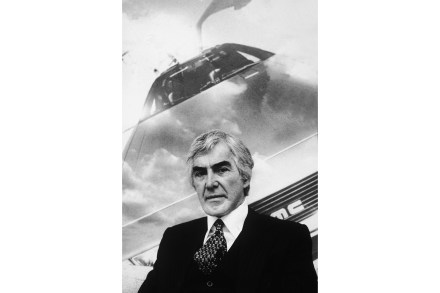
DeLorean: Back from the Future was one of those documentaries — for me at least — that takes a story you thought you sort of knew and makes you realise a) that you didn’t really, and b) what a great story it is. The programme began, as it was pretty much duty-bound to, with a clip of Michael J. Fox and the time-travelling DeLorean car from the movie that inspired Wednesday’s means-less-the-more-you-think-about-it subtitle. A series of captions then introduced us to John DeLorean himself: a man who ‘had everything’ (cue shots of a much younger ex-model wife and some Rolexes) until he ‘risked it all’ in the mid-1970s, when he left a high-ranking post at General Motors to found his own sports-car company. Now all he needed was the money.

How Joe Biden can be a true friend to the Irish

From our UK edition

On this day in 1974, a body was recovered in quiet fields near the Country Tyrone village of Clogher, hard against Northern Ireland’s frontier. It was that of Cormac McCabe, the headmaster of a nearby secondary school, who was also a part-time officer in the Ulster Defence Regiment, locally raised ‘home battalions’ of the British Army. McCabe had been kidnapped the day before, having crossed the border to have lunch in Monaghan town with his wife and disabled daughter. Exposed and defenceless, he was the softest of targets for the Provisional IRA terrorists who abducted him, shot him in the head and then dumped him in a bog field.

Northern Ireland is still plagued by terrorism

From our UK edition

It’s slow business for global terrorists these days with all the targets banged up under Covid house arrest. But there’s one place in the United Kingdom where it has been pretty much business as usual for violent extremism. Northern Ireland’s police service has just released its security assessment for 2020. This contains some startling information for a place with roughly the same population as Hampshire. Last year there were 39 shooting incidents and two security related deaths, the same number as in 2019. The number of bombings – which include viable devices defused by the army – actually rose year on year to 17, with 8 happening in Belfast. Imagine this happening in Southampton.

Boris won’t be forgiven if his No. 10 chaos makes him cave on Brexit

From our UK edition

Mayhem has once again engulfed 10 Downing Street with the dramatic resignation of Lee Cain, Boris Johnson's communications chief. He was with the Prime Minister on the Vote Leave campaign — as had Dominic Cummings, Oliver Lewis and others who have formed a band of brothers in No. 10. Cain's departure put a question mark over the future of the others, which comes at an odd time because the Brexit they all campaigned for is weeks away from a conclusion. There are huge issues facing the government: a second lockdown, due to end on 2 December. The procurement and rollout of a potential vaccine. But another deadline, just weeks away, is Brexit. This is the mission Johnson was elected to accomplish, this is the drama that has defined British politics for the past five years.

Humiliating the IRA was a fatal mistake

From our UK edition

It was said that Reginald Maudling, as home secretary, once boarded a plane in Belfast and immediately requested a stiff drink, muttering: ‘Get me out of this awful bloody country!’ This does not appear in Ian Cobain’s compelling, interwoven narrative about a killing in Lisburn, near Belfast, in April 1978, but it emblemised some of London’s attitudes to what was sometimes called ‘Ulster’. Even during the height of the Troubles, with daily shootings, bombings and killings, the Province was frequently ignored at cabinet level: the spirit of Maudling prevailed in both Conservative and Labour administrations. By Cobain’s measure, Labour’s Roy Mason was as bad as any Tory.

From half a shelf to a library: my life in books

From our UK edition

‘Yes, I will have a coffee,’ said the van driver. He’d driven down to the south of France from Devon. I motioned him to take a pew at the kitchen table and asked him about himself. Ron was ex-army. Aged 17, he was faced with a stark choice: the building site or the army. Because he’d seen his builder father working in a trench all day with water up to his waist, he chose the army. He joined the Royal Engineers and trained as a driver. In the early 1970s he drove two SAS men around Belfast in an unmarked saloon car. That was the job. All day every day. Everywhere Gerry Adams went Ron followed him. Gerry Adams knew he had a tail and would give a friendly or an unfriendly wave, depending on how he was feeling. Yes, he enjoyed the army.

Without John Hume there might have been no peace process

From our UK edition

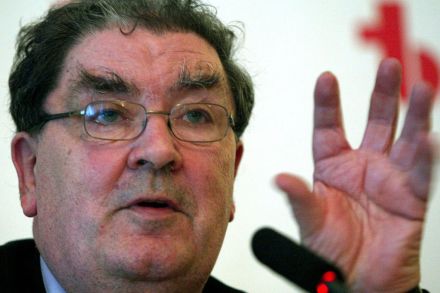
John Hume, the first and the greatest of the Irish peacemakers, has died aged 83. Few political leaders are truly indispensable, but it remains difficult to imagine a Northern Irish peace process without John Hume. Without Hume’s questing belief that peace was not only desirable but possible, there might have been no peace process at all. For two decades Hume served as leader of the SDLP and, more significantly, the moral centre of Northern Irish politics. Like so many others, he knew injustice and discrimination; unlike too many others, he did not allow that experience to strangle his own humanity.

Why does England have the worst excess deaths in Europe?

From our UK edition

On 12 May, the government stopped publishing international comparisons of its Covid-19 death toll in the daily press briefings. The argument was that the data wasn’t helpful, and perhaps even misleading: the way calculations were carried out varied country-by-country, with each nation on a different timescale when experiencing the peak of infections and death. There would be a time for international comparisons, but that time wasn’t now. Today, the ONS picks up where the press briefings left off, comparing excess mortality rates throughout Europe. The data is not specifically calculating Covid-19 deaths, but rather all causes of mortality on a five-year average.

Homage to Lyra McKee — the journalist I miss most

From our UK edition

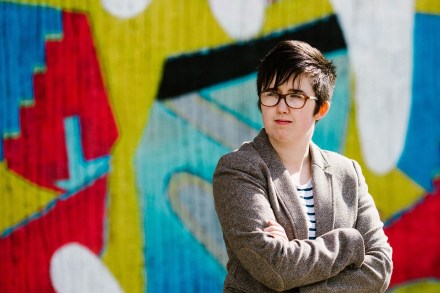
In the two generations since Watergate, the image of the journalist has gone from that of plucky truth-seeker to sensationalist and partisan hack. Somewhere along the way the fresh-faced idealists of All the President’s Men gave way to the dissociative anti-hero of Nightcrawler. Corporate-driven news values? Probably. Phone hacking? Definitely. But what grates more is the suspicion that journalism is a clique that protects its own, disdains its audience and passes off its attitudes and preferences as the neutral norm. The perception isn’t entirely wide of the mark. Lyra McKee was a one-woman union for the reputation of journalism. To her it was more than blue-tick-on-blue-tick gossip-shopping and SEO-chasing junk news.