Northern ireland

How long will Edwin Poots’s DUP reign last?

From our UK edition

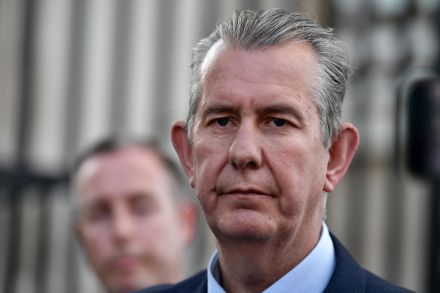
New DUP leader Edwin Poots has wasted little time consigning the Arlene Foster era to history. Poots' shake-up of his Stormont ministerial team has resulted in Foster’s loyalists being shown the door, in favour of what the Traditional Unionist Voice leader Jim Allister drily termed 'Poots’ posts'. Poots' appointment of Paul Givan, his fellow Lagan Valley MLA, as first minister of Northern Ireland, is perhaps his most controversial, though not unexpected, move. Givan, who like Poots is a creationist, is one of the more verbose figures in the DUP hinterland.

Independence would be karmic vengeance for Sturgeon

From our UK edition

I have a mean streak. Perhaps my cruellest urge is to give people what they claim to want. When political parvenues disparage capitalism and the unfairness of meritocracy while talking up an ‘equitable’ socialist utopia, I want to stick them personally in a society where work pays the same as sloth, the well-off flee and the left behind expect everything to be free — just so long as the rest of us don’t have to submit to this inert destitution, too. When eco fanatics demand zero carbon emissions by 2025, I yearn for their own Amazon orders to arrive months later by donkey cart. I’d grant their wish: dead phone batteries on windless days and nights that are cold and dark.

The EU is overplaying its hand on Northern Ireland

From our UK edition

The EU's decision to take control of the vaccine programme was hardly a roaring success. The eurozone's economy remains stuck in recession. And the EU's foreign policy is a mess, as events in Belarus have just made clear.  Still, despite the evidence that she isn’t very good at managing anything, no one can argue that the European Union’s president Ursula von der Leyen lacks self-confidence. Last night, she made it clear there could be no possible compromise over the Northern Ireland protocol. The trouble is that she could easily bring the whole trade deal between the EU and the UK crashing down.

Could Sinn Fein become the largest party in Northern Ireland?

From our UK edition

In 2022, a year after its centenary, there is the chance that Northern Ireland could end up with a nationalist, republican, Sinn Fein First Minister. The latest survey of popular opinion in the province, polled by LucidTalk, currently has Sinn Fein as the largest party on 25 per cent, nine points clear of the DUP who have slumped to 16 per cent – from around 30 per cent at the 2019 Westminster election. Meanwhile, there has been a slight upswing in the performance of the Ulster Unionists and Traditional Unionist Voice. The middle ground Alliance party are on the same level as the DUP, while the moderate SDLP appear to be a minority taste among nationalists, and are stuck on 12 per cent.

More devolution won’t save the Union

From our UK edition

Yesterday, Lord Dunlop – the author of the Dunlop Review into the British state and devolution – appeared before a joint meeting of four Select Committees. It was the first time the Public Accounts and Constitutional Affairs Committee (PACAC), Scottish, Welsh, and Northern Irish committees had sat together, which was fitting given his remit. But the resultant Q&A only highlighted the ongoing tensions in the government’s approach to the Union. Dunlop is an advocate of what he calls a ‘cooperative Union’. His emphasis is on getting the various parts of the governments of the UK to work together, and building on the past two decades of devolution.

The two halves of Ireland can’t be forced together

From our UK edition

Last week, Edwin Poots was elected leader of the DUP. You will have read all about him. I have. You may not previously have known much about him. I didn’t. We should hesitate, I think, to respond to his elevation with a broad-brush sneering dismissal, or in personal terms. We know, of course, about Mr Poots’s creationist beliefs and most of us reject them, and I don’t like his views on homosexuality or abortion; but Poots has proved able to work pragmatically with republican fellow politicians. In an important way, though, this isn’t about Poots, but what he represents: a unionist shift towards back-to-basics fundamentalism.

Can the DUP survive?

From our UK edition

A 36-person strong electorate will meet in Belfast this Friday to elect Arlene Foster’s replacement as leader of the Democratic Unionist party.  The choice facing the assembled ranks of the party’s MPs and members of the legislative assembly (MLAs) is, amusingly, between two men who share the same office in Lisburn: the Lagan Valley MP Sir Jeffrey Donaldson and Edwin Poots, the Stormont agriculture minister. Such is the DUP way, the two candidates are under orders not to speak to the media or undertake any form of public-facing promotional activity for the duration of the contest. However, a document sent by Poots to his colleagues setting out his vision for the future was leaked to the Northern Irish media.

What’s next for the Union?

From our UK edition

The Union faces two simultaneous challenges in Northern Ireland and Scotland that both look set to worsen in the coming years. In Northern Ireland, the immediate problem is that Brexit has disturbed the fragile balance there. (A more persistent problem is the fact that after the Good Friday agreement, the Democratic Unionist party and Sinn Fein replaced the more moderate Ulster Unionists and the Social Democratic and Labour party as the main Unionist and Nationalist parties.) The debate over where various borders should go has turned into a question of identity. Unionists argue that the UK government’s agreement to create half a border in the Irish Sea threatens Northern Ireland’s place in the United Kingdom.

Portrait of the week: Covid retreats, raves resume and a £165,000 squid

From our UK edition

Home ‘I think we have got a good chance of being able to dispense with the one-metre-plus from 21 June,’ Boris Johnson, the Prime Minister, remarked. By the beginning of the week, 29 per cent of the adult population had received both doses of coronavirus vaccination; 65 per cent the first dose. In the seven days up to the beginning of the week, 107 people had died, bringing the total number of deaths (within 28 days of testing positive for coronavirus) to 127,534. Maldon in Essex reported three cases per 100,000 people, which meant only two people in the whole district. Care home residents in England were allowed to make outdoor visits without having to self-isolate for 14 days on their return.

Unionist opinion will harden unless the EU gives ground

From our UK edition

Arlene Foster has been forced out as DUP leader because of Unionist anger about the Northern Ireland protocol. She is blamed for being far too trusting of Boris Johnson. Her party’s anger with her has been compounded by how it has fallen in the polls since the protocol started being implemented. But as I say in theTimes this morning, the protocol isn’t even yet in full effect. If the protocol were to be implemented in full, Unionist opposition towards it would escalate to the next level. Next year’s Stormont election would turn into a proxy referendum on the protocol, with unionist parties arguing that if they can get a majority, they can vote to scrap it.

Who would want to replace Arlene Foster?

From our UK edition

Arlene Foster has announced that she will be standing down as DUP leader on the 28 May and First Minister of Northern Ireland at the end of June, bowing to the inevitable after the arithmetic suggested that 80 per cent of her Stormont and Westminster colleagues were set against her leadership continuing.  This will be welcomed by those who in recent days orchestrated manoeuvres against her; Foster staging a defiant last stand had the potential to turn the leadership election poisonous very quickly, which was the last thing the embattled party needs. Who would honestly want to replace Foster now, such is the troubling in-tray she is handing over to her successor? The challenge is two-fold in advance of 2022’s Assembly election.

It’s remarkable that Arlene Foster lasted this long

From our UK edition

Arlene Foster’s spell as leader of the Democratic Unionist party is over. Today, Foster announced that she is stepping down as party leader on 28 May, and resigning her position as First Minister by the end of June. Her resignation came after a letter, signed by three quarters of the party’s MLAs alongside some MPs, was submitted to its chair Lord Morrow calling for her departure. In what is the most dramatic case of unionist infighting since Foster herself helped destabilise David Trimble's leadership of the Ulster Unionists in the early 2000s, moves are also afoot to remove her erstwhile deputy Nigel Dodds. Several of her most senior advisers, including the party's chief executive and director of communications, are also facing the chop.

Sinn Fein’s hollow ‘apology’ for Mountbatten’s murder

From our UK edition

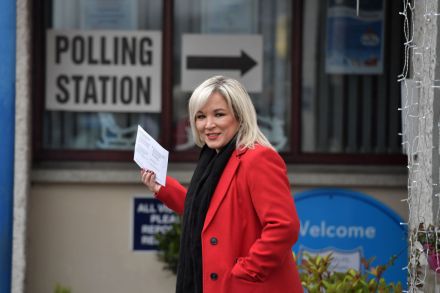
Prince Philip's death presented Sinn Fein with a particular challenge, given that the IRA murdered his beloved uncle. 'I am sorry that happened. Of course, that is heartbreaking,' said the party's leader Mary Lou McDonald this weekend. But if the words sounded sincere, don't be fooled. Sinn Fein learnt a difficult lesson back in 2011, when the Queen and Prince Philip visited, the first time for a century that a British monarch set foot in Dublin. Back then, they completely misjudged Irish public opinion and refused to participate, ending up looking like kids outside a sweet shop with noses pressed to the window. The Queen got an approval rating in the Republic of more than 90 per cent and Sinn Fein were accused of being dinosaurs. There was to be no repeat this time.

Why Sinn Fein can’t really apologise for the IRA’s atrocities

From our UK edition

What are we to make of Sinn Fein's latest experiment with the language of regret when it comes to the murder of Lord Mountbatten just after his nephew’s Royal funeral? It's not hard to be cynical about the Shinners. This is after all the political party that appointed a convicted terrorist bomber as Director of 'Unionist outreach' not so long ago. A party that dragged its feet on pensions for victims of paramilitary terrorists in their attempt to include injured perpetrators. A party that police services on either side of the border says is run by shadowy figures in the army council of the IRA. Their uncamouflaged leader, Mary Lou McDonald chopped up a word salad in an interview on Times radio this weekend and came up with a new side dish in obfuscation.

The Northern Ireland Protocol is untenable

From our UK edition

The process that delivered us the Northern Ireland Protocol already seems to have been rewritten in official memory. It suits most parties involved to pretend the outcome was inevitable. For Brussels, it helps them defend an arrangement designed to ‘protect the peace’ which is instead corroding loyalist support for the Belfast Agreement. For those in London, it is infinitely preferable to pretend that they were honouring the UK’s ‘obligations under the Good Friday Agreement’ rather than own one of the most abject episodes of British diplomacy in recent memory. It also helps to shift the blame onto preferred targets.

The Good Friday Agreement’s uneasy anniversary

From our UK edition

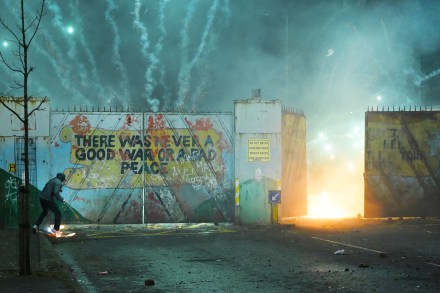
On the 23rd anniversary of the signing of the Belfast Agreement, it’s safe to say celebrations here in Northern Ireland will be muted at best. Over the past ten days, hundreds of rioters wielding bricks, bottles, stones and petrol bombs in Belfast have injured more than 70 police officers, most notably in the west of the city, where working-class loyalists and republicans live cheek by jowl. In terrifying scenes, a bus driver narrowly escaped injury when his vehicle was petrol bombed and left to coast down a street. The trigger for the violence was the decision by Northern Ireland’s public prosecution service not to bring charges against 24 Sinn Féin politicians who broke Covid restrictions at a funeral of an IRA leader, which 2,000 attended.

Northern Ireland’s sink estates are fertile ground for fundamentalists

From our UK edition

Northern Ireland is routinely voted one of the happiest places to live in the UK. A few weeks ago, a survey revealed that Belfast was the best city to raise a family in Britain. The Province is in the top ten digital economies of the future. A world-class film production industry is transforming it into the Hollywood of Europe adding tens of millions of pounds to the local economy. It's a stark contrast to the ugly scenes from over the Irish Sea flashing across our screens this week. Working-class loyalist communities are in a dangerously mutinous mood that is hard to square with this parallel world. Alienation and opportunity often exist in the same postcode, literally a stone’s throw away.

Portrait of the week: Vaccine passports, Northern Ireland riots and a cocaine-smuggling kayaker

From our UK edition

Home The government sketched a scheme for a coronavirus passport, or ‘Covid status certification’, to be tried out at the FA Cup Final on 15 May. It would record vaccination, a recent negative test or natural immunity after recovering from Covid and might admit the bearer to public places, such as pubs or soup kitchens. Dozens of MPs opposed the passport, including Jeremy Corbyn, the former Labour leader, who sits as an independent, and Iain Duncan Smith, the former Conservative leader. In the meantime everyone could have two lateral flow tests a week at pharmacies or at home, and would have to self-isolate if the result was positive.

Why is nobody talking about Northern Ireland?

From our UK edition

It is depressingly appropriate that a weekend which started on Good Friday was one which illustrated the shaky foundations of the agreement which brought a form of peace to Northern Ireland. Twenty three years on from that landmark deal, discontent among the Province's unionist and loyalist community is beginning to mount. Violence once again erupted on the streets of Derry last night. It was a repeat of the ugly scenes that played out over Easter weekend in Belfast’s loyalist Sandy Row area. Petrol bombs were flung and a total of 32 police officers were injured. The latest spark is mounting unhappiness among unionist pro-British groups at the Northern Ireland Protocol.

Is Biden turning on Brussels?

From our UK edition

The Joe Biden administration, headed up by a proud son of Ireland, has spent St Patrick's Day briefing reporters in Washington that it will not be taking a side in the latest Irish border dispute. The new President spoke with the Irish Taoiseach on Wednesday in celebration of the two countries' history — just as the EU prepares to take the UK to court over the border row.  Perhaps Micheál Martin was planning on lightly nudging Biden to remind him of the more recent past. Six months ago, the Democratic challenger to Trump blasted Boris Johnson for putting the Good Friday Agreement at risk, saying that he couldn't allow it to become a 'casualty of Brexit'.  https://twitter.com/JoeBiden/status/1306334039557586944?