Nigeria

Why the Pentagon has Nigeria in its sights

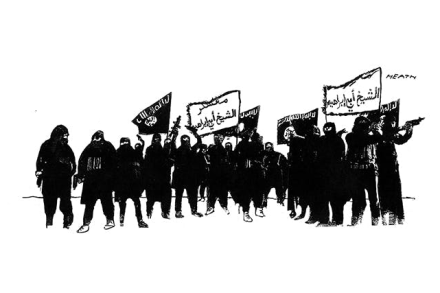
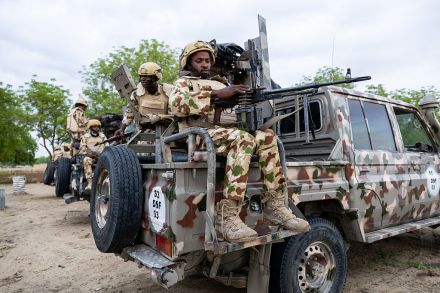
For the Pentagon, Nigeria is firmly on the list of countries where terror has run amok. In 2025 and again in January and May this year, the US Air Force bombed rebel camps in the north in an effort to halt a spree of murders and abductions that has left thousands dead or missing. US bombings earlier this week killed Islamic State’s second in command, Abu Bakr al-Mainuki, but the insurgency shows no sign of slowing; 17 trainees died recently in an attack on the army’s special forces academy and the conflict has spread to nearby Mali. In Nigeria, keeping the peace is a challenge. Since independence from Britain in 1960, there have been six coups and a civil war.

Nigeria

Does Tate’s director care about art?

From our UK edition

I met the Tate’s outgoing director Maria Balshaw only once, back when she was in Manchester running both the Whitworth gallery and the city’s municipal art museum. She was given to management-speak and annoying soundbites – she more than once described herself as ‘feisty ’ – but she’d done a superlative job. She was charismatic and supremely competent – in theory, the perfect candidate for the soon-to-be-vacant Tate leadership. She got the job two years later, but the confrontational demeanour that had worked so well up north didn’t wash in London, where the phrase ‘can do’ routinely elicits the same retort: no, you can’t.

Are we witnessing the birth of an African Islamic State?

From our UK edition

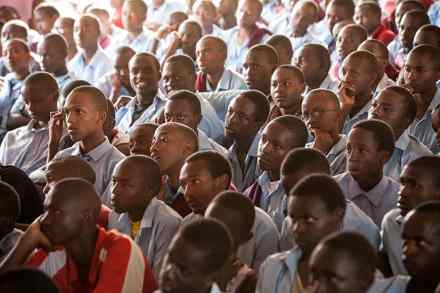
On Monday, 13 soldiers were killed by the Islamic State in northeastern Nigeria. A week ago, just after midnight on Friday morning, a Boko Haram suicide bomber blew up 14 villagers in northern Cameroon. These attacks — passing us by, as they do, in a stream of news and information — are becoming increasingly common in the beleaguered states of West Africa.  At the end of last year, Islamists kidnapped 344 schoolboys in an apparent ransom attempt. While the raid saw a continuation of Boko Haram’s strategy (in 2014 the group kidnapped 276 schoolgirls, to global condemnation) it marked a change in the terror group’s ambitions.

Why is it left to Trump to highlight the persecution of Christians in Nigeria?

From our UK edition

20 min listen

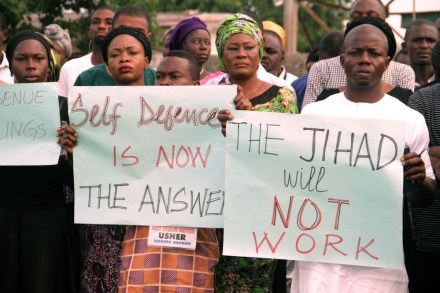
Fr Benedict Kiely, founder of nasarean.org, and Freddy Gray join Damian Thompson to discuss the persecution of Christians which has reached new and terrifying levels. Since this podcast was recorded last Friday, we have had the further news that over 300 children and staff were abducted from a Christian school – while around 50 of the children have since managed to escape, the rest remain missing and a local Bishop has criticised the Nigeria government for its failure to act. Over 185,000 Christians are estimated to have been killed in Nigeria in the past 15 years – so why has it taken the efforts of President Trump to push this horrific topic up the agenda? Produced by Patrick Gibbons.

Nicki Minaj and Mike Waltz team up at the UN

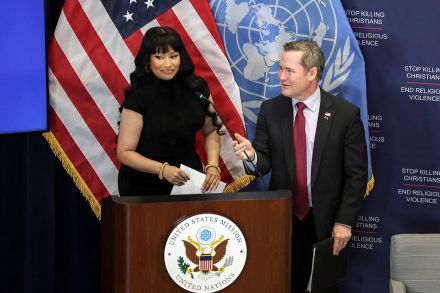
Before Nicki Minaj spoke at the United Nations today, Ambassador Mike Waltz referred to her as “the greatest female recording artist” and a “principled individual who refuses to remain silent in the face of injustice.” Adele, Beyoncé, Madonna, Lady Gaga, Barbra Streisand and many others would like to have a word with Ambassador Waltz (I hear he’s on Signal). But unlike Minaj, none of them appeared at the UN to speak out against the persecution of Christians in Nigeria.   “Ambassador,” Minaj wrote on X, “I am so grateful to be entrusted with an opportunity of this magnitude. I do not take it for granted. It means more than you know. The Barbz & I will never stand down in the face of injustice.

nicki minaj mike waltz

Pray for the persecuted Christian church

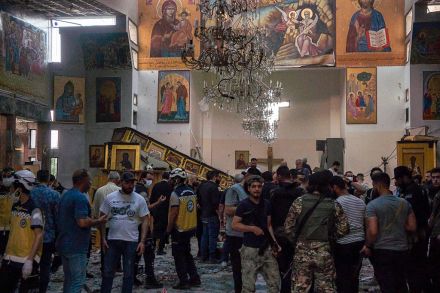
Sunday November 2, 2025 marks the annual Day of Prayer for the Persecuted Church. Global violence against Christians has doubled in the last thirty years, and one in seven believers now suffers persecution. Today, “Christians constitute by far the most widely persecuted religion,” in the world.In sub-Saharan Africa, more than 16 million Christians have fled for their lives to escape violence or been forcibly displaced. Congressman Riley Moore has described Nigeria as “the deadliest place in the world to be a Christian.” So far this year in Nigeria at least 7,000 Christians have been put to death. More than 19,000 Christian churches have been burned to the ground or attacked in the last fifteen years.

Christians

Round the world in a vast, unlovely barge

From our UK edition

Ships change not just their location but their identity throughout their lives. Medieval trading vessels became warships at royal command. The Queen Mary was a troop ship during the second world war. Ian Kumekawa, of Harvard University, has had the clever idea of following a modern ship through its metamorphoses and asking how these changes in use reflect the economic conditions of our time. But this ship is no Queen Mary. He calls it the Vessel, because it changes its name and owner so many times. Without its superstructure, no one would give it a second glance. It has neither an engine nor a rudder. It had to be mounted on a heavy-lift ship or towed to reach it destination.

Is the tide turning on restitution? 

From our UK edition

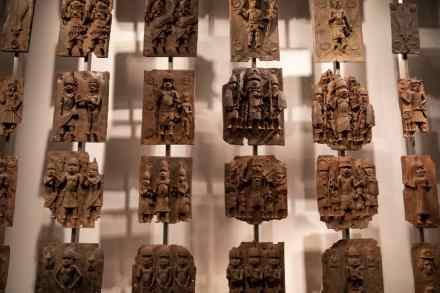
When passions are aroused, all of us are liable to overstate our case. Dan Hicks, a curator at Oxford’s extraordinary Aladdin’s Cave of anthropology, the Pitt-Rivers Museum, is perhaps a case in point. A Swedish academic, Staffan Lunden, has convincingly argued that Hicks is guilty of ‘distortion’ when writing about the British raid on Benin in 1897, which brought several thousand objects, including finely wrought brass statuettes, to museums across the world. Hicks published his uncompromising views in 2020 in a prize-winning book, The Brutish Museums: The Benin Bronzes, Colonial Violence and Cultural Restitution.

The complexities of our colonial legacy

From our UK edition

It happened by accident. In 1829 the naturalist Nathaniel Bagshaw Ward was trying to hatch a moth pupa. He placed it in a sealed glass container, along with some soil and dried leaves, and set it aside. Sometime later he was surprised to find that a fern and some grass had taken root in the soil, despite having no water. As Sathnam Sanghera writes in Empireworld, the discovery ‘revolutionised the logistics of international plant transportation’. Suddenly there was a means of securely transporting seeds and seedlings across vast distances. Empireworld is a sequel to Sanghera’s wildly successful Empireland. Where the latter examined the legacies of empire in Britain, this book seeks to apply that template to the world.

The African exception to the population bust

Earlier this year, New York Times columnist Ross Douthat wrote a provocative piece making the case that there are two kinds of people in the world: “Those who believe the defining challenge of the twenty-first century will be climate change, and those who know it will be the birth dearth, the population bust, the old age of the world.” Douthat made this bold claim not just because he believes the population bust is the more important of the two challenges, but because, in his view, it is being comparatively neglected due to all the attention paid to irrepressible climate doomsayers.

african population

What’s to become of Africa’s teeming youth?

From our UK edition

Demographers are attached to their theories. The field’s most enduring is the ‘demographic transition’, whereby modernisation inexorably lowers a society’s once-high fertility to replacement rate. Unfortunately, reality is obstreperous and doesn’t always obey the rules. The United Nations Population Division bases population projections on the assumption that all countries will eventually follow the pattern of plummeting birth rates first observed across the West. Edward Paice’s Youthquake addresses the exception so far: Africa. The continent is hardly a minor asterisk.

A broken nation: Chronicles from the Land of the Happiest People on Earth, by Wole Soyinka, reviewed

From our UK edition

One of the best episodes in Wole Soyinka’s third novel (his first since 1973) takes place not in Nigeria but in Salzburg. An engineer-turned-entrepreneur has died in hospital there after a bomb attack back home. His grasping clan descends from Lagos to parade their last respects — and stake their claims. The drive to the cemetery triggers a ‘torrent of eulogies to Austrian horticulture’. In a ‘concerted sibling gush’, plutocratic relatives swoon over the contrast between these clean, green vistas and the choking inferno of Lagos — an urban nightmare aggravated by their own mercenary scams. Soyinka’s characters often hide behind such ‘straw masks’ of pretentiousness, hypocrisy and fakery.

Who really owns the Benin Bronzes?

From our UK edition

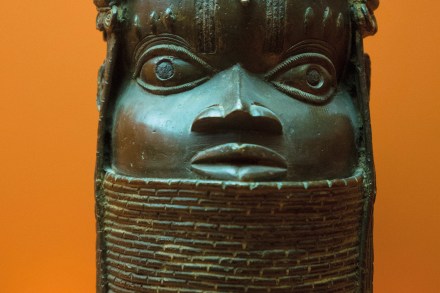
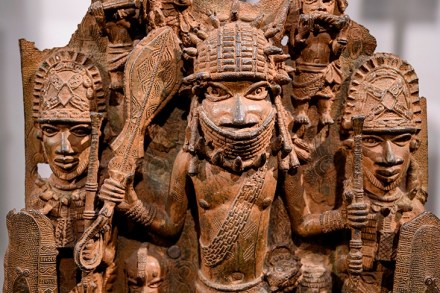
Should the British Museum return its priceless collection of Benin Bronzes? For years, the museum has stood firm in its refusal to hand back artwork looted from the ancient kingdom of Benin, in what is now southern Nigeria. In doing so, it has defied the trend set by regional institutions in Britain, such as the university of Aberdeen. Earlier this year, the university confirmed that it would repatriate a bust of an Oba, or king of Benin, which it has had since the 1950s. As a result of refusing to take a similar stance, the British Museum has been heavily criticised – but there is a strong case to be made that its approach is the correct one.

Nigeria’s abduction epidemic and the silence of the West

From our UK edition

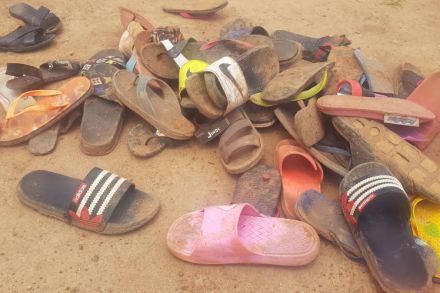
Every day, more and more children are going missing in Nigeria. At least 140 schoolchildren were kidnapped in Nigeria’s northwestern Kaduna city yesterday. A day earlier, another eight people – including two nurses and an infant – were abducted in Zaria, around 50 miles north of Kaduna. This marked the fourth attack on a Kaduna state school and the third on a Zaria hospital in the past five months. Over 1,000 schoolchildren have now been kidnapped in Nigeria since December; around 200 of them are still missing. Yet the international condemnation has been muted.

Trump’s influence is waning in exile. Is that a bad thing?

Some say the Roman Republic died when the Senate murdered Tiberius Gracchus, a populist reformer. When the elites whose negligence and hubris had fueled in the first place the rise to prominence of Tiberius and his brother, Gaius, chose violence over the political process, they peeled away any pretense of civility with the ruled. Something similar happened with Donald Trump. His presidential record is a mixture of half-truths and half-measures. He was too soft and too undisciplined for all the bluster about him as a competent threat to the established political order. He did, however, help reveal the true face of the regime as it attempted to snuff him out. In February, TIME ran a story about the 'shadow campaign' that altered the course of the 2020 election.

trump

Boko Haram’s demise will only strengthen Isis in Africa

From our UK edition

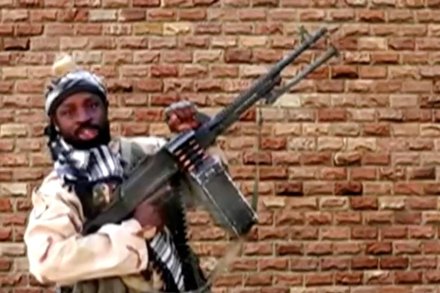
Multiple reports have confirmed that the Boko Haram chief Abubakar Shekau is dead. Shekau’s demise came after Boko Haram last week clashed with Isis in Sambisa forest in northeast Nigeria. Some reports suggested that the Boko Haram leader detonated a suicide vest rather than be captured by the Isis militants. Isis’s West African Province (ISWAP) is often characterised as being under the Boko Haram umbrella, but the two factions have become deadly rivals in the region. And with terror engulfing the continent, along with the rise of an African Islamic State, it is Isis that is now the beneficiary of Shekau’s death.

The problem of the Benin Bronzes will never go away

From our UK edition

A book about the looted African art known as the Benin Bronzes begins by clarifying that most of them are not actually bronze, and none of them comes from the country of Benin. Yet as this gripping work of live history makes clear, such name ambiguity feels entirely appropriate for art so sophisticated in creation yet so controversial in acquisition. Little about the Benin Bronzes is black and white. The exact age is unknown for the cache of carved ivory, coral and metal plaques, heads, statuary, swords and other ceremonial objects, the best guess emphasising the circa in ‘circa 16th century’.

Why we’ll all be fleeing to Nigeria

From our UK edition

I keep thinking what I’ll do when we regain our liberty — and I picture that beer at the end of Ice Cold in Alex, when after surviving his trek through the Sahara, a sweaty John Mills traces his finger up the frosted schooner, drinks the golden liquid down in one and says: ‘Worth waiting for.’ A month ago I had big ambitions for the future at home on the farm in Kenya. We were planting thousands of avocado trees, we were about to start rearing organic broiler chickens, there was a tilapia farm to expand, a new dairy project, and preparations for the Nairobi livestock breeders’ show later this year, when we hoped to compete with a string of Boran beef cattle. The event was cancelled and all my farm plans were delayed when the flights home to Kenya were closed.

Between the devil and the deep blue sea

From our UK edition

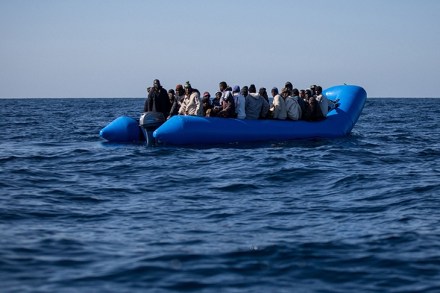
Death by water haunts the stories of Africans in Europe that flow through this fourth novel by Helon Habila. From the drowning of Milton’s swain Lycidas (a sort of tidal refrain for the book) to the capsized boat in the closing pages that offers victims in their hundreds to the ‘enraged leviathan’ of the sea, the imperious waves help wash these personal histories in an aura of myth. Whether privileged or penniless, the migrants whose journeys fill this episodic fresco of a work all crave the stories ‘traded as a currency among homeless, rootless people’. They hunger for narratives because ‘the water they all crossed to come here has dissolved the past’.

Alms for arms

From our UK edition

In the rush to declare Isis dead now that its caliphate has been routed from Iraq and Syria, it’s easy to forget that its Nigerian fellow traveller, Boko Haram, is still going strong. April’s five-year anniversary of the Chibok schoolgirls’ kidnapping, for example, passed with barely a celebrity tweet to mark it, despite the fact that 112 of the girls are still missing. Nor is much fuss likely to be made next month, when an insurgency that has killed nearly 30,000 will enter its second decade as violent as ever. Out of sight and out of mind, Boko Haram’s power is growing. And to find out why, all you have to do is follow the children who beg on the streets of Nigeria’s northern cities.