Nhs

The dream pill may not always be worth it

From our UK edition

A couple of years ago, I was put on the third-generation contraceptive pill Yasmin. ‘It’s good for your skin and stabilises your weight,’ the doctor said. And it’s true. I’ve found it to be wonderful. Most of my friends are on similar types of third–gen pill, like Femodene and Marvelon; many swear by them. Out of the 3.5 million women in the UK using the combined contraceptive pill, 1 million are on third–gen versions. But things aren’t all rosy. In the past week, all British GPs have been ordered to warn anyone taking these popular pills that they are at risk of developing potentially fatal blood clots. The statistics make for an uneasy read.

Imagine the uproar if a Tory minister proposed a “do-it-yourself” NHS?

From our UK edition

Consider these two stories. In the first the government approves new proposals to overhaul hospital outpatient care. For once there isn't even much of a pretence that this will improve healthcare. It's simply a question of saving money. Assuming the new proposals are implemented, many outpatients who had hitherto enjoyed (or endured) hospital appointments will be told to stay at home. Indeed they will be advised to "treat themselves". What contact they have with a consultant will be of the "virtual" kind. Perhaps a quick telephone call if they are lucky. More likely, they will be told to download an app to their phone which will tell them how to manage their condition or affliction. In other words, a DIY NHS. Or, if you prefer, some real privatisation.

What the NHS owes the Tories

From our UK edition

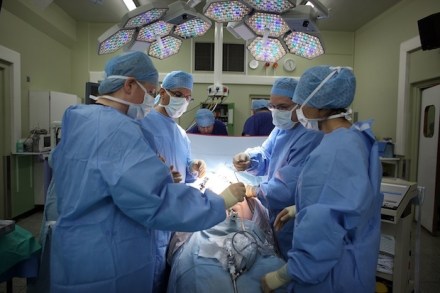
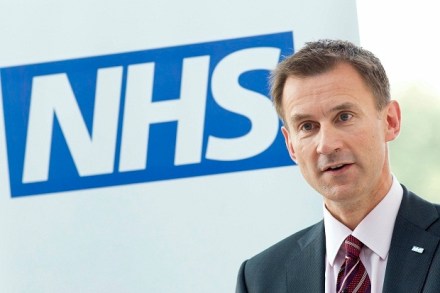
[audioplayer src='http://traffic.libsyn.com/spectator/TheViewFrom22_23_January_2014_v4.mp3' title='James Forsyth discuss the NHS with Charlotte Leslie MP' startat=1430] Listen [/audioplayer]Pinned to the wall of Jeremy Hunt’s office in the Department of Health is an A1 piece of paper detailing that week’s ‘Never Events’. It catalogues the mistakes that have been made in NHS hospitals that should never have happened: people having the wrong leg amputated, swabs being left inside patients after surgery and the like. This grim list is a rebuke to the glib, Danny Boyle-style rhetoric which dominates all political debate about the NHS and treats any attempt to examine the failings of British health care as heresy.

Podcast: Islam’s 30 year war, Westminster’s wandering hands and the Tories’ NHS legacy

From our UK edition

Is the Sunni-Shia conflict in the Middle East making a new great war ever more likely? On this week’s podcast, Douglas Murray discusses the battle involving Iran, Iraq, Syria and Saudi Arbia with Tom Tugendhat, a former solider and advisor to General David Richards. Why has the West failed to control the region? Can anything be done to save the situation? And how likely is it that the Sunni-Shia battle will end in a nuclear standoff? Do the men of Westminster also suffer unwelcome advances? Former Lib Dem advisor Miranda Green and Guido Fawkes’ Alex Wickham discuss the culture of Westminster’s wandering hands. How endemic is the problem for both men and women? Do journalists ever abuse the situation to develop contacts and get stories?

What the NHS really needs

From our UK edition

I blamed the pheasant casserole, but I did it an injustice. Its only contribution to the drama behind my disappearance in mid-December was a residue of lead shot in the small intestine that briefly confused the radiologist. The real villain revealed by the scan was my appendix, which had taken on the raging, bull-necked, bug-eyed appearance of Ed Balls faced with a set of improving growth figures. And so it was that I spent a week in the Friarage at Northallerton, a small ‘district general hospital’ that has survived every NHS restructuring to date and is cherished by the citizenry of rural North Yorkshire.

Martin Vander Weyer: In my hospital bed, I saw the future of the NHS

From our UK edition

I blamed the pheasant casserole, but I did it an injustice. Its only contribution to the drama behind my disappearance in mid-December was a residue of lead shot in the small intestine that briefly confused the radiologist. The real villain revealed by the scan was my appendix, which had taken on the raging, bull-necked, bug-eyed appearance of Ed Balls faced with a set of improving growth figures. And so it was that I spent a week in the Friarage at Northallerton, a small ‘district general hospital’ that has survived every NHS restructuring to date and is cherished by the citizenry of rural North Yorkshire.

Save the heritage of Barts Hospital

From our UK edition

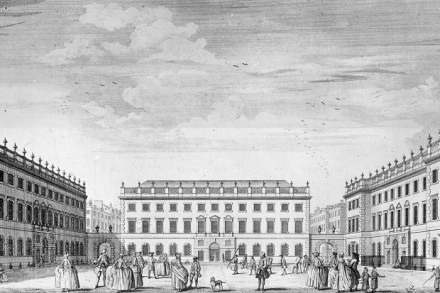
Everybody wants to support cancer charities, don't they? Take Maggie’s Trust, which ‘empowers people to live with, through and beyond cancer’. The Maggie’s approach is defined by their cleverly designed modern care centres, which welcome not just people battling against cancer but their families and those who care for them. Maggie’s now plans to build a new centre, only the second in London, at St Bartholomew’s Hospital in Smithfield. We desperately want to stop them. Before you start shouting at the screen, let us explain. We represent another group, one that was set up to protect the heritage of Barts, rather wordily calling ourselves ‘The Friends of The Great Hall and Archive of St Bartholomew’s Hospital’.

Portrait of the week | 21 November 2013

From our UK edition

Home The government announced proposals for the National Health Service, including a law to criminalise wilful neglect by doctors and nurses, and a scheme to post online the numbers of nurses on wards. By the end of October, 219 households had seen work completed to insulate their houses under the government’s Green Deal, launched last January. Nick Boles, the planning minister, suggested that David Cameron, the Prime Minister, might like to revive the National Liberal Party, an organisation affiliated to the Conservative party from 1947 to 1968. The Foreign Office summoned the Spanish ambassador after a Spanish ship entered waters off Gibraltar and undertook surveying activity for 20 hours.

After Mid-Staffs, the NHS needs whistleblowers – and whistleblowers need protection from the public

From our UK edition

It is impossible, I would have thought, to have heard Debbie Hazledine’s account on the Today programme of her late mother’s mistreatment at Mid Staffs Hospital and not to have thought ill of the hospital in question. An institution in which such callousness thrived for so long must have few friends left, you might imagine. And yet the strangest thing about the Mid Staffs scandal is the defensive feeling it has inspired. The ‘Save Mid Staffs’ campaign has been vocal at points, while Julie Bailey, the Mid Staffs whistleblower, appears to have been persecuted. In front of this backdrop, a debate about what should happen to wards in failing hospitals has morphed into a full-on slanging match about the future of the NHS.

The return of the family doctor?

From our UK edition

Ministers have described the deal on GP contracts, negotiated by the government and the British Medical Association (BMA), as a return to the days when GPs were family doctors. Certainly, it is a step in that direction. The contract, which will come into force next April, revives the personal link between doctor and patients aged 75 or over, and makes GPs responsible for out of hours care.

Portrait of the week | 14 November 2013

From our UK edition

Home EDF Energy said it would put up prices by 3.9 per cent. BT Sport spent £897 million on the rights to show Champions League football for three years, provoking a 10 per cent fall in BSkyB shares. The rate of inflation fell from 2.7 per cent to 2.2, as measured by the consumer prices index; as measured by the retail prices index, it fell from 3.2 per cent to 2.6 per cent. Unemployment fell by 48,000 to 2.47 million. Barratts, with 75 shoe shops, went into administration. Flybe, the Exeter-based airline, announced plans to cut 500 jobs. Plans were published for an airport on an artificial island off Sheppey in the Thames Estuary, to be called Britannia airport.

Sir Bruce Keogh denies that he is proposing two tier A&E

From our UK edition

Sir Bruce Keogh’s anticipated review into accident and emergency has been published today to a chorus of praise and boos. The Mail describes it as a ‘sticking plaster’. The Independent is cautious. The Guardian is critical. And the Telegraph and the Sun are more positive. Sir Bruce Keogh gave a masterly performance on the Today programme, which may go some way to calming fears in the press. He said that the current system, which was designed in the 70s for the 70s, is unsustainable. At the root of his analysis is the belief that the present system is inefficient because patients have to go to the NHS to receive attention, rather than the NHS reaching out to patients. So, in short, emergency care has to become more flexible and mobile.

David Cameron prepares for winter of discontent in A&E

From our UK edition

There are two important NHS stories in the papers today. First, the Times reports (£) that A&E departments are facing severe pressures because of historic staff shortages. The paper notes: ‘Half of all senior doctor posts go unfilled at accident and emergency departments, putting unsustainable pressure on life-or-death care. The College of Emergency Medicine (CEM) says that 383 of the 699 specialist registrar posts in A&E have been left vacant over the past three years, stretching emergency ward doctors beyond capacity and driving up waiting times. The shortfall in senior doctors deprives A&E departments of the ability to see 766,000 people each year, since the CEM points out that each registrar would have seen about 2,000 patients.

Why Cameron’s NHS lines didn’t quite work at PMQs today

From our UK edition

Though the NHS made a welcome change from endless bickering about energy bills at today's PMQs, the exchanges were just as unedifying. There is very little gain in the sort of fact war that David Cameron and Ed Miliband tried to indulge in, as there is no killer fact that can silence an opponent on the NHS. Instead, the exchanges descended very quickly into 'let me give the right honourable gentleman the facts about the NHS under this government', 'we have a Prime Minister too clueless to know the facts' and 'once again, the right honourable gentleman is just wrong on the facts'. Each man used his own 'simple facts' that he claimed either showed the NHS was safe in the Tories' hands or that it was being killed by the Tories.

Another rotten culture, another political risk on the NHS

From our UK edition

The allegations of a cover-up at Colchester General Hospital suggest something rotten in a culture, once again. The police have been called in by the Care Quality Commission to investigate claims that documents about patients' care were falsified and that managers bullied staff into doing this so that cancer care at CGH could meet its targets. Bernard Jenkin, the local MP, placed great emphasis in his interview on Today on the problems with culture in the NHS, which Health Secretary Jeremy Hunt is trying to resolve with a series of reforms to NHS leadership. But there will inevitably be a row about the role of targets in this scandal as well, given the allegations centre around falsified documents to give the impression CGH cancer care was meeting its targets.

The next bitter battle over the NHS is looming

From our UK edition

It's been a while since we had a nice big fat NHS row, but those who enjoy watching Andy Burnham and Jeremy Hunt fight over the 'party of the NHS' crown can rest assured that there's a really bitter one coming up this autumn. NHS England has spent the past few months consulting on a change to the way clinical commissioning groups are funded that could end the current arrangement where more money per capita is spent on patients in deprived areas. The formula currently being considered would make the number of elderly people in an area a more important factor in the size of the grant that each CCG receives. You can probably already guess how this will play out in the political arena, but firstly, here's the argument behind changing the formula.

I got a call from Jeremy Hunt about health tourism — but he still doesn’t get it

From our UK edition

On Monday morning, Jeremy Hunt’s diary secretary rang me to arrange a time for me to speak to the Secretary of State over the telephone. I had already received an email from his special adviser the previous week, saying, ‘The two points which the independent research make clear are central to what you’ve been saying for a long time; namely that health tourism is a huge problem with a substantial cost to the NHS and the current system is an unfair burden on frontline staff.’ When Jeremy rang, he was charming, full of praise, and eager to tackle the issue of health tourism — the exploitation of the NHS by ineligible, non-tax contributing patients. Yet for all the Health Secretary’s good intentions, I fear his department is failing to grasp the nettle.

The View from 22 — tomorrow’s news today

From our UK edition

The Daily Mail appear to be avid readers of The Spectator but we're pleased that they now follow our weekly podcast, the View from 22, just as closely. It yesterday ran a story based on the comments of one of our podcast guests, Professor J Meirion Thomas, saying that £200 NHS levy on foreigners 'will attract more health tourists': Top cancer surgeon claims move would be a 'disaster'. What the Mail had to say about Thomas' take on Jeremy Hunt's efforts to tackle health tourism is powerful stuff: 'Professor Thomas, a cancer specialist, was one of the first whistleblowers to expose the financial impact of non-British residents seeking free healthcare on the NHS. 'He said: ‘It [the levy] is the worst thing they could do.

Simon Stevens could turn out to be Jeremy Hunt’s Mark Carney

From our UK edition

Remember the name Simon Stevens. He’s is the new chief executive of the NHS in England and is going to be absolutely crucial to whether the government can make its health reforms work. Stevens is a former Labour special adviser. However, he comes from the reformist wing of the party. He used to advise Alan Milburn and Tony Blair on the NHS. But a profile in today’s Guardian reveals just how impressively radical Stevens is. Denis Campbell writes that Stevens favours local pay in the NHS. He is also, Campbell says, keen on the idea of independent GPs competing with existing GP surgeries for patients, in the hope that this competition would drive up standards.