Nhs

What Germans are worst at

From our UK edition

What Germans do worst Some things Germans aren't very good at: — Making reliable car engines. According to a survey by Warranty Direct last year, Audi came bottom, BMW seventh from bottom and Volkswagen ninth from bottom out of 36 manufacturers for engine failures. — Making love. According to a spurious website survey of 15,000 women in 2009, German men were the world's worst lovers, the main complaint being that they were 'smelly'. (Englishmen were second worst.) — Cricket. But they are not the worst. Germany lies between Ghana and Japan in division 8 of the ICC World Cricket League. This makes them the 42nd best team in the world, above France.

The NHS ‘wellbeing’ monkey deserves to die

From our UK edition

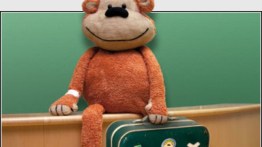
My young daughter has a furry beaver — lifelike in all but its eyes, which to me seem cold and dead. I bought it for her in the United States and I think it has pride of place within her impressive menagerie of anthropomorphised cuddly toy animals. There are also countless wolves which we have to hide when her grandmother comes to stay, in case she puts them in a sack and burns them, or just throws them in the garage. Grandma is an evangelical Christian of a somewhat uncompromising brand and believes that wolves, living or inanimate, are agents of Beelzebub. As, of course, are bats.

The ambulance service is in a state of emergency

From our UK edition

Tom leant back against the bathroom wall, his face streaked with blood from the nosebleed, eyes half shut like an owl. ‘I’m passing out,’ he said. Then his legs gave way and he slumped to the floor. ‘Tom? Tom?’ I shook him but — nothing, no response. His hands began an awful looping tremor. Five minutes before, I hadn’t been much worried, a little bossy even, enjoying playing nursemaid to a friend. It’s only a nosebleed T. Now. Don’t tip your head back, you’ll choke. Lean forward over the sink, pinch your nose. Like this. Here. As Tom lost consciousness, so my reality changed. This was a different world — one in which T might be having a fit, or dying. My thoughts moved at different speeds.

Farewell, Speccie

From our UK edition

So we are all going to have to pay for fatties to have stomach bands and bypasses, are we? It may be ‘cost-effective’ to treat the obese before they go on to develop diabetes and other medical problems, but I’m not sure how much sympathy they will get when we already hear about cancer patients having operations delayed and drugs withheld because of stretched NHS budgets. According to the OECD, Hungarians are the most obese people in the EU, followed by Brits. Rather surprisingly, Romanians are the least fat. Surprising, because on a recent holiday to the island of Lefkada, there were a huge number of Bulgarians, Serbs and Romanians. And, yes, most of them were huge.

Mental health and benefits: ministers get the wrong end of the stick

From our UK edition

Every so often when ministers are considering a policy, they send a little kite up to see how it's received. Sometimes it gets hit by a lightning bolt of fury from a party's target voters, and is never heard of again. Sometimes it flutters about and no-one plays a blind bit of notice. And sometimes the kite gets rapturous applause. There seems to be a mixed response to the kite flown today that people with anxiety and depression could be forced to have a talking therapy such as cognitive behavioural therapy or risk losing their benefits. On the one hand, it's welcome that ministers want to help people with mental health conditions that can be managed so that someone can go back to work. Unemployment is hardly conducive to good self-esteem and strong mental health.

How Wales was betrayed by its (Labour) government.

From our UK edition

In England, success in life is bound up with where you went to school. In Wales, where I come from, the standard of education can be so miserable that you’d do better to get expelled. I did. I’d just spent three days in ‘isolation’ in my south Wales comprehensive — banished to a cubicle with a CCTV camera — for misbehaviour. As I left the grounds, I lit a cigarette. A teacher accosted me. I got lippy and she smacked me across the face. I was expelled soon after. Thank God. If you want good schooling in Wales, you’d be best to go private. If you’re taken ill, make sure you’re treated in the English NHS, not the Welsh version. If you want a private-sector job, best leave Wales. You get the picture.

We are all numbers in Labour’s computer now

From our UK edition

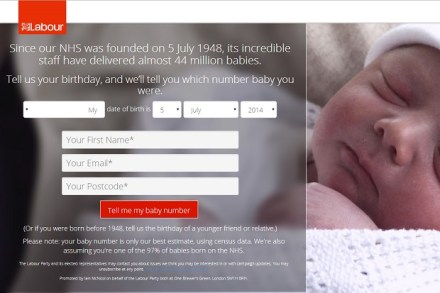
In 1975 Margaret Thatcher said in her 'Free Society' speech to the Conservative Party Conference: ‘Some Socialists seem to believe that people should be numbers in a state computer. We believe they should be individuals. We are all unequal. No one, thank heavens, is like anyone else, however much the Socialists may pretend otherwise. We believe that everyone has the right to be unequal but to us every human being is equally important.’ Mr S could not help but recall these fine words after an email arrived from the Labour Party asking him to enter chunks of personal data into its website, such as his postcode and date of birth, in order to find out his ‘number’. Since Labour created the NHS 66 years ago, croons the propaganda, it’s delivered 44m babies.

Ed Miliband needs to mix things up to avoid Cameron’s PMQs attacks

From our UK edition

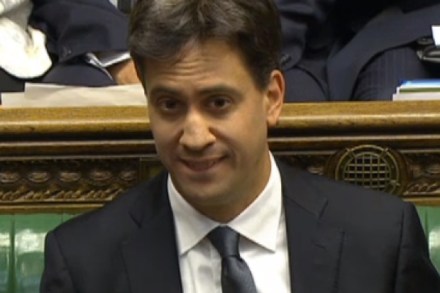
Ed Miliband's first few questions to David Cameron today were about the various inquiries into child abuse. Miliband wasn't interested in creating controversy: he didn't ask about whether Lady Butler-Sloss was the right person to run the inquiry given that her late brother was Attorney General when Geoffrey Dickens handed his file to the Home Secretary. But then Miliband turned to the NHS and the atmosphere in the House flipped. listen to ‘PMQs: Cameron and Miliband’ on Audioboo Cameron defiantly defended his use of statistics from last week. But it was once Miliband had asked his last question that Cameron went into full attack mode.

The problem with the NHS? The soft bigotry of low expectations.

From our UK edition

In many ways I've endured enjoyed a very fortunate life. Not least because, perhaps unusually, I've had almost no dealings with the National Health Service. I mean, apart from a couple of vaccinations before trips to heathen foreign parts I've hardly seen a doctor since I left school. This surprises me as much as it may surprise you. So I'm never quite sure what passes for 'good' service on the NHS. What is normal in an organisation of its size, diversity and complexity? And how, in any case, do we measure 'success'? I have a sneaking suspicion that we often do so by rebadging failure as normal. As I type this, you see, my mother is confined to her bed, unable to walk on account of, quite literally, crippling pain in her back and leg.

PMQs sketch: Miliband’s integer attacks dissolve into a whirl-pool of squiggles

From our UK edition

It was damn close. And it scored top marks for effort. Miliband’s plan today was to prove that Cameron’s NHS policy is a disaster. And to prove it with Cameron’s own admissions. Or omissions. ‘It’s four years since his top-down re-organisation of the NHS,’ began Miliband in that quiet, meticulous manner that always foretells a forensic ambush. ‘Have the numbers waiting for cancer treatment got better or worse?’ Cameron instinctively dodged the question. Miliband moved on to A&E waiting times. Cameron shifted and ducked again. Miliband asked about numbers waiting over four hours on a trolley. Cameron ran for cover.

PMQs: Cameron and Miliband revisit their youthful indiscretions

From our UK edition

Today's PMQs will not live long in the memory. Ed Miliband led on the NHS and the debate quickly turned into a statistical stalemate. Indeed, at the end Andy Burnham tried via a point of order—with little success—to get Cameron to admit that one of his numbers was wrong. listen to ‘PMQs: ‘Cheer up folks, it's only Wednesday!’’ on Audioboo Miliband was in a confident mood at the despatch box because he knew he was on strong ground on the NHS. But in a week where Labour is trying to burnish its economic credentials, it is telling that Miliband didn't choose to go on the economy.

Five things you need to know about the NHS’s Jimmy Savile report

From our UK edition

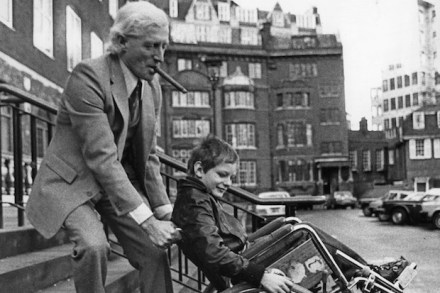
The NHS has released the findings of its investigations into Jimmy Savile’s relationship with several hospitals and the accusations of abuse. Leeds General Infirmary has been the location of the most shocking incidents, which occurred from 1962 to 2009. Victims have reported abuses ranging from inappropriate comments to sexual assault and rape. Here are the five things you need to know about the latest Savile revelations: 1. Savile ‘interfered with the bodies of deceased patients’ Long-circulated rumours about Savile and necrophilia appear to have some credence, according to the Leeds report. It appears his unfettered access to the Leeds General Infirmary led to an interest in the mortuary which  'was not within accepted boundaries’.

‘A great experience during my colposcopy’ – inside the NHS’s new Accountability Hub

From our UK edition

Sunlight is said to be the best of disinfectants. Jeremy Hunt has taken up this mantra with the launch of the NHS’s Accountability Hub today. As well as offering information about your nearest GP or hospital, the NHS Choices website is now full of patient safety indicators which, according to the Department of Health, offer an ‘unprecedented amount of patient safety information to allow patients, regulators and staff to see safety performance across a range of indicators.’ All sounds like a good idea, so I had a poke around to see how much information was available on two hospitals I’ve had the pleasure of visiting — one in London, one in Gateshead.

Mental health: Government’s commitment doesn’t match its rhetoric

From our UK edition

Professor Sue Bailey, the outgoing President of the Royal College of Psychiatry, has described mental health services in England as a ‘car crash’. Although the language may be alarmist Professor Bailey’s concerns deserve to be taken seriously by all those who care about mental health provision in our country. The truth is that while politicians are much more comfortable talking about mental health than ever before, too often the ambitious rhetoric is ahead of the reality. Of most concern is the decision by NHS England, set against a background of pledged ‘parity of esteem’, to set the price deflator for mental health and community trusts at 1.8 per cent compared to 1.5 per cent for acute hospital trusts.

The big fat lie about cholesterol

From our UK edition

Though I’m not generally big on banning stuff, there’s one substance I would prohibit without a moment’s hesitation — probably on pain of death if that’s what it took because clearly, where vanquishing monstrous evil is concerned, no sanction is too extreme. I’m talking, of course, about the devil’s semen: semi-skimmed milk. And about its unholier cousin — aka the devil’s urine — skimmed milk. Seriously, almost nothing can conspire to ruin my day more effectively than when I order up a flat white and the barista doesn’t know that only weird faddists with no taste take their coffee made with anything but full fat. Apart from maybe when someone tries to add some skimmed or semi-skimmed to my tea.

DNR notices: A matter of life and death

From our UK edition

It was Janet Tracey’s family who brought about a change in the law regarding Do Not Resuscitate notices on patient’s notes in hospital. Thanks to their efforts, hospitals will now have to consult patients and their families before instructing medics that they shouldn’t go out of their way to provide life-saving treatment. Mrs Tracey had made perfectly clear that she wanted to be in on her own case; didn’t matter – she got a DNR notice anyway. I’m not sure whether I was in quite this situation a couple of years ago when my mother was in St Mary’s Paddington after a fall. She succumbed to an infection which she may have contracted before coming to the hospital: don’t know.

How the NHS fails new mothers on breast-feeding

From our UK edition

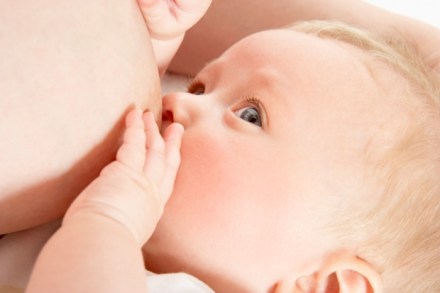
There is really no question about whether it is best for babies to be breast-fed, at least for the first few weeks of life. Plenty of research from around the world has proved conclusively that breast-fed babies, who receive all the mother’s antibodies from the colostrum (produced during the first few days) and then the milk, have a better resistance to infections and viruses, and get them more mildly if they do succumb. They have fewer allergies, have a 20 per cent lower risk than formula-fed babies of dying between the ages of 28 days and one year, and may be protected against some diseases that strike later.

Spectator letters: Ken Loach defended, and the music of Pepys

From our UK edition

We need religion Sir: Roger Scruton (‘Sacred hunger’, 31 May) describes a reason, dare I say a ‘purpose’, for religion in society. Evolutionary biologists such as the evangelical atheist Richard Dawkins should accept the concept of evolution in the social behaviour of Homo sapiens. Archaeological and anthropological evidence suggest that some form of religion played a part in the earliest of primitive societies, going back tens of thousands of years. If religion is so toxic to society, how could it have developed into so many complex and varied forms around the world unless it had powerful social ‘survival’ value? Indeed in countries where religion was outlawed, such as the USSR and China, it made the need for it even stronger.

Nigel Farage is becoming a moderniser

From our UK edition

[audioplayer src="http://traffic.libsyn.com/spectator/TheViewFrom22_5_June_2014_v4.mp3" title="James Delingpole and Michael Heaver debate whether Ukip stands for anything" startat=1222] Listen [/audioplayer]There are many words that you might associate with Nigel Farage, but moderniser probably isn’t one. Yet the Ukip leader is embarking on the process of modernising his party. He has concluded that it cannot achieve its aims with its current level of support. So he is repositioning it in the hope of winning new converts even at the risk of alienating traditional supporters. If this sounds similar to what David Cameron did after winning the Tory leadership in 2005, that’s because it is.

Why Weight Watchers doesn’t deserve taxpayers’ money

From our UK edition

Porky, flabby, lardy? Obese — and morbidly so? Yup. That’s us. We knew already that two out of three of us weigh more than is healthy, and last week the scales of shame revealed further cause for dismay: Britain has more obese girls under 20 than anywhere else in the West. Something, as the hand-wringers say, must be done. And so the scene was set for the National Institute of Health and Clinical Excellence (Nice) to bring out some advice. All of the guilty, they say — yes, two thirds of the population — should be sent to classes like Weight Watchers or Slimming World, with the tab of some £50 a head picked up by the NHS. Gob-smacked? Somebody should be. Even if it worked, we couldn’t afford it; and such a scheme would not and could not work.