New york

Stop Andrew Cuomo’s war on restaurants

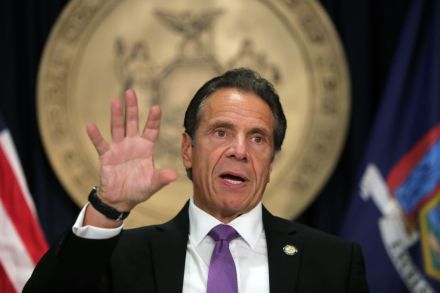
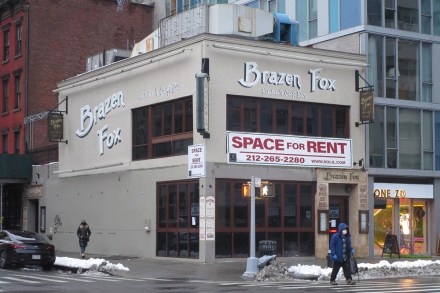
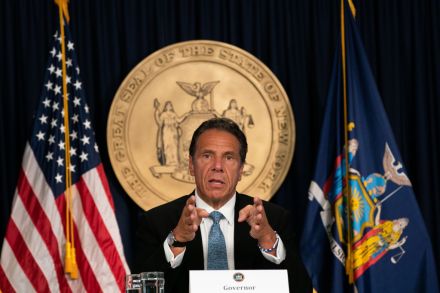
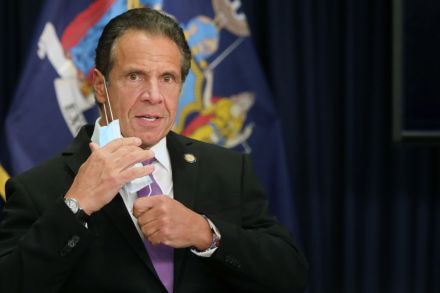
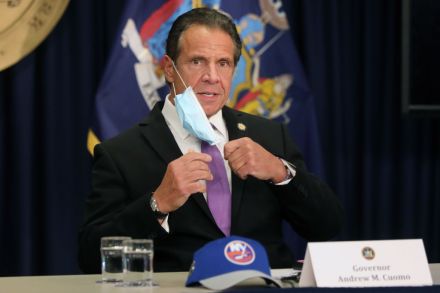
New York Cuomo to New York City restaurants: drop dead. This is the unmistakable message from Gov. Andrew Cuomo to the cornerstone dining industry in America’s premier city. Thankfully, Cuomo’s veritable kiss of death for these establishments is earning him nothing but rotten tomatoes. Cuomo is being fricasseed like a cartoon rabbit for his policy on Gotham’s eateries. New Yorkers across the political spectrum are baffled and revolted at his treatment of these signature local enterprises. Cuomo deserves every spoon of hot gravy ladled down his back. The Emperor of the Empire State has unleashed a policy that makes zero scientific, meteorological, or economic sense. Aside from that, it couldn’t be more brilliant.

new york city restaurants

The resurgence of the New York Republican

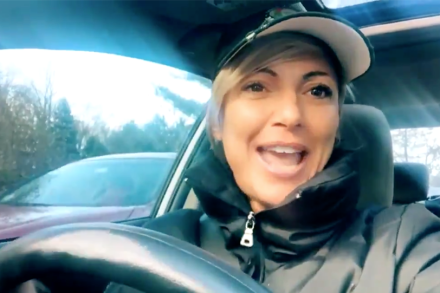
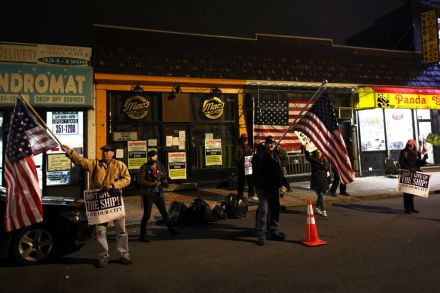
Have you met Tina? You may have seen her this month leading a charge outside Mac’s Public House on Staten Island, protesting a second wave of economic terrorism against small business owners enacted by Mayor Bill de Blasio and Gov. Andrew Cuomo.The fiery, bombastic blond with the thick New York accent and colorful vocabulary has shown up at anti-lockdown events across the city, broadcasting footage to her 206,000 Twitter followers at a time when everyday New York Republicans are having a bit of time in the spotlight. https://twitter.com/RealTina40/status/1335652275532992512 A couple of years ago, the city cheered Vickie Paladino, a mom from Queens who was driving home one day and saw de Blasio surrounded by reporters on the street.

new york republican

Following Cuomo’s numbers

‘Follow the numbers,’ Gov. Andrew Cuomo likes to say, as if the numbers made a run for it and we all gave chase. ‘Follow the numbers!’ as if data can also make decisions. Follow the numbers. But what numbers? On October 6, during one of his regular scraps with Mayor Bill de Blasio in which the mayor wanted to implement shutdowns by zip codes and the governor wanted to use a color-coding system, Cuomo made the following remark about why he was shutting down schools in areas with elevated COVID positive test rates: ‘The schools are important because you will very often see the schools be a place of transmission.’ Gov. Cuomo never lacks for confidence so this comment was uttered with his usual certainty. You will very often see schools be a place of transmission.

numbers

Every business is essential

Governors across the country are deploying their unilateral power to institute draconian measures which close small businesses, mostly those in the service industry. They use outright Orwellian language to justify doing so, all in the name of the greater good of halting COVID-19 cases. But it’s not working anymore. Total cases are higher now than they’ve been since the spring and people are losing their livelihoods. No federal relief has come and there is a nationwide feeling that the dam is about to break. When people were told they had ‘15 days to slow the spread’, they listened. While they obliged, they watched crowds gather in protest of their personal causes and politicians ignore their own rules.

business

Finally America is realizing that Andrew Cuomo is a putz

In a sane world, Andrew Cuomo would be America's least popular politician, a welcome target for a primary campaign or a robust Republican challenge in 2022. Yet the anti-Cuomo chorus has included precious few voices this year. The New York Post has been unrelenting in its criticism, as have conservatives in publications such as this one. ProPublica and the Associated Press rigorously reported out the nursing home debacle. But Cuomo's performance has been largely been lauded by liberal New Yorkers and pundits in the mainstream media. In July the New York governor was the 'politician of the moment', according to the New York Times.

cuomo

Sorry Cuomo, we’re doing Thanksgiving

New York governor Andrew Cuomo took the last can of Who-hash by announcing a ban on both indoor and outdoor private gatherings larger than 10 people. It is just the latest flash of insanity from our nation's leaders in trying to deal with the COVID-19 pandemic, but it provoked an even larger backlash than usual because it attacks two sacred American institutions: Thanksgiving and the family. Cuomo's order is insulting to our intelligence and is disgustingly authoritarian. COVID science suggests gathering outdoors is relatively safe (it's why so many states have offered restaurants money to winterize their patio dining), yet Cuomo tells families they cannot do it for Turkey Day. What if you live in a rural area and have a large backyard that makes social distancing possible?

thanksgiving

The age of the informant

Parts of the country are talking openly about lockdowns again. The dangerous economic, mental health, educational and developmental implications of shutdowns have been widely debated. One that has not been sufficiently discussed is the social division and distrust bred by draconian rules that pit neighbor against neighbor. We all have stories about being shamed, yelled at or reported on for not wearing a mask outdoors, not socially distancing enough, or for gathering in our yards. Who are these finger-pointers and what does it mean when society produces people who appoint themselves watchdogs over everyone else? About three months into the lockdown in New York, I went to my local tailor.

lockdown snitches informant

Culture and anarchy

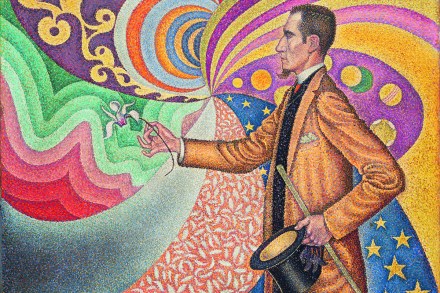
Paul Signac’s portrait of Félix Fénéon is a striking and historically important painting. But is it a good one? Its subject didn’t think so. Signac profiles Fénéon against a swirl of complementary colors and kaleidoscopic shapes, as if anticipating an acid-trip scene from a Roger Corman movie. This radioactively abstract background was bold stuff for Paris in 1890, when the picture was made, but contemporary critics disapproved, one finding the work ‘cold and dry’, another calling it ‘neither decorative nor comprehensible in terms of feeling’. Fénéon himself was similarly vexed by the final result, though he held onto the portrait throughout his life out of loyalty to his painter friend.

Féneon anarchy

Why New Yorkers are fleeing the city in droves

From our UK edition

New York Back when people used to read newspapers, they called it a ‘human interest’ story. Now it appears as just another statistic. The know-nothings on social media, who express utter drivel on a daily basis, will have pretty much ignored it, but a dreaded pro-Biden sheet actually published the full story. A young Japanese man came over to the Bagel from Tokyo to make it as a jazz pianist, and that he did. He started a trio of his own and toured with several bands until the fateful night of 27 September, when he rode the New York subway after a video shoot. Tadataka Unno is now 40, and a new father, but he most likely will never play an instrument as a professional again.

I’m now considered a freak in New York

From our UK edition

New York It’s nice to finally be in the Bagel, a place where the cows have two legs and no bells around their necks. I walk daily around the park two blocks from my house and stick to the Upper East Side in general. The park is by far the best part of Manhattan, and it’s better than ever because of you-know-what. Yes, the virus has chased away the tourists, and without tourists the rickshaws that had turned the park into a free-for-all have all but disappeared. Central Park is the only part of the city that Bloomberg’s three-term despotic reign didn’t change for the worse. Bloomberg was a so-so mayor but a lucky one.

Andrew Cuomo’s revisionist history

‘I normally don't turn off my cellphone when I sleep,’ writes Andrew Cuomo in his new book American Crisis: Leadership Lessons From the COVID-19 Pandemic, ‘because the work of being governor is literally 24 hours a day, and the phone pings all night long.’ Wait a minute. Is he joking? If Cuomo is so busy, how on Earth has he found the time to write a book in a matter of months? I can't find the time to write a book. How in Hell can he? A few pages later, Cuomo is at it again:‘I don’t have what you call a balanced life either. I work all the time. Enjoyment for me is when I’m with my daughters or my family, and in the summer I spend time on the water with my brother and friends, but usually I just work.

andrew cuomo

New York is a paradise for criminals

From our UK edition

New York New York, New York, once a wonderful town/ The people are crap and the mayor’s a clown/ The only safe space is a hole in the ground… I could go on, but why be so negative? Arriving from bucolic Switzerland, Newark, one of America’s ‘murder capitals’, feels like Katanga circa 1960. If this isn’t a third-world airport, then I don’t know what is. My driver tells me I’m lucky that the virus is keeping people away otherwise it would take at least three hours just to get through customs. None of the electric signs that would tell us which terminal to collect our luggage from is working, so some very old people have to hike a mile or two to search for them. The airport itself looks grubby, shabby and worn.

Still painting after all these years

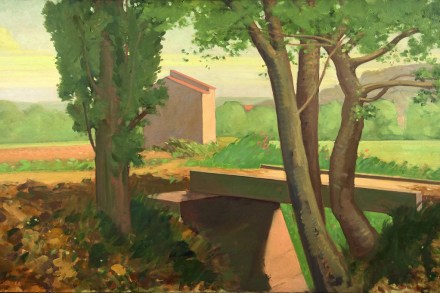
On March 14, 1847, Eugène Delacroix made a trip to the studio of his colleague and countryman Camille Corot. Later that day, Delacroix recorded in his journal a feeling of newfound appreciation for the painter’s landscapes: ‘Corot is a true artist. One has to see a painter in his own place to get an idea of his worth.’ The Corot paintings that Delacroix had recently viewed at the Paris Salon seemed to hold new meaning after his seeing the site of their creation. As to exactly what had changed, or what he saw that changed it, Delacroix does not — perhaps could not — tell us. Few modern painters can claim as close a kinship to the spirit of Corot as Paul Resika.

resika
dickie

Dickie and me

New York Hullo, readers. Many thanks for the kind notes and well-wishes. I’ve fully recovered from my bout with the plague and am only a little worse for wear. I’m desperate for a bit more time on the water, but I’m convinced my palate hasn’t yet recovered. I’ve been reduced to taking brandy in the evenings. Still, though far from splendid, isolation hasn’t been all bad. I’ve spent a great deal of time on the phone with my brother Richard. We’re not naturally expressive people, and I’m more than a bit embarrassed about the state of my marriage. But our respective sheltering-in-place, his in Boston and mine in New York, has turned us into talkers. Like the rest of the family, I’ve always called him Dickie.

The perception of doors

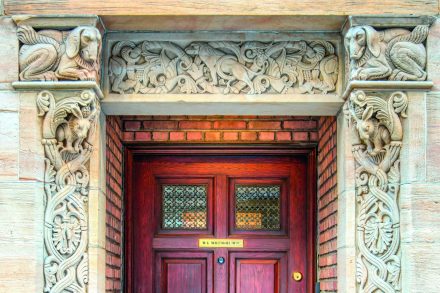
The architectural historian Andrew Alpern has for decades done the dirty work when it comes to pre-war New York apartments. Others have presented glossy coffee-table books full of newly commissioned professional photographs. Alpern has focused on the practical details of apartment design, especially floor plans, which tell us so much about how people actually live in their apartments, or at least were originally meant to. His Apartments for the Affluent (1975), Historic Manhattan Apartment Houses (1996) and New York Apartment Houses of Rosario Candela and James Carpenter (2002) are essential compendia; anyone with an interest in New York residential architecture, especially of the magnificent variety, must have them. The more industrious uptown real estate agents also find them useful.

doors

New York has turned ugly

New York City In grim times such as these, New Yorkers tend to flatter themselves for possessing special reserves of moxie, an outdated word that connotes courage, brio and a kind of raffish know-how. Think of Humphrey Bogart as Rick, a nightclub owner in the film Casablanca, when he jousts with Major Strasser, the German bully who thinks he can outsmart and intimidate him. Pressed to reveal his background and political beliefs, the poker-faced Rick replies: ‘I was born in New York City, if that’ll help you any.’ Asked if he could imagine the Germans occupying New York, Rick retorts, with a little extra moxie, ‘There are certain sections of New York, Major, that I would not advise you to try to invade.

new york

Creeping critical race theory in Manhattan’s private schools

Cockburn doesn’t have any school-aged children — that he’s aware of, anyway. But a number of his close associates do — and they’ve been complaining a lot recently about schooling. Here’s a brief note from a New York-based mother Cockburn often gets cocktails with, who has a grievance she’d like to air… The ‘closing of the American mind’ is a lament usually reserved for the indoctrination of college students, but it’s now starting far younger. By the time our American students arrive on campus, much of the damage has already been done. K-12 education has been infected with critical race theory, tenets of the 1619 Project, Black Lives Matter doctrine and other debunked, destructive ‘religious’ ideologies.

private schools

Why I’m moving to England

From our UK edition

Gstaad It is not exactly a stop all the clocks occasion, let alone cut off the telephone, but I’ve finally come to a decision. My looking-at-cows time is over. I am going to leave good old Helvetia and find somewhere nice in the green and ‘unpleasant land’ I read about in Charles Moore’s Notes last week. (Corinne Fowler, what a halfwit; now, according to her, the British countryside is racist.) Easier said than done. The reason I want to move is that I’ve had it. For the first time in my life I’m bored with my surroundings. Sixty-two years is a long time, but then Gstaad isn’t the charming little alpine village it once was.

Liberty and death: Jacob Lawrence’s struggle for freedom

Few artworks could be more responsive to the current upheaval than Jacob Lawrence’s 1954-56 series ‘Struggle...From the History of the American People’. Painted during the dawn of the Civil Rights movement, the cycle of 30 panels tells a history of the American Founding through punchy modernist vignettes, engaging with timely and timeless topics such as brutality, race, memory, justice and our shared national heritage. At the Metropolitan Museum of Art, 24 of the original panels have been reunited for the most complete exhibition of the series since its original showing more than six decades ago. The exhibition will travel to Birmingham, Seattle and Washington, DC from New York.

jacob lawrence

As New Yorkers flee, the suburbs are under siege

From our UK edition

New York ‘Land of the Flee’, screamed the New York Post front page this week. Moving vans are lining up in Manhattan. Residents have had enough. It had been ‘another bloody weekend in Gotham’ with 21 people shot, and a rising wave of non-gun violence. At 11 a.m. on Saturday, a man leapt on top of a young woman on a subway platform in midtown and began grinding against her until a group of bystanders forced him to stop. You can watch the whole thing on video and decide never to take public transport again. Living in New York has always felt like walking on a very narrow beam. The chasms on either side are the thrill of it. They create extremes of excitement, anxiety, achievement and despair. But many are now deciding: to hell with the city that never sleeps.