New york times

Why John Bolton won’t win his war on Trump

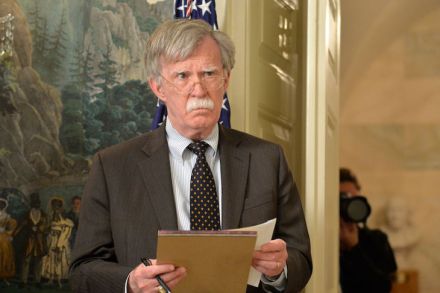
The first sentence of the New York Times report on John Bolton’s tell-all memoir about his time in the Trump White House contains a bombshell — but not the one that everybody thinks. The real revelation is that it suggests that President Trump is innocent of the charges on which Democrats are trying to impeach him. Maggie Haberman and Michael Schmidt reported on Sunday that Trump 'wanted to continue freezing $391 million in security assistance to Ukraine until officials there helped with investigations into Democrats including the Bidens, according to an unpublished manuscript by the former adviser, John R. Bolton.

bolton

A hostile media helps Donald Trump

The news media of the late 1700s and early 1800s consisted almost entirely of partisan political operations. Ron Chernow, the biographer of Washington and Hamilton, describes the newspapers of that era as 'avowedly partisan’, with 'no pretense of objectivity'. It was, Chernow, writes, a 'golden age for wielding words as rapier-sharp political weapons’. Some two centuries later, we are returning to a media landscape in which the majority of sources are 'avowedly partisan' with little pretense of the objectivity that only a few decades ago was a hallmark of American journalism.

media

Why did the New York Times minimize the Bosnian genocide?

‘Why Did I Let a Convicted War Criminal Practice Energy Healing on Me?’ wonders Jessica Stern in a New York Times excerpt from her forthcoming book. The war criminal in question is Radovan Karadžić, a Bosnian Serb leader responsible for the energetic orchestration and execution of genocide against Bosnian Muslims during the 1990s war. His most notorious crime against humanity includes the murder of over 8,000 Muslim men and boys over a few days in Srebrenica. The book in question is My War Criminal: Personal Encounters with an Architect of Genocide, a memoir of Stern’s interviews with Karadžić.

bosnian

In Apprentice-Style Special, New York Times Endorses Trump for President

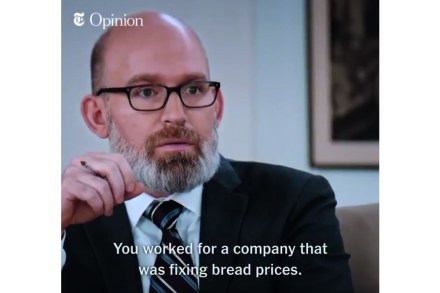
In the New York Times’s latest self-centered Hulu special, the op-ed board invited Democratic primary candidate after candidate into their lavish board room, peered over their elitist glasses at them and demanded why each of them might be worthy of their precious ink. One by one, the candidates willingly prostrated themselves before the court. At the end of this hour-long special, the Times revealed its endorsement. The suspense is over. The New York Times has endorsed Donald Trump for president. That television special, like the Times’s docu-series The Weekly, lets the mask slip.

times

No, Megxit doesn’t mean Britain is racist

Here we go again. Just when it seemed that the rancor might abate and wounds might start to heal, along comes another express train of controversy to divide Britain. Brexit has been replaced by Megxit (as the tabloids are calling it) following the bombshell announcement by the Duke and Duchess of Sussex that they want to ‘step back’ as senior members of the royal family while continuing to have their cakes and eat them — or, rather, ‘work to become financially independent.’ Suddenly, those who strive tirelessly to rid Britain of its monarchy altogether have been galvanized. So man those ramparts! Re-arm! Let the venom flow once more! Some on the left are even calling for a referendum on the matter.

megxit

The 1619 Project is the 2019 Project — and the 2020 Project

It is increasingly clear that the 1619 Project, foisted on the American public in August by the New York Times, was ill advised. Fatuous, tendentious and tedious, 1619 is more advocacy than history, and is intended mainly to stoke the woke and to keep race on the front burner in the upcoming 2020 elections. No close observer of the Times over the past few years would have expected otherwise, for in its domestic coverage it reads at times more like a Midtown edition of the Amsterdam News than a national newspaper of record. While still indispensable in some ways, its editorial slant and, indeed, news coverage have become unmoored.

1619 project hannah-jones

For some reason, Michael Bloomberg thinks he should be president

Who would you like to see better represented in the already-crowded Democratic primary? Septuagenarians? Centrists? Or billionaires? For those of you who answered 'all three', you may be in luck, as the New York Times reports that former New York mayor and current 17th richest person in the world Michael Bloomberg is set to file paperwork in Alabama designating himself a presidential candidate. Bloomberg has sat on the sidelines over the past few months. He has watched once-respected politicians address near-empty tents in New Hampshire and seen Tom Steyer splurge his own cash on TV and internet ads to distort the proportion of his popularity. It takes real guts to observe that and think 'I too would like to get 3 percent in a poll — how much of my money would you like?

michael bloomberg

What you can tell about a man from his choice of underwear

From our UK edition

New York It’s Indian summertime and the living is easy. There hasn’t been a cloud above the Bagel for two weeks and the temperature is perfect. But the noise of cement mixers and construction everywhere is unbearable, and there is gridlock while the world’s greatest freeloaders are in town for the annual UN assembly. Despite the great weather, the place feels joyless, the media full of dire warnings about safe spaces and racism. There’s something very wrong here. Pessimism rules an anxious, depressed and angry people. Well, I’d be depressed too if I took American media and its pundits seriously.

Dear journalism students…

Stacked up next to lessons on queering Shakespeare, feminist interpretive dance, and non-binary archery, studying journalism is only mildly less ridiculous than many courses offered by the academy today. Yet each time my alma mater’s increasingly woke newsletter arrives in the mail I’m stunned these programs still exist. I think, these poor students are being led so far astray, as I was, by studying journalism. Today, more than ever, it is harming, not helping, their future career. I came out of school in 2005, before iPhones, before Big Social Media, before journalism was completely dead, when reading the news on your computer was unpleasant and people mostly still bought print.

journalism students

Journalistic ethics 101 with Pogrebin and Kelly

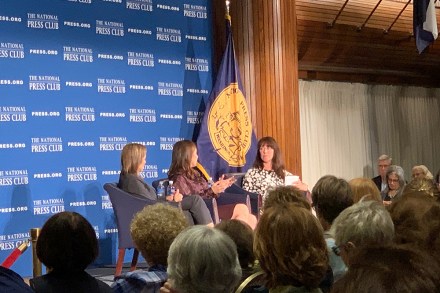
In Cockburn’s grubby corner of the journalism world, New York Times writers Robin Pogrebin and Kate Kelly are at the center of a serious controversy. To promote their new book, The Education of Brett Kavanaugh: An Investigation, the two journalists had an excerpt published in the Times featuring a new sexual assault allegation against Justice Kavanaugh. Unfortunately for Pogrebin and Kelly, the excerpt failed to mention that the alleged victim does not recall the assault. While the New York Times has been criticized for its journalistic malpractice, it seems only fair to hear about the new book from the authors themselves. On Wednesday night, Cockburn slinked into the prestigious National Press Club to see the two authors discuss their new book.

pogrebin kelly

A fresh assassination of Brett Kavanaugh’s character

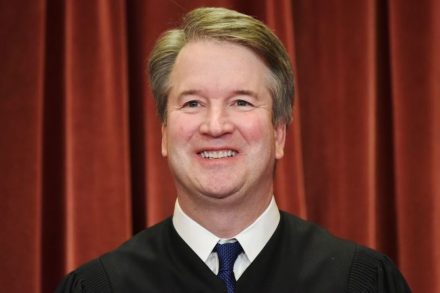
I guess that The New York Times didn’t get the memo. Brett Kavanaugh was confirmed as Associate Justice of the Supreme Court last fall. He is sitting there (officially, I mean) right now, as I write. Despite the most disgusting, ad hominem, evidence-free effort at character assassination of a Supreme Court nominee in history, the combined forces of The New York Times and other cesspool media organs like The New Yorker, bottom-feeding Senate Democrats, feminazis of various stripes, and other woke constituencies on the left, Kavanaugh made it.

brett kavanaugh

9/11 and the false sense of American security

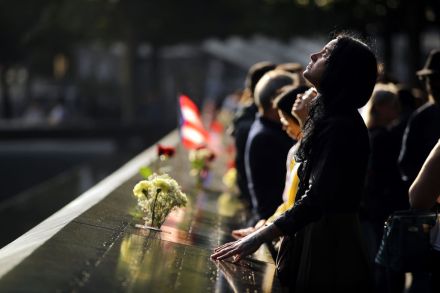
Eighteen years ago, I was only a child. My first indication that something bad had happened on September 11, 2001 was that a birthday party my whole class had been slated to attend was canceled. Instead of heading to a celebration, I waited with the rest of my classmates for our parents to come and take us home. Except my mother didn’t take me home. We went straight to the supermarket. I remember watching, mouth agape, as my mother piled what seemed like hundreds of boxes of spaghetti, cases of water, and canned goods into the wagon. None of us knew what would come next, and she wanted to be prepared. That commitment to preparation came from fear. A fear that was rational and justified, and which grew out of a realistic sense that the sands had shifted. We were at war.

9/11

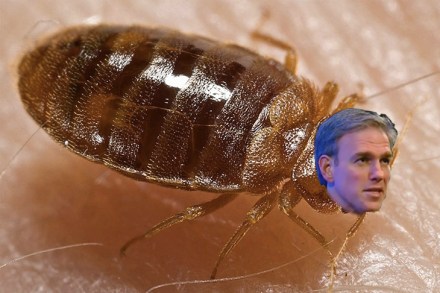
Bedbug Bret Stephens should stay on Twitter and quit the New York Times

Bedbugs are, according to the University of Kentucky, 'small, brownish, flattened insects that feed solely on the blood of animals.' The common bedbug has been known to bite 'warm-blooded animals, including dogs, cats, birds and rodents'. Now we can add 'professors who are mean to the bedbug on Twitter' to that list. An internal memo was circulated around the New York Times yesterday regarding a bed bug infestation. Upon the news breaking, an associate professor at George Washington University called Dave Karpf tweeted the following joke about NYT columnist Bret Stephens: https://twitter.com/davekarpf/status/1166094950024515584 Innocuous enough, right? WRONG. A few hours later, Karpf posted 'This afternoon, I tweeted a brief joke about a well-known NYT op-Ed columnist.

bret stephens

The NYT and the triumph of narrative journalism

The Mueller report did not bring down Donald Trump. The president will not be impeached before the 2020 election, and it is clear – in spite of the hopes of the good men, women and nonbinary soldiers of the Resistance – that he is not a Russian superbot manufactured in a cutting-edge information warfare lab in the dark belly of the Kremlin. Trump is not the Manchurian president. An ominous question emerges for liberals: who is Donald Trump, if he is not Vladimir Putin’s dogsbody? What the hell are we going to do with him? Why is he still fouling up our government? The pack howls, but in the four years since Trump descended the golden escalator from the world of television entertainment to the world of political entertainment, they have yet to catch him.

dean baquet narrative

What woke journalists are calling ‘nonbinary fashion’ we used to just call ‘clothes’

When I was 13, I wore my dad’s clothes to school every day. Men’s overalls, stinky old t-shirts, a flannel shirt tied around my waist...sometimes Dr Martens, sometimes too-big combat boots. If I was feeling bold, I’d ignore my insecurities about my bony knees and skinny legs and wear a skirt and tights with my unisex boots. It was called 'grunge.' No one ever thought of it as 'gender bending': it was just what we wore. Apparently, those of us who came of age in the Nineties, smoking on the corner instead of going to class, our second-hand itchy wool sweaters soaking up the stench of rain and cigarettes, were revolutionaries. This week, the New York Times, one of the world’s most-respected sources of journalism (or so they'll tell you), published a story about 'nonbinary fashion.

nonbinary fashion

A letter to our subscribers, from the New York Times

Dear Valued Subscriber, For a mere $39.99 a month, about what you pay your Guatemalan nanny, you depend on us for thought-provoking personal reassurance, award-winning arrogance, hard-hitting sycophancy, and up-to-the-minute coverage of Orange Man – who is very, very bad. The New York Times remains the world’s most prestigious Viewpoint Validation Service because we understand the crippling emptiness permeating the wealthy liberal soul – we are that emptiness – and you entrust us to make you feel good, smart and worthy every day. While News and Opinion whisper watered-down postgrad nothings in your ear, Style and Dining guarantee you’ll be validated on the outside, as well as inside.

new york times

The NYT’s pound-foolish Brexit coverage

It seems The New York Times has decided to continue its bizarre crusade against Britain, which culminated in last year’s outlandish claim that the nation lives on a diet of mutton and oatmeal (although, given current reports that the government is considering buying up Welsh lamb in the event of a no-deal exit, this strange claim could turn out to have been an unwitting prediction). The latest pronouncement comes from the NYT’s European economics correspondent Peter S. Goodman. He writes: ‘The British pound has long possessed a mystique that transcends its marginal role in the global economy, conjuring memories of its dominance in the imperial age.

pound

Where is the outrage from the right over Ben Garrison’s White House invite?

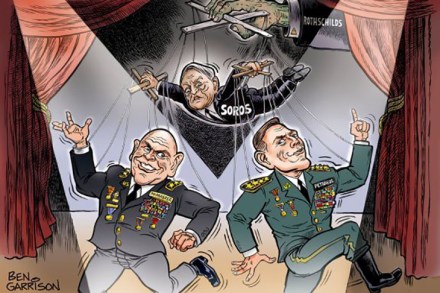
The New York Times published an anti-Semitic cartoon depicting a blind Donald Trump being led by a canine Benjamin Netanyahu in its international edition earlier this year. Following near-universal condemnation, Trump seemed more concerned for himself than for the Jews. His tweet on the matter was typically puerile: 'The New York Times has apologized for the terrible Anti-Semitic Cartoon, but they haven’t apologized to me for this or all of the Fake and Corrupt news they print on a daily basis.

ben garrison anti-semitism

Are Tories fanatics? The New York Times thinks so

From our UK edition

The New York Times’s strange jihad against post-Brexit Britain continues. Some readers may have missed the paper’s insistence that having only just finished eating mutton, the British public are currently stock-piling food and all but preparing to start eating each other (see here, here, and here just for starters).  But yesterday they have returned to the fray with the international edition of the paper carrying a front-page piece declaring ‘Extremists hijacked UK politics’.  The online version of the story is headlined ‘A fanatical sect has hijacked British politics’.

The death of political cartoons isn’t funny

The New York Times is dropping its political cartoons. Well, what a surprise! Making people laugh has never been easy. I’ve been supporting ex-wives and making a living from banging out cartoons since 1953, God help me. I started with selling drawings to the British music magazine, Melody Maker. They printed them and paid me two guineas a time, which was worth £2 and 2 shillings, or about $5.50. You could buy a house for five quid then, and you could afford to get married, God help me! There were lots of magazines and newspapers around then and I worked for most of them: Lilliput and Tatler are still going but jokeless. Punch’s editor Malcolm Muggeridge said that if I kept sending my work in I’d soon become a regular, (then, added ‘God help you!’).

michael heath political cartoons