New york times

Macron vs the New York Times

From our UK edition

Fresh from sparking protests around the world with his comments on Islam, Emmanuel Macron now has a new adversary to add to the list: the New York Times. 'The president has some bones to pick with the American media,' read a piece by the NYT's media editor Ben Smith, published this week. 'So president Emmanuel Macron of France called me on Thursday afternoon from his gilded office in the Élysée Palace to drive home a complaint'. The interview made it sound as though Macron, infuriated by the hostility of the Gray Lady, had taken it upon himself to suddenly phone Smith up out of the blue to give him a piece of his mind.

In defense of RealClearPolitics

Find a comfortable spot on the carpet, children, the New York Times has a lesson for you all about how to curate editorial content. While fishing through his neighbor's recycling this morning, Cockburn was amused to see, on page A15 of the Times, a piece about his favorite poll aggregators, RealClearPolitics. What on earth could the site have done to earn the scrutiny of the Gray Lady? Brace yourself, dear reader: you may find parts of the report unsettling: '...RealClearPolitics and its affiliated websites have taken a rightward, aggressively pro-Trump turn over the last four years as donations to its affiliated nonprofit have soared.' Dear heavens! Rightward and aggressively pro-Trump?

realclearpolitics

The incredible vanishing World Health Organization

The lockdown is dead...long live the lockdown?In an interview last Thursday on Spectator TV, WHO special envoy David Nabarro warned seven months too late that the ubiquitous global response to the coronavirus pandemic might be a bit of an oopsie-daisy: https://twitter.com/spectator/status/1314573157827858434 ‘We in the World Health Organization do not advocate lockdowns as the primary means of control of this virus,' Nabarro said. ‘Lockdowns just have one consequence that you must never ever belittle, and that is making poor people an awful lot poorer... It seems that we may well have a doubling of world poverty by next year. We may well have at least a doubling of child malnutrition.’Now, there was nothing astonishing about Dr Nabarro’s claims.

lockdown world health organization

The New York Times has no editorial policy

The New York Times put many lives in danger in June when it published an op-ed from Republican senator Tom Cotton, advocating for President Trump to send the National Guard into several riot-torn cities. At least that’s what several of the paper’s employees claimed, both in an open letter to the paper’s editor and the editor of the opinion board. Cotton wrote threatening words such as ‘Some elites have excused this orgy of violence in the spirit of radical chic, calling it an understandable response to the wrongful death of George Floyd. Those excuses are built on a revolting moral equivalence of rioters and looters to peaceful, law-abiding protesters. A majority who seek to protest peacefully shouldn’t be confused with bands of miscreants.

hong kong new york times

Why is the media downplaying the Hunter Biden story?

Remember the Ukraine impeachment drama? No? Cockburn can hardly blame you. But believe it or not, less than nine months ago, the Ukraine ‘scandal’ was supposed to be the greatest in American history. Donald Trump was impeached. Mitt Romney gave some embarrassing speech.Not even a year later, it’s the story never happened. Neither impeachment nor Ukraine were mentioned a single time at the Democratic convention. The party isn’t just tired with the story. They seem earnest about keeping it dead.But now, thanks to the US Senate, they’ll need an assist from the press.A newly released report by the Senate Intelligence Committee resurrects the Ukraine story by reviving focus on Joe Biden’s ne’er-do-well son Hunter Biden.

hunter biden

My run-in with the New York Times

From our UK edition

It’s never a good sign when you’re watching a scene of street terror in yet another gut-churning YouTube video and you find yourself thinking: ‘Hang on a minute, that’s around the corner from my apartment!’ But there’s a now infamous video from last week where a mob of enraged millennials with their fists pumped in the air surrounded a lone young woman sitting outside a Washington restaurant where I often eat. Like a scene from the Cultural Revolution, the crowd demanded she shout certain slogans and raise her clenched fist in solidarity — or be damned as a racist. Most of her fellow diners took the path of least resistance. She wouldn’t. The chants grew louder: ‘White silence is violence!’ They started screaming in her face.

Who really wants to delegitimize the election result?

On Thursday afternoon, prior to the final night of the Democratic convention, four New York Times opinion columnists gathered to discuss the political landscape. Of course, millions of people do that every single day. The special conceit of the Times opinion staff is that it believes its discussions are worth broadcasting to the world. The special curse for the rest of us is that many find them worth listening to. The theme of Thursday’s discussion was the awful, terrifying, unspeakable, unthinkable idea that a major presidential candidate might delegitimize an election outcome.

bari weiss election

How I got canceled

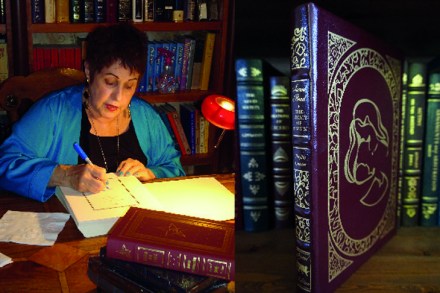
Perhaps contemporary ‘cancel culture’ officially began in 1989, when Khomeini issued his fatwa against Salman Rushdie for having ‘defamed’ Islam in The Satanic Verses. Rushdie was ushered into hiding and the Islamist assault on truth-speech in the West was on. But here’s what I also think. The day after Israel won its 1967 war of self-defense, the propaganda began in deadly earnest against both Israel and the West. Within two decades, perhaps less, Western universities were intellectually and politically ‘occupied’ by Stalinist and Islamist narratives. Balkanized social identities and victimology ruled.

phyllis chesler

How the New York Times profits from self-censorship

The recent high-profile departures at the New York Times of editorial page editor James Bennet and opinion writer Bari Weiss have left some on the business side of the news industry scratching their heads. Both exited amid ideological turmoil that Weiss detailed in a letter of resignation to the Times’s publisher A.G. Sulzberger, describing the 'hostile work environment' she endured at the hands of fellow editors and staffers. They were wholly intolerant, she said, of her role as a ‘centrist' at the paper. Bennet, said Weiss, had led the effort after President Trump’s election in 2016 to bring in 'voices that would not otherwise appear' in the Times.

new york times

The New York Times thinks ‘nice white parents’ are the root of all evil

Cockburn was recently made aware of a new production at the New York Times, bearing the ominous-in-2020 title Nice White Parents. The podcast, launched on Thursday, is the work of the same people who created Serial, the preposterously popular true crime podcast. This time, Team Serial digs into New York City’s public school system, and specifically, the group they say is the root of all pedagogical evils. 'We’ve tried standardized tests, and charter schools,’ narrator Chana Joffe-Walt solemnly intones in the first episode. 'We’ve tried smaller classes, longer school days, stricter discipline, looser discipline, tracking, differentiation. We’ve decided the problem is teachers, the problem is parents.

nice white parents

Rich people are struggling during COVID, too

The New York Times reports on the struggles faced by families who, in the midst of the COVID-19 pandemic, have been forced to convert their second homes into their primary homes. The Gray Lady observes: ‘These homeowners share many of the same difficulties as anyone dealing with the coronavirus lockdown — working in communal spaces where their children are now present 24/7, discovering items in their home that need updating, and then renovating a home while they are living in it. In addition, these homeowners must adjust to living in relatively unfamiliar towns, often far from friends, family, or creature comforts like a favorite bagel shop or longtime barber.’ Don't I know it. I consider myself a solidly middle-class American, making about $500,000 a year.

rich

Extra, extra — read all about us!

Instead of telling us about America, or even the world outside, American journalists now tell us about other American journalists. The dirty laundry of America’s journalists is aired hourly on Twitter, where it stinks the place out. None of it is news and nobody will remember any of it in 10 months, let alone 10 years. It’s amazing to watch adults setting their emotional temperatures by palace intrigues at the New York Times. A series of laughably esoteric conflicts have consumed the industry in recent days. Each has generated thousands of self-referential tweets, articles, think pieces and podcast episodes.

manhattan journalism

What is the point of the New York Times?

From our UK edition

Earlier today, Bari Weiss resigned from the New York Times and published a devastating letter of resignation on her website (also available here). There will be those who try to pretend that this is no big deal, or that it is just a storm in a journalistic tea-cup: they would be wrong. For several generations now the New York Times has been seen as America’s ‘paper of record’. You might have appreciated some aspects of it more than others, and it may have been a little dull, but it was reliable; even necessary. A sort of journalistic fibre. Then at some stage in recent decades, it started to exemplify a rot which has wormed its way through much of the legacy media. Its reporting became unreliable and its comment pages monotone. The paper became increasingly unreadable.

brexitland times

Source: ‘Dozens of instances of bullying and harassment’ at New York Times

‘Bari Weiss’s letter was tame,’ a New York Times insider tells me. ‘She could have named names. She could have said, “There are dozens of other instances of bullying and harassment.” Because there are.’ What took Weiss so long? Prominent writers at the Times never accepted her as a colleague. Instead, her colleagues on the opinion page sniped and leaked against her on Twitter from the first. Was it ‘tall poppy syndrome’ — resentment of a young writer who, in an era when legacy media seem to be in perpetual crisis, landed a plum job at the Times?

Sister act: did Kerri Greenidge sign the Harper’s letter or not?

Have you met the Greenidge sisters — Kirsten, Kerri, and Kaitlyn? They are quite the trio. Kirsten, the eldest, is a playwright who teaches at Boston University; Kerri, the middle one, is a historian and the director of American Studies at Tufts University; and youngest Kaitlyn is the author of the award-winning We Love You, Charlie Freeman who also writes for the New York Times. Fancy that? Kerri has found herself in hot water this week after she signed the now notorious Harper’s letter in defense of free thought and free expression. She appears to have been stunned by the hostile reaction the letter received. Within hours of its publication she tweeted: ‘I do not endorse this @harpers letter. I am in contact with Harper’s about a retraction.

Kerri Greenidge, Photo: Twitter
Taylor Lorenz attends VidCon 2019

The problem with the NYT’s Taylor Lorenz

‘To have a photographer come is overwhelming; a lot of kids don’t want anything to do with it, especially if their parents aren’t fully aware of what they are doing.’ No, that is not a quote from a child predator. It is from a New York Times reporter. But nowadays, there doesn’t seem to be much of a difference. Taylor Lorenz is the tech reporter bringing Tiger Beat to the Gray Lady. She seeks to validate internet culture among the media class, taking TikTok videos, YouTube feuds and Instagram trends as seriously as an economics reporter does the Dow. What this means in practice is that she is a thirty-something woman exploiting teenagers for clicks.

Can Biden avoid the debates?

In an opinion column for the New York Times, Thomas Friedman proposes that Joe Biden debate Donald Trump only if the President meets two conditions. Trump must release his tax returns and agree to a non-partisan panel of fact-checkers. The fact-checkers, he says, should point out the debaters’ errors in real time and conclude the event by summarizing their findings. Among really bad ideas, this one is a prize-winner. Let us count the reasons why. Trump’s failure to release his tax returns is a legitimate issue to debate, not a precondition for one. Biden is free to raise it on the campaign trail and debate stage, just as Hillary Clinton did. Remember, the voters have already dealt with this issue once.

biden

The poison of reparations

Reparations are a recipe for rancor. Under the guise of settling a grievance, they intensify and often eternalize it. They almost inevitably plant seeds of enmity that last for generations. However large the cost, the victorious side eventually feels it settled too cheap. And the side that humbly paid comes to recognize it paid too dearly and gained nothing more than a pause in the demands. Reparations don’t repair. They turn the original grievance into institutionalized animosity. The topic comes up because today’s doyen of racial resentment, the New York Times’s Nikole Hannah-Jones, says that monetary reparations are ‘What Is Owed’ to black Americans for centuries of slavery and ‘slavocracy’.

reparations

The death of the private citizen

The internet is not a private place, but news outlets have decided that it's up to them to determine when someone loses their right to anonymity. Quite often, the media gets this calculation wrong and destroys lives in the process. Scott Alexander, the pseudonymous blogger behind 'Slate Star Codex', deleted all of the content on his popular website after the New York Times revealed it was going to publish his true identity. In a long post explaining the debacle, Scott Alexander said that he was talking to a Times reporter last week who was planning on writing an article about his blog. The Times reporter apparently discovered Scott Alexander's identity in the course of reporting and cited a 'New York Times policy' requiring him to publish his full name.

The New York Times private
nikole hannah-jones

Nikole Hannah-Jones and 1619, Inc.

The New York Times’s 1619 Project is meant to be all about details that, it alleges, were ‘conveniently left out’ of America’s ‘founding mythology’. But should its Pulitzer-winning curator, Nikole Hannah-Jones, worry more about the details she’s been slipping in? And what’s the relationship between the Times’s 1619 Project and 1619 Enterprises, a company for whom Hannah-Jones’s techie partner, Faraji has supposedly worked? When she's not explaining how destroying property isn't violence on national television or circulating conspiracy theories about fireworks, Hannah-Jones is giving puff interviews, like this one to Glamour in May, in which she endorsed some of her favorite products.