New york times

Who really wants to delegitimize the election result?

On Thursday afternoon, prior to the final night of the Democratic convention, four New York Times opinion columnists gathered to discuss the political landscape. Of course, millions of people do that every single day. The special conceit of the Times opinion staff is that it believes its discussions are worth broadcasting to the world. The special curse for the rest of us is that many find them worth listening to. The theme of Thursday’s discussion was the awful, terrifying, unspeakable, unthinkable idea that a major presidential candidate might delegitimize an election outcome.

bari weiss election

How I got canceled

Perhaps contemporary ‘cancel culture’ officially began in 1989, when Khomeini issued his fatwa against Salman Rushdie for having ‘defamed’ Islam in The Satanic Verses. Rushdie was ushered into hiding and the Islamist assault on truth-speech in the West was on. But here’s what I also think. The day after Israel won its 1967 war of self-defense, the propaganda began in deadly earnest against both Israel and the West. Within two decades, perhaps less, Western universities were intellectually and politically ‘occupied’ by Stalinist and Islamist narratives. Balkanized social identities and victimology ruled.

phyllis chesler

How the New York Times profits from self-censorship

The recent high-profile departures at the New York Times of editorial page editor James Bennet and opinion writer Bari Weiss have left some on the business side of the news industry scratching their heads. Both exited amid ideological turmoil that Weiss detailed in a letter of resignation to the Times’s publisher A.G. Sulzberger, describing the 'hostile work environment' she endured at the hands of fellow editors and staffers. They were wholly intolerant, she said, of her role as a ‘centrist' at the paper. Bennet, said Weiss, had led the effort after President Trump’s election in 2016 to bring in 'voices that would not otherwise appear' in the Times.

new york times

The New York Times thinks ‘nice white parents’ are the root of all evil

Cockburn was recently made aware of a new production at the New York Times, bearing the ominous-in-2020 title Nice White Parents. The podcast, launched on Thursday, is the work of the same people who created Serial, the preposterously popular true crime podcast. This time, Team Serial digs into New York City’s public school system, and specifically, the group they say is the root of all pedagogical evils. 'We’ve tried standardized tests, and charter schools,’ narrator Chana Joffe-Walt solemnly intones in the first episode. 'We’ve tried smaller classes, longer school days, stricter discipline, looser discipline, tracking, differentiation. We’ve decided the problem is teachers, the problem is parents.

nice white parents

Rich people are struggling during COVID, too

The New York Times reports on the struggles faced by families who, in the midst of the COVID-19 pandemic, have been forced to convert their second homes into their primary homes. The Gray Lady observes: ‘These homeowners share many of the same difficulties as anyone dealing with the coronavirus lockdown — working in communal spaces where their children are now present 24/7, discovering items in their home that need updating, and then renovating a home while they are living in it. In addition, these homeowners must adjust to living in relatively unfamiliar towns, often far from friends, family, or creature comforts like a favorite bagel shop or longtime barber.’ Don't I know it. I consider myself a solidly middle-class American, making about $500,000 a year.

rich

Extra, extra — read all about us!

Instead of telling us about America, or even the world outside, American journalists now tell us about other American journalists. The dirty laundry of America’s journalists is aired hourly on Twitter, where it stinks the place out. None of it is news and nobody will remember any of it in 10 months, let alone 10 years. It’s amazing to watch adults setting their emotional temperatures by palace intrigues at the New York Times. A series of laughably esoteric conflicts have consumed the industry in recent days. Each has generated thousands of self-referential tweets, articles, think pieces and podcast episodes.

manhattan journalism

Source: ‘Dozens of instances of bullying and harassment’ at New York Times

‘Bari Weiss’s letter was tame,’ a New York Times insider tells me. ‘She could have named names. She could have said, “There are dozens of other instances of bullying and harassment.” Because there are.’ What took Weiss so long? Prominent writers at the Times never accepted her as a colleague. Instead, her colleagues on the opinion page sniped and leaked against her on Twitter from the first. Was it ‘tall poppy syndrome’ — resentment of a young writer who, in an era when legacy media seem to be in perpetual crisis, landed a plum job at the Times?

brexitland times

Sister act: did Kerri Greenidge sign the Harper’s letter or not?

Have you met the Greenidge sisters — Kirsten, Kerri, and Kaitlyn? They are quite the trio. Kirsten, the eldest, is a playwright who teaches at Boston University; Kerri, the middle one, is a historian and the director of American Studies at Tufts University; and youngest Kaitlyn is the author of the award-winning We Love You, Charlie Freeman who also writes for the New York Times. Fancy that? Kerri has found herself in hot water this week after she signed the now notorious Harper’s letter in defense of free thought and free expression. She appears to have been stunned by the hostile reaction the letter received. Within hours of its publication she tweeted: ‘I do not endorse this @harpers letter. I am in contact with Harper’s about a retraction.

Kerri Greenidge, Photo: Twitter
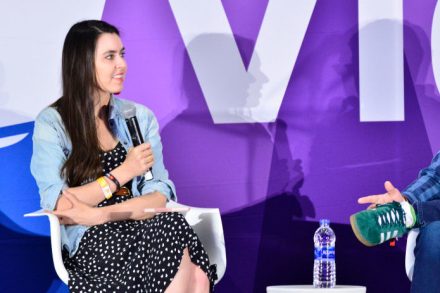
Taylor Lorenz attends VidCon 2019

The problem with the NYT’s Taylor Lorenz

‘To have a photographer come is overwhelming; a lot of kids don’t want anything to do with it, especially if their parents aren’t fully aware of what they are doing.’ No, that is not a quote from a child predator. It is from a New York Times reporter. But nowadays, there doesn’t seem to be much of a difference. Taylor Lorenz is the tech reporter bringing Tiger Beat to the Gray Lady. She seeks to validate internet culture among the media class, taking TikTok videos, YouTube feuds and Instagram trends as seriously as an economics reporter does the Dow. What this means in practice is that she is a thirty-something woman exploiting teenagers for clicks.

Can Biden avoid the debates?

In an opinion column for the New York Times, Thomas Friedman proposes that Joe Biden debate Donald Trump only if the President meets two conditions. Trump must release his tax returns and agree to a non-partisan panel of fact-checkers. The fact-checkers, he says, should point out the debaters’ errors in real time and conclude the event by summarizing their findings. Among really bad ideas, this one is a prize-winner. Let us count the reasons why. Trump’s failure to release his tax returns is a legitimate issue to debate, not a precondition for one. Biden is free to raise it on the campaign trail and debate stage, just as Hillary Clinton did. Remember, the voters have already dealt with this issue once.

biden

The poison of reparations

Reparations are a recipe for rancor. Under the guise of settling a grievance, they intensify and often eternalize it. They almost inevitably plant seeds of enmity that last for generations. However large the cost, the victorious side eventually feels it settled too cheap. And the side that humbly paid comes to recognize it paid too dearly and gained nothing more than a pause in the demands. Reparations don’t repair. They turn the original grievance into institutionalized animosity. The topic comes up because today’s doyen of racial resentment, the New York Times’s Nikole Hannah-Jones, says that monetary reparations are ‘What Is Owed’ to black Americans for centuries of slavery and ‘slavocracy’.

reparations

The death of the private citizen

The internet is not a private place, but news outlets have decided that it's up to them to determine when someone loses their right to anonymity. Quite often, the media gets this calculation wrong and destroys lives in the process. Scott Alexander, the pseudonymous blogger behind 'Slate Star Codex', deleted all of the content on his popular website after the New York Times revealed it was going to publish his true identity. In a long post explaining the debacle, Scott Alexander said that he was talking to a Times reporter last week who was planning on writing an article about his blog. The Times reporter apparently discovered Scott Alexander's identity in the course of reporting and cited a 'New York Times policy' requiring him to publish his full name.

The New York Times private
nikole hannah-jones

Nikole Hannah-Jones and 1619, Inc.

The New York Times’s 1619 Project is meant to be all about details that, it alleges, were ‘conveniently left out’ of America’s ‘founding mythology’. But should its Pulitzer-winning curator, Nikole Hannah-Jones, worry more about the details she’s been slipping in? And what’s the relationship between the Times’s 1619 Project and 1619 Enterprises, a company for whom Hannah-Jones’s techie partner, Faraji has supposedly worked? When she's not explaining how destroying property isn't violence on national television or circulating conspiracy theories about fireworks, Hannah-Jones is giving puff interviews, like this one to Glamour in May, in which she endorsed some of her favorite products.

The fatwa artists

On June 3, the New York Times published a very bad op-ed. By itself, this is not breaking news. The Times opinion page has long been a kind of stagnant water cooler for conventional center-left opinion, a hospice care ward for America’s remaining pleats-panted, open-collar Blairites. Sure, they’ll occasionally publish something interesting — an essay by the deputy leader of the Taliban, for example, or an admission by David Brooks that he once tried the ganja. But generally the Gray Lady’s opiners tend to be tucked in bed by nine, dreaming of the things globalization might accomplish the next day.This piece was not that. It was, first of all, written by a Republican, Sen.

fatwa twitter

As old media squabbles, new media thrives

The traditional newsroom is finally coming to terms with its slow metamorphosis into a college campus, taken hostage by younger progressive activist staffers.When Sen. Tom Cotton was granted op-ed space in the New York Times last week, many of the millennial staff were triggered into issuing social media claims that lives were being put in danger, namely those of their African American colleagues.The fallout has been swift and will have a chilling effect on speech and commentary in major newspapers for years to come. James Bennet, the Times’s editorial director, resigned from his position after defending the paper’s decision to run the column.

campus media

The snowflakes turn to ice

About a year ago, I went to see my friend John R. MacArthur, the publisher of Harper’s magazine, in his office in New York. When I reached him, he was in a state. One of his authors had used the word ‘tartly’ — the adverb, meaning sharply or sourly — and one of his junior editors had ruled that the word was problematic. The junior editor thought it might be connected to the word ‘tart’ — the noun, meaning prostitute — and therefore misogynistic. ‘See what I have to put up with?’ he asked. Rick was laughing but it wasn’t altogether a joke.

media

Why isn’t Andrew Sullivan allowed to write his column?

What has happened to New York media? Just as the New York Times was experiencing its own Inner Mongolia Moment over the now notorious Sen. Tom Cotton ‘Send in the Troops’ op-ed, the Maoists at New York magazine were going after their best columnist, Andrew Sullivan. Sullivan revealed on Twitter yesterday that his column wouldn't be appearing. The reason? His editors are not allowing him to write about the riots. https://twitter.com/sullydish/status/1268564124423933953 Presumably Sullivan’s editors are frightened that he might make the radically bourgeois point that looting and violence are wrong.

andrew sullivan
cotton

Sources: New York Times not telling the truth about Tom Cotton op-ed

The revolution is eating itself at the New York Times. After the Times ran Sen. Tom Cotton’s call for using the National Guard to quell riots, a riot broke out in the Times’s News department. Although a poll earlier this week found that 63 percent of Democrats ‘strongly’ or ‘somewhat’ supported Cotton’s suggestion, the woke warriors at the Times were truly triggered. On Thursday, some 800 staffers broke the terms of their contracts and publicly denounced their employer. Most demonstrated their fearless individuality by retweeting the same sentence: ‘This article endangers Black @nytimes staff.’There’s no mob without a lynching.

New York Times makes The Spectator part of the story

Cockburn was thrilled to see the New York Times take an interest in The Spectator last weekend, after the paper published an article about our London office’s ‘incestuous ties’ with the governing elite. Amazing that during a global pandemic and nationwide rioting, the NYT saw fit to dedicate few inches on page A8 to a political adviser on a northern European island. ‘Rogue Trip by Boris Johnson Aide Makes U.K.’s Spectator Part of the Story’, declared the headline. At least that was the revised headline — the first suggested, erroneously, that The Spectator was in ‘turmoil.’ The Spectator may be in many things, but turmoil isn’t one of them. The Gray Lady isn’t known for its fair-mindedness these days. But its coverage of the Speccie was surprisingly reasonable.

new york times spectator

In praise of Kayleigh McEnany

Is Kayleigh McEnany the best Press Secretary in history? I think she may be. True, it’s early days. She was elevated to the position only in April and presided over her first briefing just a few weeks ago on May 1. But so far her tenure has been glorious. Despite having attended both Georgetown and Harvard, where she took a law degree, she remains quick-witted, forthright and occupies a cant-free zone that suffuses the James S. Brady Press Briefing Room with a spirit of patriotic candor that is as welcome as it is rare in the self-involved purlieus of the so-called mainstream media. She is also, I think it important to observe, distinctly dishy, another advantage.

kayleigh mcenany