New statesman

The View from 22 — Twitter abuse wars, Theresa vs Boris and Egypt’s Arab winter

From our UK edition

Will online abuse and trolling ever be stopped? On this week's View from 22 podcast, Hugo Rifkind discusses his Spectator column on the subject with Helen Lewis of the New Statesman. They ask if trolling has got better or worse? What, if anything, can or should be done about 'morons' who mindlessly attack people? And should politicians — like Stella Creasy — be influencing the moderation policies of social networks like Twitter? James Forsyth and Toby Young discuss the next Tory leadership battle: Theresa May vs. Boris Johnson. James reports that these two top Tories are jostling to succeed David Cameron, even though the PM is expected to be in situ after 2015: Boris isn’t even going to stand in the 2015 election. Who is most likely to be successful?

The View from 22 — Sex and success, Conservative vs. Labour unity and the two-wheeled tyranny of cyclists

From our UK edition

What do Margaret Thatcher, Sheryl Sandberg and Angela Merkel have in common? They are the ultimate alpha-female icons, according to Alison Wolf. In this week's Spectator cover feature, Alison examines the ultra-competitive female elites who are pulling ahead and leaving the rest of the 'sisterhood' behind. On this week's View from 22 podcast, the Spectator's deputy editor Mary Wakefield discusses with Alison what makes an alpha female, why they are only interested in alpha males and how feminism is response for this new divide. Melissa Kite and Gary Lingard also debate whether the world now revolves around cyclists. In this week's magazine, Melissa argues that beautiful country paths should stop be turned into tarmac cycle routes.

A birthday challenge to the New Statesman

From our UK edition

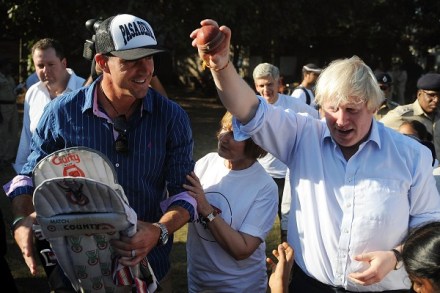
Slight treachery from Boris, who has written a glowing piece on the occasion of the New Statesman’s centenary. While most people will focus on his dissection of the evils of left-wingery and explanations for hatred of Margaret Thatcher, something else caught Steerpike’s eye: 'My paranoia about the New Statesman and its terrific pieces went on for some months, until we finally met for physical combat, in the form of a cricket match. It was a torrid afternoon and I was full of nerves. Bernard Levin had come to watch, for heaven’s sake, and the New Statesman’s captain, Christian Wolmar, displayed what I am forced to call gamesmanship. At last we prevailed, thanks to a last-wicket stand by Alex van Straubenzee, our circulation manager, and myself.

PMQs sketch: Miliband has ‘one of those days’

From our UK edition

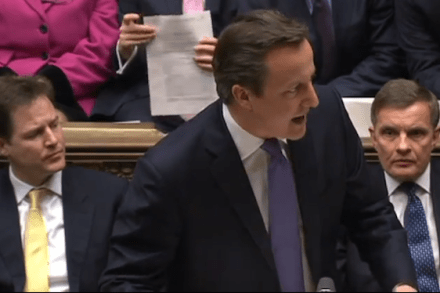
What a strange PMQs. The house seemed half empty. The tug of elsewhere dominated proceedings. Richard Drax asked the prime minister if ‘prospective members of parliament’ should ever speak in support of terrorism.  David Cameron took this cue to rebuke John O’Farrell. Labour’s candidate at Eastleigh has admitted to feeling ‘a surge of excitement’ when he learned that the IRA had nearly assassinated Mrs Thatcher in the Brighton bomb. Cameron asked Ed Miliband to condemn his candidate. Miliband refused. ‘If he wants me to answer questions I’ll swap places any time.’ Miliband’s aim today was to turn the triple-A downgrade into a government-breaking issue. It didn’t work.

David Cameron sails through what should have been a difficult PMQs

From our UK edition

Today’s PMQs should have been a tricky one for David Cameron. Ed Miliband had the ratings downgrade with which to attack the Prime Minister. But Cameron sailed through the questions about the loss of the triple A rating. Following George Osborne’s lead from Monday, he mocked Labour for its ‘policy to address excessive borrowing by borrowing more.’ This failure to capitalise on the undoubted embarrassment for the government of the credit downgrade should worry Labour. listen to ‘Cameron vs.

Down the memory hole for Orwell Week

From our UK edition

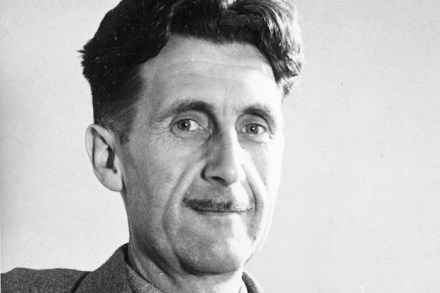
Amid much Twitter self-congratulation, the New Statesman has declared this 'Orwell week'. Oddly, however, it has yet to mention some of the most notable aspects of its relationship with the great man. In his long, long introductory piece Philip Maughan allows that Orwell went through a certain amount of 'disagreement' with the magazine's editor, Kingsley Martin. He even admits that, in aspects of this disagreement, Orwell might have been right: 'Nobody can forgive the decision by editor Kingsley Martin not to publish reports sent from Barcelona, fearing they were “liable to be taken as propaganda against socialism.

The truth about dead bats and wind farms

From our UK edition

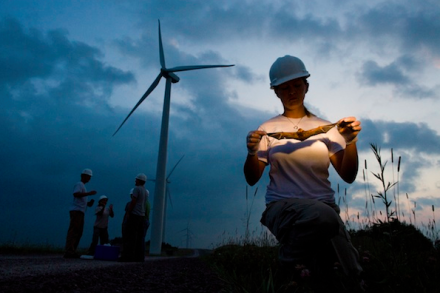
Are wind turbines really good for the environment? The economics, as we know, is often deeply dubious. But in this week’s Spectator, Oxford biological lecturer Clive Hambler reveals another drawback: the slaughter inflicted on birds and bats caught in the blades. Hambler argues that despite death tolls from numerous sources in various countries, many environmentalists are not being thorough with their questioning of renewable energy. In Britain, this argument isn't made much — but overseas, as Hambler says, they're realising the damage inflicted on nature: 'Every year in Spain alone — according to research by the conservation group SEO/Birdlife — between 6 and 18 million birds and bats are killed by wind farms. They kill roughly twice as many bats as birds.

Will 2013 bring an end to unpaid internships?

From our UK edition

It’s a bit early for predictions for 2013. But my feeling is that it could be the year of the unpaid intern, or rather, the year of the paid intern if the campaign to pay people a fair day’s pay for a fair day’s work continues to gather pace. Hazel Blears did well to secure cross-party support for a 10-minute-rule bill to outlaw the advertising of unpaid internships. It does seem odd that employers are obliged to pay the national minimum wage but can advertise that they are breaking the law. Campaigners Intern Aware has been pushing this particular cause for some time and should be congratulated for its work on the bill. The fact that HMRC is doing so little to enforce such breaches suggests it is perhaps not up to the job.

Steerpike at Labour: No such thing as a free glass of wine

From our UK edition

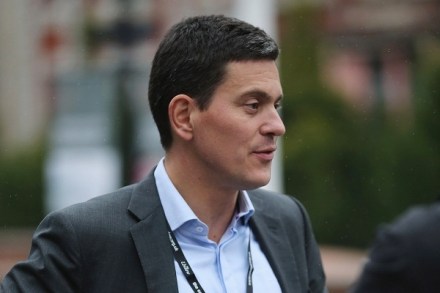
David Miliband blasted New Statesman columnist Mehdi Hasan's updated Ed Miliband biography yesterday afternoon: 'Judging by extracts about me in the Mail on Sunday, updates to Ed's biography should be filed in the fiction section'. The former foreign secretary took umbrage at the suggestion that he had said his brother would 'crash and burn'. And, just in case we had missed the point, he added 'i.e. made up' for good measure. Despite these manifold grievances, the elder Miliband graced the New Statesman’s Labour conference party later in the evening. He waited until Ed had done the rounds and left before entering, tieless.

Lib Dem conference: Tim Farron discovers his coalicious side

From our UK edition

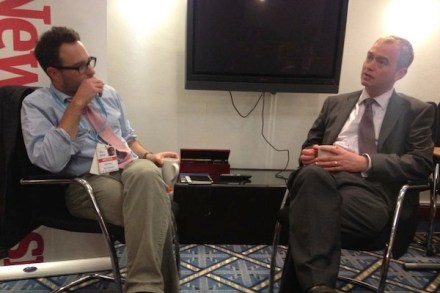
Distinctive not destructive — that's Tim Farron's view on how the Liberal Democrats can redefine themselves within government. Speaking to the New Statesman after his muted conference speech today, the Lib Dem president blamed the media's narrow perception of the coalition for a misunderstanding of their partnership with the Tories. Tantalisingly, he made reference to a potential partnership elsewhere: 'We're either seen as cats in a sack or having a love-in. No one seems able to understand that this is a just a business arrangement...a relationship that could exist with another party' Sadly, Farron made no reference to whom exactly that might be with.

Does the New Statesman need more cartoons? Yes!

From our UK edition

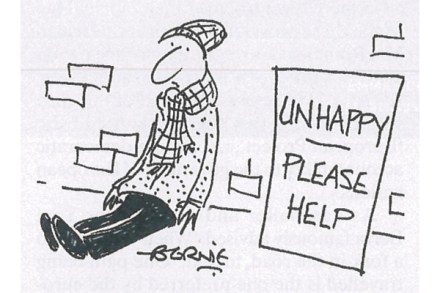
The current issue of the New Statesman leads off with a characteristically elegant and thorough feature by its deputy editor, Helen Lewis, on the fate of the political cartoon. In short, she fears for its future. The most poignant element, however, is a sidebar headed 'Cartoons in the New Statesman'. After reviewing the magazine's magnificent record in the area - Low! Vicky! First professional publication of Matt! - it winds around to the fact that a recent redesign eliminated the regular editorial cartoon: 'This was brought up by several of the cartoonists I interviewed.' Lewis then asks readers whether they miss it, and would like it back. Speaking as a New Statesman reader (and also a lapsed subscriber), I do, and I would.

The other Miliband under attack

From our UK edition

By now, we’re all used to waking up to newspaper columns describing Ed Miliband’s flaws and proclaiming him unfit to lead the Labour party. But today, it’s David Miliband who’s under fire in two articles – one by Roy Hattersley in the Guardian and the other by Matthew Norman in the Telegraph. They’re both in response to the elder Miliband’s New Statesman article, the significance of which Pete wrote about on Thursday.

Labour wants to be the party of law and order

From our UK edition

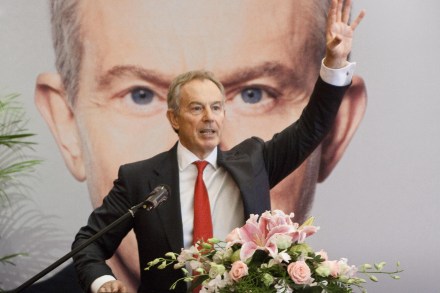
Andy Coulson was right to worry about the coalition’s law and order policies: Labour is trying to outflank the government from the right. Sadiq Khan and Yvette Cooper have cut assured figures at fringe events at this year’s conference, sensing that the government’s cuts to the law and order budget will imperil one of Labour’s positive legacies: substantially reducing reported crime (by 43 per cent according to Sadiq Khan) between 1997 and 2010. A strange atmosphere pervades the law and order fringe: the name ‘Tony Blair’ is spoken of with something approaching respect and it is met with scattered applause. Blair’s memory is profane to this incarnation of the Labour Party, a grinning devil to be exorcised.

Ed’s opportunity

From our UK edition

Ed Miliband is the man to rip up the rulebook. He uses the phrase half a dozen times in an interview with the New Statesman. Ever since the phone hacking saga climaxed in July, Miliband has been busy posing as an insurgent against the Establishment; the politician who refused to fawn to Rupert Murdoch. His version of events is utterly specious: he was happily quaffing News International’s champagne at the beginning of the summer. But that is immaterial. Miliband has recognised an opportunity to redefine his faltering leadership. Despite his stern rhetoric, Miliband says very little about policy to the Statesman beyond promises of a VAT cut and a few other baubles. A separate interview with Progress is equally devoid of concrete policies.

The Real New Statesman

From our UK edition

I am the last person to speak ill of the New Statesman. But even during those golden years when I worked at the magazine, I have to admit we struggled with a tendency towards earnestness. During the Kampfner era, the senior editorial team tried time and again to introduce a little levity among the wonkiness and hand-wringing. I am now prepared to admit we didn't often pull it off. But our successors have finally pulled it off -- by creating a spoof online business section. At first sight it looks like a crude aggregator of corporate press releases. But look a little closer and I defy you to find anything funnier on the web today. It is quite brilliant. Unfortunately, the NS has seen fit to pull down the piece "Cold Stone Creamery unveils chocolate-dipped strawberry ice-cream".

Geoffrey Robinson in The Times

From our UK edition

I was delighted to see Geoffrey Robinson's letter in The Times today where he clarifies that my departure from the New Statesman had nothing to do with my sometimes critical attitude towards the Prime Minister and his government.  Here is the letter in full in case anyone is interested: Sir, Paul Staines (“Guido Fawkes”, Opinion, April 17) is off the mark in his account of Martin Bright’s departure from the New Statesman. Before some mythology develops about Martin being a victim of his courageous writing critical of Gordon Brown and his Government, we wish to set the record straight.