Neoconservatism

Why Lindsey Graham was always ready for war

Political lives almost always end in failure, or at least anticlimax, but Lindsey Graham went to his reward while in the midst of achieving his goals. Indeed, even the timing of his death might advance one of the causes dearest to him. He had just returned from a visit to Kyiv and his fellow advocates of greater US involvement in the Russia-Ukraine war have questioned whether he might not have been murdered by Vladimir Putin. The evidence is against that but the South Carolina senator certainly had deadly enemies: he was high on Iran’s hit-list as well. For decades, he’d called for the use of force against the ayatollahs’ regime and he lived to see that call answered. The Republican aviary still has many other hawks. But can any take Graham’s place?
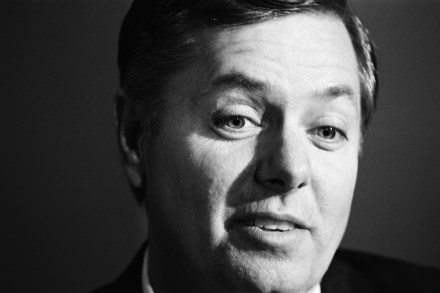
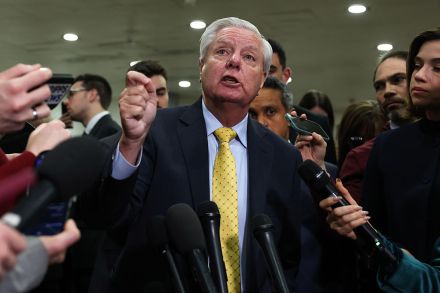
Will Lindsey Graham be remembered as a great senator?

Already the denunciations of Senator Lindsey Graham, who died at 71, are piling up. Former Republican operative Steve Schmidt’s verdict was not untypical. He declared on X that Graham not only “lacked a moral core,” but also found relevance “as a cast member in the most malignant reality show ever made.”  There’s never been a bummer rap. Graham’s moral center was never in greater evidence during the Trump era. Had Graham not aligned himself with Trump, American foreign policy would look vastly different over the past several years. Rather than delivering pompous, empty speeches like former senator Jeff Flake, he made a conscious decision to influence Trump rather than flee the field of fight.

lindsey graham

Will the Iran deal destroy J.D. Vance?

When it comes to foreign policy, Donald Trump is neither hawk nor dove. He’s a dealmaker who plays differing sides off each other. In so doing, he ends up disappointing warmongers and peaceniks in equal measure. Rather than blaming Trump for a bad deal, his pro-Israel supporters will tie its shortcomings to Vance On 28 February, when he launched Operation Epic Fury, Trump’s more dovish supporters felt betrayed. The president who had campaigned against regime-change wars began a new conflict by channeling George W. Bush. "To the great, proud people of Iran I say tonight that the hour of your freedom is at hand," he said.

Trump Iran

Trump has been humbled over Iran

Donald Trump is engaged in one of the biggest battles of his career. After spending millions to turn the Lincoln Memorial Reflecting Pool “flag day blue,” Trump is combatting a tenacious opponent that threatens to mar his upcoming July 4 celebrations. US National Park Service Workers spent much of yesterday on a desperate mission – dumping gallons of hydrogen peroxide into the pool to eliminate the ghastly green clumps of algae that have colonized it. Trump is awash in a sea of troubles. His name has been removed by court order from the Kennedy Center. His White House ballroom is facing cost overruns amounting to several hundred million dollars.

Regime change

Trump won’t be dragged into a regime-change war

The handsome pages of The Spectator World’s July issue readers will find an essay of mine arguing that the United States doesn’t win wars anymore because we don’t even understand what a modern war is. From the French Revolution to the Cold War, and in the long, warm afterglow—thankfully, non-nuclear—of Cold War success, Western elites have tended to think about wars in terms of regimes and ideologies. Winning a war is all about changing the opponent’s regime so that it endorses one’s own ideology: turning a “dictatorship” into a “liberal democracy” through the magic of bombs and bullets.

The battle for the neoconservative soul

Robert Kagan has long had a knack for capturing public attention with bold pronouncements about American foreign policy. In 1996, together with William Kristol, he published an essay in Foreign Affairs called “Toward A Neo-Reaganite Foreign Policy” that chided the Clinton administration for insufficient martial vigor and argued that the Pentagon budget should be doubled. As a charter member of the Project for the New American Century and a regular contributor to the Weekly Standard, Kagan became an eloquent champion of the George W. Bush administration’s Iraq war.

Rober Kagan

The tragedy of Laura Loomer

I first met Laura Loomer in the New York office of Project Veritas. She was blonde then, feisty, smart and ambitious. She was also fearless. Because of her outspoken views regarding the dangers of radical Islam – views that I largely share – her career as an investigative journalist and advocate was severely hampered. She became possibly the most censored woman on the planet; forbidden from placing her warnings about Sharia law and radical Islam on Twitter, Facebook, Instagram and YouTube. Even Uber banned her. In 2020, Loomer decided to make a valiant race for Congress against Democrat incumbent Lois Frankel in an overwhelmingly blue Florida district, which happened to include Mar-a-Lago, Donald Trump’s club and winter residence.

Laura Loomer

Trump has been caught flat-footed on Iran

Donald Trump has become something of a sole man. His cabinet members and White House visitors report that the president has developed a penchant for handing out $145 Florsheim shoes in an effort to up their sartorial game. In his Life of Johnson, Boswell reported that Dr. Johnson recoiled at an “eleemosynary supply” of shoes as an impecunious student at Christ Church, Oxford and threw them away with indignation. Trump’s followers have no such freedom of action. “All the boys have them,” one official told the Wall Street Journal, which ran a picture of his administration leaders obediently lined up and wearing the same shiny black leather numbers.

I spent 25 years fighting neocons. Then Trump became one

Like everyone, I’m glued to the news coming out of Iran. I’m experiencing some depression, as one might, upon realizing that much of what one has worked on for 25 years has suddenly gone up in smoke, destroyed when Donald Trump discovered he was pretty much a neocon after all. Like everyone else, I have no idea what will happen in Iran, whether Trump’s bombing and perhaps breaking apart a very unpopular regime will lead to something better, or just chaos, a failed state spitting out a cohort of embittered men.

neocon

America’s last war in the Middle East

Win or lose, Donald Trump has begun the last war the United States is ever likely to fight in the Middle East. That might sound wildly optimistic, but what it really means is that war with Iran has been decades in the making. If the mission succeeds, it will mark the end of an era. And if it fails, this war will have exhausted what’s left of America’s willingness to remake the region by force. It’s not just that Iran puts the case for regime change to the ultimate test. America’s relationship with Israel is also on trial.

neoconservative

Why Iran marks the end of neoconservatism

45 min listen

Spectator World columnist – and Heritage Foundation fellow – Daniel McCarthy joins Freddy Gray to explain how Trump's war with Iran could mark the end of an era, that of neoconservatism. For Daniel, there is no contradiction between Trump's 'America First' policy and its overseas interventions: Trump is pursuing a version of hegemony that will reduce the need for future interventions. If all goes to plan, this could mark an ideological watershed that stretches back to the first Gulf War in the early 1990s – but it's a big 'if'. What if the conflict spirals out of control? To what extent was this driven by Trump, or by Netanyahu? And what are the dynamics at play between the leadership figures in Maga? Produced by Patrick Gibbons.

Why Iran marks the end of neoconservatism

Could the Donroe Doctrine turn Marco Rubio into the president-in-waiting?

It required an incredible amount of sophistication to achieve the desired result in Caracas: a dictator detained and transported alive. The mission had been planned and mapped out for months, worked and reworked at the behest of the Commander-in-Chief. No American casualties would be tolerated. Special Forces had been circling and at the ready for weeks. The helicopters were easy targets, so a vital part of the mission was to eliminate Nicolás Maduro’s ground- to-air response beforehand and claim total air superiority.

marco rubio

Are J.D. Vance and Marco Rubio heading for a clash?

Thanksgiving weekend ends on Sunday, and still there’s no peace in Ukraine. Donald Trump’s latest attempt to end the war – his 28-point plan – began to fall apart from the moment it mysteriously leaked to various international news outfits last week. As that story landed, Reuters broke some other news: Keith Kellogg, Trump’s special envoy to Ukraine, would stand down in January. Kellogg, who represents the more ardently pro-Ukrainian faction of the administration, had clashed repeatedly with Trump’s peace envoy Steve Witkoff, who has been engaging in friendly dialogue with Moscow for most of the year. His departure seemed linked to the fact that Dan Driscoll, the Secretary of the US Army and an ally of J.D.

Rubio Vance

Neoconservative moment

In younger MAGA circles, “neocon” is a term of derision. It’s not always clear what twenty-somethings understand by the word, though its rough connotations are plain enough: “globalist” (often paired with “neocon”) and “forever wars.” The latter is what the US has fought continuously since the Soviet Union stood down thirty-five years ago — at great cost with no victories. Neoconservatism was the dominant strain of elite conservatism in the US from the Reagan era until fairly recently. So the new MAGA outlook might seem like a decisive turnabout in political and intellectual fashion. In some ways it is. Donald Trump mocked the neoconservatives’ most infamous project, the Iraq War, during his 2016 campaign and won nonetheless.

Liberation

Tucker Carlson and the revenge of the neocons

When Tucker Carlson appeared at the Heritage Foundation’s fiftieth anniversary celebration as a keynote speaker this past Friday, he was in an expansive mood. He reminisced about starting to work at the think-tank’s old publication Policy Review in August 1991, the month that the Soviet Union collapsed. He offered that it had not occurred to him that America would end up succumbing to the very totalitarianism that existed in the USSR, but then proudly noted that there wasn’t any special courage in his own willingness to challenge it. “I’m paid to do that,” he said. “I can have any opinion I want.” Oops. Carlson’s sudden ouster at Fox, complete with reports that the network has compiled a secret dossier filled with dirt on him, suggests a rather different verdict.

Tucker Carlson

NATO vote shows conservatives are getting it right

Yesterday's 95-1 vote in the Senate to support the admission of Finland and Sweden to NATO is another in a series of signs the Republican Party is figuring out what it means to have an "America First" foreign policy. The additions of the two nations serve to strengthen the NATO alliance in ways long supported by national security-minded conservatives. But they are also a vindication of the more recent arguments, advanced by Donald Trump, that members of NATO must necessarily meet their obligations in terms of military budgets. Finland and Sweden are not freeloaders — they have advanced militaries and spend a great deal on them, and have a long history of taking the threat of Russian aggression seriously.

The ‘natcons’ are here to stay

Cast your mind back to the 1990s for a moment. The left, dispirited at their generation-long rout at the hands of Ronald Reagan and Margaret Thatcher, and enraged by the ratification of limited-government trends at the hands of Bill Clinton and Tony Blair, were looking for a new rallying point. By the end of the decade, the intellectual left had settled upon a new epithet: “neoliberalism.” Although the term was not brand new, it exploded in popularity in left academic journals and soon in left media too. Simply put, “neoliberalism” means “democratic capitalism.

Who lost Afghanistan?

America's longest war draws to a bloody end. As the pullout deadline approaches, the probability of more atrocities like the suicide bombing last Thursday that killed 13 of our troops, and more than 90 Afghans, remains nauseatingly high. The American public was ready for us to leave Afghanistan. It was not prepared for just how ugly leaving could be. President Biden bears responsibility for the lives lost, just as he bears responsibility for those lost throughout the course of this conflict and the similarly ill-premised Iraq War — both of which he helped to launch while he was in the United States Senate. He has made grave mistakes. One mistake he has not made, however, is to waver from the decision to withdraw. He has not let terrorists change our timetable.

press

The straitened situation of conservatism

For the past seven and a half decades Western politicians have been exhorting voters to ‘believe’ or ‘have faith’ in democracy. They should have been addressing themselves instead. The unpleasant truth is that 20th- and 21st-century politicians on the right have never believed that constitutional democracy based roughly on the American model could ever satisfy the masses by giving them the material loot and freedom they expect, while those on the left have always thought it does not go far enough in granting themselves the power and authority they require.

conservatism

The future of populist conservatism

Laramie, Wyoming William Kristol, a Grand Poobah of neoconservatism, is leaving the Republican party to join the donkeys of the Democratic one. As Dorothy Parker remarked on being told that Calvin Coolidge had died, ‘How could they tell?’ Mr Kristol, of course, was never a Republican to begin with, only a conservative Democrat. Still, it is true that with Donald Trump’s election and ascendance to the Oval Office, the Republican party has changed considerably, at least for now. So has American conservatism. Whether or not the GOP remains the party of Trump after he steps down from the White House or is dragged out of it by his gilded forelock, conservatism in this country will continue to be Trumpist, and probably for a very long time.

populist