Neil Gorsuch

Why the death of Chevron matters

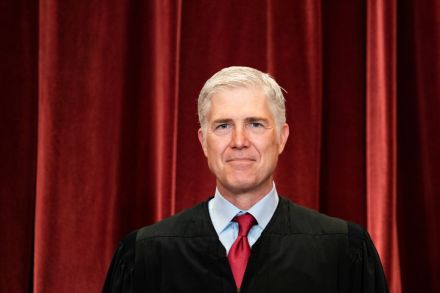
Chevron is dead. Many will mourn its passing. Forty is too young, they will say, for a doctrine to have done its work in enabling bureaucrats to decide for us the meaning of laws and the nature of reality. But the US Supreme Court has overturned Chevron in a landmark ruling in Loper Bright and Relentless, cases named after fishing boats which regulators drove toward extinction. It is appropriate, as Justice Gorsuch phrases it in his concurrence, that “the Court places a tombstone on Chevron no one can miss.”   The powers of the bureaucracy reined in by the new ruling may seem subtle or benign. The Chevron doctrine was that when the terms of a law are ambiguous, regulators in administrative agencies have the power to define the meaning of the law and its application.

chevron

Is the age of the legacy student over?

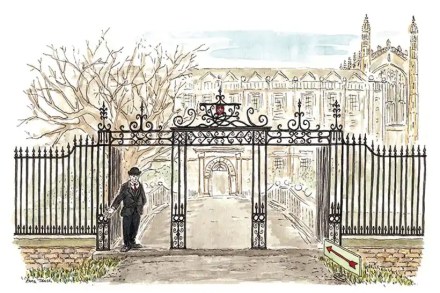
Johnston’s Gate isn’t the only entrance to Harvard Yard. For years, money, status and secret lists have opened back doors into Harvard University for a select group of privileged students. And the easiest way to open these doors? The right parents. According to the Harvard Crimson, over a third of the class of 2022 had a parent or other relative who attended Harvard. In the wake of the Supreme Court’s ruling against affirmative action, the admission policy that has created America's aristocrats is starting to take some heat. Could legacy admission be the next to go? Three Boston-based advocacy groups say yes.

small colleges legacy

The real reason for the Supreme Court smear jobs

Over the last few weeks, we’ve seen a spate of media stories and dumped opposition against conservative justices on the Supreme Court, intended to paint a picture of vaguely illicit and unethical behavior while proving no illegality. ProPublica has released a number of articles regarding Clarence Thomas’s relationship with billionaire megadonor Harlan Crow. Politico trumpeted Neil Gorsuch’s sale of a Colorado property to the head of a top law firm whose lawyers regularly argue in front of the court. The purpose of these stories is not to start a conversation among Democrats in Congress about ethical reform on the Court. Nor is it simply about “court packing” (expanding the Supreme Court to a thirteen-justice progressive majority).

supreme court

The coming Supreme Court win for religious rights

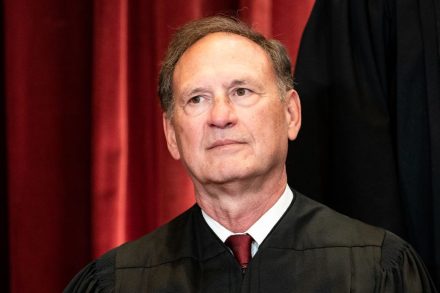
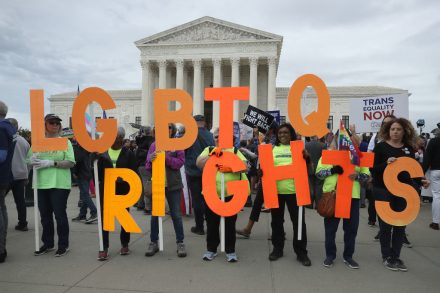
The Supreme Court is poised to grant a victory to religious conservatives via the First Amendment in blocking recognition of an LGBT club at Yeshiva University. Yeshiva is a Jewish law school which objects to the club on religious grounds. This is important news for other religious schools across America facing similar legal challenges. Though the Court as an intermittent step referred the case back to the lower courts as Yeshiva University v. YU Pride Alliance, Justices Samuel Alito, Clarence Thomas, Neil Gorsuch, and Amy Comey Barrett made no bones in their dissent that they would stand with the First Amendment when the full case comes before the Supreme Court, as it is expected the lower courts will demand Yeshiva recognize and fund the club.

Alito

The EPA’s loss is a win for democracy

Thursday’s decision by the Supreme Court that the Clean Air Act does not give the Environmental Protection Agency (EPA) authority to proceed with President Obama’s Clean Power Plan is much more significant than the narrow grounds on which it was decided. The Clean Power Plan was already dead. It had been repealed and replaced by the Trump administration, decisions that were later struck down by a court of appeals. Moreover, there is history between the EPA and the Supreme Court. In 2014, the Court ruled against the EPA’s rewriting of the Clean Air Act to facilitate its use as a tool of climate policy, which was already seen as “poor and probably unworkable” by officials in the Obama administration.

Courting favor: is Trump remaking the conservative legal movement?

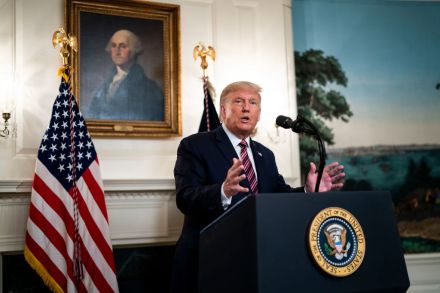
President Trump announced Wednesday afternoon that he was adding 20 new names to his previous list of potential Supreme Court nominees in the event of a vacancy. The new list included three very familiar political names: Sens. Tom Cotton, Ted Cruz, and Josh Hawley. Those names alone indicated that the president is bucking his 2016 method of allowing the Federalist Society, a conservative legal group, to dictate his judicial choices. After a string of Supreme Court rulings that went against conservatives, who felt spurned that they could not get the outcomes they wanted even with a stacked court, the President is perhaps signaling to his base that he will nominate an avowed social conservative, rather than just a textualist or originalist.

legal

The conservative legal movement is dead

Imagine if Sonia Sotomayor, once she got on the Supreme Court, started ruling like Clarence Thomas. I know, I know, that’s like something out of The Twilight Zone or the Babylon Bee. But try to picture it. There’d be riots on the campus of every school she’d attended, and likely in DC, too. Democrats would drawing up articles of impeachment, and speaking of packing the court. And whatever social justice thinktank vets SCOTUS appointees for the Democratic National Committee would start chopping off heads. Scapegoats would be piling up on the unemployment line like pork chops at a slaughterhouse. But that’s precisely what just happened with Neil Gorsuch (and less, surprisingly, John Roberts) in the Bostock decision.

legal

Why banking on judges is a poor strategy

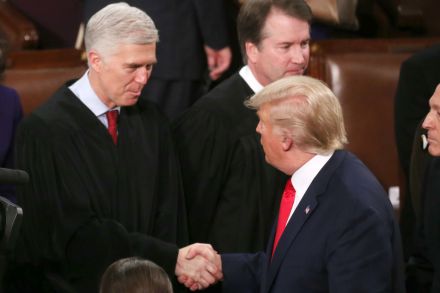
Monday’s Supreme Court decision in Bostock v. Clayton County was massively significant for two reasons. As a legal matter, the ruling determined that the prohibition on ‘sex discrimination’ in the Civil Rights Act of 1964 makes it illegal to fire an employee on the basis of sexual orientation or gender identity. As a political matter, the ruling flipped the entire legislative strategy of the GOP political class — which relied exclusively on judges to enact and protect all of their priorities — on its head.The majority opinion was authored by none other than Justice Neil Gorsuch, nominated by President Trump and confirmed by the Republican Senate in 2017.

judges