Nazi history

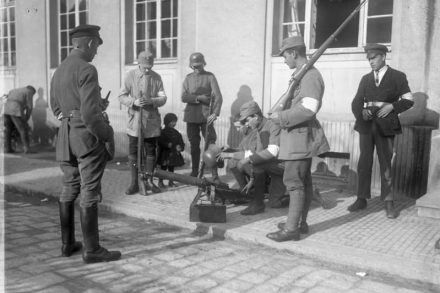
A hundred years on from the Munich Putsch

There’s a school of thought that says the events in Washington, DC on January 6, 2021 were the great communal wound of Western democracy, an outrage seen around the world when a retired cowboy dared put his boots up on an aide to the speaker of the House’s desk (he later got four-and-a-half years for his trouble), and the commander-in-chief tried to grab the steering wheel from a Secret Service agent to turn his SUV around in the direction of the mob so he could join them. “I did not seek the fight brought to this Capitol, but I will not shrink from it either,” President Biden announced through clenched teeth in a speech delivered just outside the House chamber a year later. “I will stand in this breach. I will defend this nation.

munich putsch

Berlin has always been a Faustian metropolis

Each time I return to Berlin, the wonderful, awful city where I spent the best days of my misspent youth, I pay a sentimental visit to Grolmanstrasse, where my German grandparents used to live. There isn’t much left to look at. Their apartment block was destroyed in 1945 in the Battle of Berlin. The site where it stood is now occupied by a children’s playground. For me, that empty space seems to symbolize the way Berlin has changed — mainly for the better, but at enormous human cost. So much has vanished — not just the buildings, but also the people who inhabited them. For my children’s generation, Berlin is a party town. For me, it’s a city full of ghosts. It is these ghosts that keep bringing me back to Germany’s battered, bombastic capital.

berlin