Names

Pity the fool with a nonsense name

From our UK edition

‘If there is one thing I dislike,’ said P.G. Wodehouse, ‘it is the man who tries to air his grievances when I wish to air mine.’ His grievance was conversational, mine is nominative: I pity those with made-up names. There was a time when names came from a modest catalogue: the Bible, aunts and uncles of fond memory, a wider culture that worshipped the royals. Maturity involves a conservative deference to tradition. One learns to presume that norms have more value than drawbacks: dress in an ordinary style, have the manners people expect – and bear a name that connects you to others. Beware any job that requires new clothes, said Thoreau. He meant coats and trousers but it applies to birth certificates, too.

Don’t call me ‘Mr’

From our UK edition

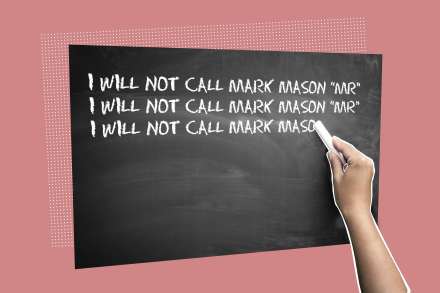
‘Please call me Mark,’ I’ve always said to the teachers at my son’s school. ‘If you call me “Mr Mason” it makes me feel 85 – and if I call you “Mrs Smith” it makes me feel seven.’ I know their first names, and always use them, in emails, phone calls and in person. A few return the compliment, but most keep it formal. It feels wrong, putting distance between us when we’re having a conversation, often an in-depth and important one, about my only child. The best teachers and staff have taught me fascinating things about how to deal with Barney. I’ve only been a parent once; they’ve encountered thousands of kids. It was the same at his primary school, starting with Sonja, when I was a volunteer helping with the class’s reading.

What’s in a name?

Someone, I think it was Martin Amis, once said that you can judge a novelist by how much effort he puts into his characters’ names. If that’s true, a political independent who grew up in the 1990s with the name “Matt Purple” may be a sign of some cosmic writerly laziness. Yes, that is my real name. The one you see in the byline there. I’m always amazed at how many people assume it’s a nom de plume, as though if I could have any last name I wanted I’d choose an Easter color. I actually did write an essay under a pseudonym once: “Matt Thomas,” Thomas being my middle name. Given that it was instantly posted to the top of a prominent website and discussed on a national radio show, I sometimes wonder whether I’m the victim of nomenclature discrimination.

name

Thinking about baby names

How many of you know a baby called Margot? I’ve encountered three in the last couple of months. They all looked more or less the same too. Presumably it’s twenty years too late to blame The Royal Tenenbaums — so perhaps Ms. Robbie is responsible? There’s a lot I love about America, and in many respects this country has improved on the systems and traditions of my own — but one adjustment I cannot get behind is the frequency with which you guys deploy last names as first names. Many want to show appreciation for their favorite president, hence the number of kids called Reagan and Jefferson — and the lack of ones called Biden and Trump. But there’s something bleakly corporate about the result.

names

What’s in a name?

I used to have a cantankerous old relative who hewed to generalizations drawn from long experience. One of them concerned people named “Adam.” On a Sunday morning twenty years ago, as we sat around reading the papers, I mentioned Adam Sandler — or maybe it was Adam West or Adam Vinatieri. “All Adams are assholes,” he grumbled. “You ever notice that?” I tried to respond with some piety about how these people were not to blame for being called Adam. But I had a nagging sense that that was not how the Wheel of Onomastic Destiny spun. I had spent much of my adult life looking for heroic qualities in people bearing my own middle name, which is Scott. Even before I was fully emerged from childhood, Scott had acquired a bad name.

name

Mispronouncing names isn’t a ‘microaggression’

From our UK edition

People can make a bewildering number of offensive transgressions these days: from using the wrong pronoun when addressing people to saying that only a woman has a cervix. The latest eggshell to avoid now is mispronouncing people's names. #MyNameIs is a new initiative calling on people to add phonetic spellings to their email signatures. Race Equality Matters (REM), which launched the campaign, says that mispronouncing names can be 'considered a microaggression' and sends out a message that 'you are minimal'. A survey conducted by REM found that 71 per cent of respondents said their names had been mispronounced, leading some to feel 'disrespected' or that 'they didn't belong'.

Why Pontins thinks I’m an ‘undesirable guest’

From our UK edition

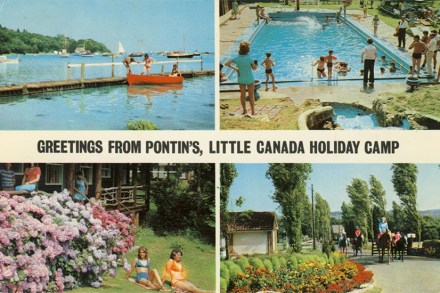
Oh curses, one less option for the summer holidays. Pontins, the holiday camp for those who don’t mind bringing their own cleaning products, has been exposed for issuing a list of surnames belonging to ‘undesirable guests’. Under the legend ‘You Shall Not Pass’ on the company intranet was an instruction: ‘Please be aware that several guests are not welcome at Pontins, however some of these will still try and book… We have been informed by our Operations Director that we do not want these guests on our parks. Please watch out for the following names on ANY bookings.’ There follows a list of 40. There are the O’Briens, the O’Donnells and O’Connells, the Carneys and the Lees, the Leahys, the Sheridans and the Wards.

Letters: Immunity passports are nothing to fear

From our UK edition

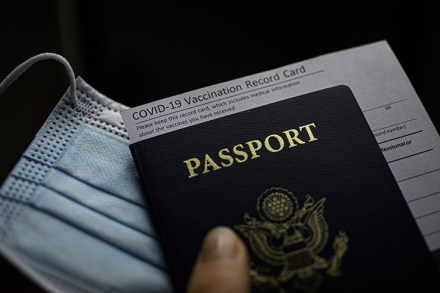
Nothing to fear Sir: Many of us await the day when we can travel abroad for much-anticipated holidays — but surely there is a distinction between immunisation passports and Tony Blair-type IDs (‘Papers, please’, 13 February)? If a country requires you to be immunised to travel there in order to protect its citizens against Covid, then I would be happy to have that ‘passport’ requirement. It is quite different from carrying ID with you in your own country. Let’s face it, the danger from Covid will fade in time, and the ‘passport’ requirement along with it. After all we happily travel with a passport in our pockets to show who we are when we go abroad. Didn’t people have the same worries when passports were introduced?

Where would politics be without fighting talk?

From our UK edition

‘Tencent Wykeham’ has a ring to it. It captures how easily British universities can be bought. It is the new name for what was until now the Wykeham Professorship of Physics at New College, Oxford, now acquired by the huge Chinese techno-conglomerate Tencent for £700,000. William of Wykeham founded New College and Winchester in the 14th century. ‘Tencent Winchester’ next? The problem, which Oxford seems to ignore, is that Tencent acts for the national security interests of the Chinese Communist party. It propagandises too: for Xi Jinping’s address to the 19th Party Congress in 2017, it brought out a mobile game called ‘Clap for Xi Jinping: An Awesome Speech’.

The rudeness of calling Jane Austen by her surname

From our UK edition

I agree with Charles Moore (The Spectator, 6 February) that it is a shame the Times is dropping its use of titles of courtesy — Mrs, Mr, Lord — at the second mention of anyone in a report. Now it’s Charles Moore first mention, and Moore after that. Even when I see Jane Austen referred to as ‘Austen’ I feel it a little rude. It makes her sound like a convict, or at best the cook below stairs in some historical drama. ‘Austen, there will be 14 to dinner and please ensure the duck is thoroughly done.’ This is partly a question of sex. I wouldn’t like to be called Wordsworth, noble name though it be, without the Mrs. My husband, even if stripped of Dr, is old enough to remember surnames used alone as a mark of friendship between men.

Lockdowns can destroy the lives they’re intended to protect

From our UK edition

Some Leavers are perturbed that Lord Frost was suddenly stood down as the next National Security Adviser. This anxiety may be misplaced. If he gets the necessary authority in No. 10, his new job of making our European policy fit with our entire foreign policy and making both serve a sovereign nation will be just what is needed. More discouraging, though, is his replacement choice at the NSC. Sir Stephen Lovegrove comes from the Ministry of Defence but is more renowned for tweeting the hashtag of Black Lives Matter and getting generals into rainbow lanyards than for helping the armed services adjust to war in the information age. His appointment is a victory for the Blob over Boris’s attempts at reform.

Letters: Solidarity is the best thing for Scotland

From our UK edition

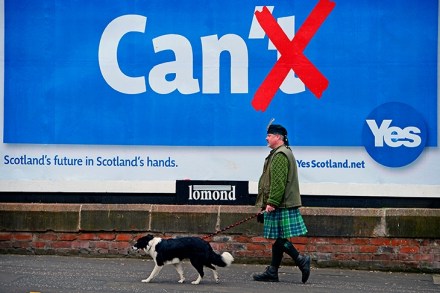
SNP sophistry Sir: Andrew Wilson (‘Scot free’, 21 November) poses the question: ‘What if the case for independence was a highly sophisticated position?’ If only. For the SNP position is one of sophistry rather than sophistication. Wilson states that Scottish voters want Scotland to return to Europe. He also states that an independent Scotland would retain sterling, but does not mention the two policies are incompatible. It would be impossible for an independent Scotland to join the EU using sterling.

First names are for friends and family, not bosses and builders

From our UK edition

Recently I was listening to Lieutenant-General Tyrone Urch, the army’s Commander Home Command, being interviewed by Martha Kearney on Today. I cannot remember what he was talking about, because I had become quite agitated by the officer’s insistence on using Ms Kearney’s name in every response: ‘Good morning, Martha… It absolutely is, Martha… The things the military is able to do, Martha… I’m no biochemist, Martha…’ On and on it went, this patronising and repeated use of the interviewer’s name. But what rankled more than the repetition was that Lieutenant-General Urch was using Ms Kearney’s first name. Did Ms Kearney tell Lieutenant-General Urch that it was all right for him to use ‘Martha’?

The populist revolution has only just begun

From our UK edition

Why aren’t children called Roger any more? I wondered this when reading about the sad death of Sir Roger Bannister. Coincidentally, the evening before, my young daughter had been watching The Great Escape and most of the Englishmen in it seemed to be called Roger. The only time you hear the name is in early episodes of Midsomer Murders, the ones produced before they were forced to have black people being killed in a ludicrous fashion alongside the whites, to demonstrate our commitment to equality. It does have an awkward connotation with sex — but then it always did, Roger having been a slang word for penis right back to the 17th century. I suppose it has simply drifted out of fashion, along with common decency, emotional continence and heterosexual marriage.

Dear Mary | 9 March 2017

From our UK edition

Q. Most of my friends have small children and being mostly media types in west London, have given them silly names: Zedechiah, Tiger etc. I’m used to that. What is driving me up the wall is that some of them have begun to use the definite article before referring to their offspring. As in: ‘I’ll bring The Zed to tea, shall I?’ Or ‘I’m taking The Wolf to swimming.’ What irritates me is the implication that we’re all expected to join in with the parents’ (understandable) assumption that their child is special and unique. I see that my irritation is mean-spirited, Mary, and I know that to mention it straight out would be unnecessarily upsetting to the doting parents. Is there anything I can do or should I just lump it?

British placenames

From our UK edition

British placenames are so good you can read the map for entertainment rather than navigation. Hardington Mande-ville, Bradford Peverell, Carlton Scroop — they sound like characters in a novel. In fact, P.G. Wodehouse often raided the atlas when writing: Lord Emsworth is named after a town in Hampshire, while a village in the same county gave Reginald Shipton--Bellinger his surname. There’s plenty of silliness out there — Great Snoring in Norfolk, Matching Tye in Essex, Fryup in Yorkshire. Some good old-fashioned smut, too: Lusty Glaze, Pant, Bell End and a couple of Twatts. Kent boasts a Thong — and it’s only a mile or so from Shorne. But enough of your sniggers. Our placenames are educational, telling the history of who was where, when.

Carillion

From our UK edition

‘Look, darling, a spelling mistake,’ said my husband, looking out of the window, as he had been for minutes, like a lonely old woman. Sure enough, a van was parked in the street with a word painted on the side: Carillion. Now, an unpleasant collection of bells hit automatically by hammers is called a carillon. Carillon can be pronounced with the stress on the first syllable, with or without a Frenchified middle consonant. Or it can be pronounced to rhyme with ‘a million’, which is perhaps where people get the idea that it contains more than one i. As a trade name, you might think it perpetuates some founding father. But the company was demerged from Tarmac in 1999. It is surprising how random are the names in the FTSE 100 index.

Letters | 12 January 2017

From our UK edition

Freudian slap Sir: In his Notes (7 January), Charles Moore explores the uncharacteristic reaction of Matthew Parris to the referendum result. What is most puzzling about Parris and so many others like him is that their present outrage has so little in common with their rather tepid support for the EU in the run-up to the vote. Such a mismatch of cause and effect suggests a Freudian explanation may be appropriate. When an impulse is felt to be so dire that it cannot be expressed, a new object is substituted and the feelings are thus ventilated. Yet what original threat could be so catastrophic as to provoke such end-of-our-world hysteria in the first place?

Letters | 24 November 2016

From our UK edition

Prisons and the public Sir: Your leading article on the sorry state of our prisons (19 November) was very welcome. However, you refer to the ‘public demand’ for sending offenders to prison. I have to query this. I cannot think of any occasion when the public has been consulted on prisons or sentencing policy or on the exceptionally high cost of incarceration. We currently have an unthinking and punitive culture, generated by tabloid newspapers and politicians competing to show how tough they are. It is hardly surprising that the coalition government’s search for savings targeted prison staff and community supervision, with results that can be seen today.

Letters | 10 November 2016

From our UK edition

A downbeat Brexiteer Sir: Alexander Chancellor (Long Life, 22 October) wondered why Brexiteers were not more upbeat about their victory. I suspect many, like me, were worried about Remainers trying anything they can to overturn the vote. The news that the judges have ruled that Brexit cannot be triggered without a parliamentary vote shows how sadly right we are to be downbeat. Marion Gurr Pury End, Northants Shakespeare’s ‘nothing’ Sir: Charles Moore comments upon the difficulty of selecting just one word to sum up Shakespeare’s poetry. Like Cordelia, I would suggest ‘nothing’.