Monica lewinsky

Monica Lewinsky discusses ‘power imbalances’… on Call Her Daddy

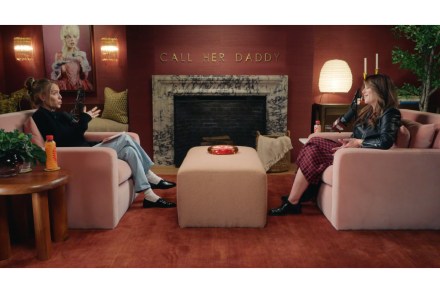
Monica Lewinsky, the woman at the center of the scandal that led to the impeachment of President Bill Clinton, opened up about her journey and how America has changed in its understanding of power dynamics and owning one’s sexuality on the Call Her Daddy podcast Tuesday. Lewinsky walked through how she processed the power imbalance involved with the scandal over time. When it was happening, she didn’t think about it much. “I thought it was something it wasn’t. My feelings were real,” she told host Alex Cooper. It wasn’t until later that she was fully able to digest what she was going through at the time. “I'm very clear that this was not sexual assault. And therefore, there is a level of consensuality that was there.

alex cooper monica lewinsky

Bill Clinton’s latest memoir sees him at his chirpiest — and most combative

In February 1974, the British prime minister Edward Heath, then facing one of his country’s cyclical economic crises, called a snap general election. The result was close; Heath’s Conservative Party won the popular vote but secured fewer parliamentary seats than the Labour opposition. After power-sharing discussions broke down, Heath resigned from office. A fifty-seven-year-old bachelor without a London home of his own, he lodged for the next several months at a small Westminster flat owned by his political secretary Timothy Kitson. The man who had served as his nation’s head of government for the previous four years was left with a typist, a single daytime detective and a part-time driver at his disposal.

Clinton

How Biden’s bad debate exposed the legacy media

The American media is in a credibility crisis following President Biden’s car-crash debate performance last week. How is it that so many reporters and pundits failed to reveal the depth of the commander-in-chief’s decline? Public trust in the media is in the basement — but it’s been tailing off since 2008, when the legacy media landscape in the United States fundamentally shifted.   Before 2008, the legacy media — while always leaning to the political left — had maintained a patina of objectivity. When Bill Clinton lied to the American people about his affair with Monica Lewinsky, they belatedly pounced. When John Kerry’s campaign began to crater, they reluctantly covered it. They were, to be sure, oriented against Republican candidates and policies.

joe biden debate

The new wave of woman hate

It was in the late 1990s, during then-President Bill Clinton’s scandal, when I first concluded that neither major political party actually cared about women. I watched — in horror — as the Democrats downplayed the allegations and defended Clinton’s actions rather than fully supporting Monica Lewinsky. Republicans exploited her testimony in order to discredit and weaken the president. Both parties used her to advance their own agendas at the expense of Lewinsky’s dignity and well-being. While the adults around me were concerned with the political fanfare, I only saw a young woman caught in the crossfire, enduring public scrutiny, humiliation and personal trauma while the media feasted on the spectacle.

woman

Ann Coulter: twenty-five years on from the Clinton impeachment

Happy twenty-fifth anniversary of the greatest headline in world history! DRUDGE REPORT NEWSWEEK KILLS STORY ON WHITE HOUSE INTERN BLOCKBUSTER REPORT: 23-YEAR OLD, FORMER WHITE HOUSE INTERN, SEX RELATIONSHIP WITH PRESIDENT Thus began the nation's one-year slog through President Bill Clinton’s lies and calumnies, ending in his disgrace and impeachment. Now, that was an impeachment. You missed a good one, kids. President Trump was impeached for making an (allegedly) inappropriate call to the president of Ukraine? Oh please. To discuss what Clinton did in the Oval Office the whole country needed a V-chip.

bill clinton

How Ken Starr served America

I first met Ken Starr in 1989. I was a Wall Street Journal editorial writer who was invited to speak at a conference held by the Federalist Society’s chapter at Cornell University. I met two very impressive people that day. One was Leonard Leo, the head of the Cornell Federalist Society. Only twenty-four, it was clear he had a natural genius for organizing, planning and networking. As the later head of the Federalist Society, he turned it into the premier farm team for conservative lawyers who wanted to become judges. In 2020, then-CNN legal analyst Jeffrey Toobin told a group of lawyers that Leo had played a major role in the selection of a majority of the Supreme Court.

ken starr

Matt Drudge was ahead of his time

There are two new movies in the works about internet provocateur Matt Drudge, and with the mic dropping on Roe v. Wade, today, they couldn’t come at a more appropriate time. Drudge has been dictating the national news conversation for decades, but he wasn’t always doing it out of the limelight. The tale of how a CBS Studios gift shop clerk came to inform the most powerful leader of the free world (Trump used to be a big fan) and the likes of the late Rush Limbaugh has been documented in articles, books, and a television series. Drudge went dumpster diving, found a discarded contract, and was the first to report that Jerry Seinfeld was negotiating for $1 million an episode for his show. Drudgereport.

Here come the Nineties

Everyone is bullish on natural gas, but I think America’s most inexhaustible resource might be 1990s nostalgia. Every time it seems our BuzzFeed badlands have run dry, another Friends reunion or reassessment of Francis Fukuyama comes gushing through the soil. So it is that the most hyped series on TV right now is American Crime Story, dedicated this season to Ryan Murphy’s telling of the Clinton impeachment. Legends of the Hidden Temple, perhaps the most beloved children’s show from the Nineties (and that’s saying something), is being remade for adults. Even the recent death of comedian Norm Macdonald elicited callbacks to the days of cynical wiseasses and O.J. Simpson cracks. What is it about the Nineties that remains stuck in America’s craw?

nineties