Money

My top tips for the racing season

From our UK edition

The cockerels of jump racing had better look out: the Hen is back. At 76, Henrietta Knight, whose feat of training Best Mate to win three consecutive Cheltenham Gold Cups will probably never be equalled, is to renew the licence she relinquished 11 years ago to care for her late husband, Terry Biddlecombe. Racing fans will be delighted; perhaps a few of the 27 trainers interviewed in depth by a ‘retired’ Henrietta for her revealing book The Jumping Game: How National Hunt Trainers Work and What Makes Them Tick slightly less so.

The beauty of mid-range products

From our UK edition

Once or twice, when on a crowded overnight flight, I have taken a sneaky stroll through the different cabins for the purpose of comparison. My reaction on first peering into each cabin goes like this. First class: ‘Gosh, this is fabulous. It’s like a restaurant in the air.’ Business class: ‘Ooh, this is nice; they get flat beds and everything.’ Premium economy: ‘Well this is OK; the seats seem comfy and it’s all pretty civilised.’ Economy: ‘It’s the “Raft of the Medusa”.’ Now here’s the thing. In terms of comfort, the biggest gap between two adjacent flight classes is between economy and premium economy.

Britain has an entitlement problem

From our UK edition

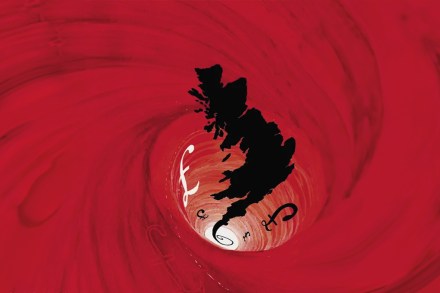
An Institute for Fiscal Studies paper, published at the end of last month, makes grim reading. Through the prism of the media reports it generated (‘One in 11 workers in England could be NHS staff by 2036,’ said the Guardian; ‘NHS staff will make up 49 per cent of the public sector workforce in 2036,’ said the Times), the most sensational finding was that our health service will be eating up an ever-increasing share of public spending. But, as so often, this particular cuckoo in the nest of public provision is only the most newsworthy of so many indications of Britain’s long, slow slide into insolvency. The gap grows between what we consider ourselves entitled to and what our governments can afford The paper is part of the Institute’s series Green Budget 2023.

How chefs cut costs in the kitchen

From our UK edition

My grandmother, and many like her, kept an account book for household spending. This was not the product of an overbearing marriage or mistrust on anyone's behalf – it was simply how things were done at a time when habits had been formed during rationing after the second world war, and banking was manual and slow. I spent a lot of time observing her kitchen on childhood visits. It was where my lifelong obsession with cooking began, and I can still recall a sense of balance in how she shopped and cooked; she was fond of naughty treats and lavish cuts, but she kept a stock pot, knew her way around basic butchery and was reluctant to let anything go to waste.

What’s behind the bungalow boom?

From our UK edition

‘Bungalows are almost perfect,’ as the old gag goes. ‘They only have one floor.’ But these once unfashionable properties are rapidly becoming anything but a joke. While the mortgage crisis is cooling most sectors of the housing market, demand for bungalows is growing. Estate agents report the properties receiving dozens of offers, selling for tens of thousands over the asking price or being snapped up before officially going on the market. The usual breed of downsizers and retirees looking to replace large family homes with something all on one level are facing stiff competition from budget-conscious purchasers seeking to renovate single-storey homes – and often turn them into family homes with stairs.

Portrait of the week: BBC presenter scandal, EasyJet cancellations and a baby boy for Boris

From our UK edition

Home The government pondered whether to accept pay-review bodies’ recommendations on rises in public sector salaries. ‘Delivering sound money is our number one focus,’ Jeremy Hunt, the Chancellor of the Exchequer, said in his Mansion House speech. ‘That means taking responsible decisions on public finances, including public sector pay.’ Regular pay in the March to May period was 7.3 per cent higher than a year earlier, although it rose less than inflation. Unemployment rose from 3.8 per cent to 4 per cent; vacancies fell by 85,000 to 1,034,000. The average two-year fixed-rate mortgage rose to 6.7 per cent. Jeremy Hunt confirmed that he was refused a bank account with Monzo last year on the grounds that he was a ‘politically exposed person’.

Would a German takeover of BT be so bad?

From our UK edition

To the Mansion House, on an unbearably humid evening, for the Lord Mayor’s annual ‘Financial and Professional Services’ dinner. It’s a big night for the City, with the formal unveiling of reforms designed to channel pension money into unlisted equities, creating by 2030 a £50 billion pool of capital for high-growth UK companies that might otherwise list in New York or sell themselves elsewhere. Simplified London listing rules, favourable to founder-entrepreneurs, will be another part of a wider reform package, much of which has been foreshadowed in this column over recent months. But what a way to put out a major policy announcement.

Price caps are a slippery slope

From our UK edition

Sometimes it’s the little things that depress most. I groaned last week to hear the news item. The government is contemplating a ‘price cap’ on ‘basic items’ in ‘supermarkets’. Forgive the quotation marks, but each of these terms is so horribly problematic that one has to start by asking what they even mean. Has Conservatism in the 2020s lost its ideological moorings? Or perhaps one should start with a quick recapitulation of the history of this idiotic idea, because price control has been tried before, first by a Labour government, and then by their Tory successors who went on to consolidate the folly.

Is it time for the £100 note?

From our UK edition

Thanks to the recent spike in inflation, never have indisputable luxuries such as Sharwood’s mango chutney or Anchor butter quite so tested the domestic purse strings. The sad truth is, however, that it’s much worse than you think. Because unlike the watched kettle, the frog of devaluation hasn’t just arrived at a nice simmer, it’s begun to boil over. And mango chutney at £4.10 a jar is but the tip of the iceberg. For the long view consider the BBC’s new drama, Ten Pound Poms, about Brits who emigrated to Australia in the 1950s for the princely sum of a £10 processing fee. These days the closest you’ll get to Australia for a tenner is a four-pack of Castlemaine XXXX – and there probably won’t be much change from that either.

Regulators should not roll over for Revolut

From our UK edition

Since we launched our Economic Innovator (originally ‘Disruptor’) awards in 2018, I’ve had enjoyable contacts with well over 100 entrepreneur-led high-growth companies picked as finalists from across the UK. Most I met at convivial pitching lunches; the rest told me their stories by Zoom or phone. Only one chosen finalist has ever shunned both the lunch and the opportunity for a call: it was Revolut, the London fintech venture that’s currently hustling for a UK banking licence. Revolut’s 38-year-old Russian-born founder Nikolay Storonsky has built a serious disruptor, valued in 2021 at $33 billion. Though Schroders – as a Revolut shareholder – has marked that figure down to $18 billion, it still bears comparison with Barclays and NatWest at £25 billion each.

Why are Americans buying up our castles?

From our UK edition

You might think someone who grew up in the 356-room Belvoir Castle wouldn't be too worried by a traffic fine. But when Lady Eliza Manners was caught speeding, she avoided paying off the full £100 ticket by claiming ‘financial hardship’. And apparently she’s not the only budget-conscious occupant of the Leicestershire property. Her mother Emma, the Duchess of Rutland, recently claimed she shops in Asda. While it might be hard for those on the actual breadline to sympathise with the troubles of the titled and entitled, such states of affairs do stand to some sort of reason.

Why do people assume I am posh?

From our UK edition

If we cram any more doctors into our spare rooms we can put a sign outside advertising NHS accommodation. We came by the first one when he answered my ad on a well-known website, booked for a few nights and ended up staying for years. He has a family home elsewhere, but needs somewhere to sleep when he is working late at the nearby hospital. I cannot find a small house with a few acres that I can afford anywhere in Britain He is an anaesthetist and no trouble at all. We see him only one or two nights a week, or sometimes less, depending on his shift pattern. He arrives at night, looking like he’s anaesthetised himself, microwaves a ready-meal, then creeps silently to bed. He leaves very early the next morning and we won’t see him again for days or weeks.

Would you pay £24,000 for a fridge?

From our UK edition

At the start of this month, the modish kitchen appliance brand Sub-Zero & Wolf proudly announced the launch of its Classic French Door fridge-freezer. This beast of a machine, featuring Nasa-inspired air purification technology and an automatic ice-maker complete with 'party mode', will set you back £23,868 ­– or the best part of a year's salary for the average UK worker. Admittedly it does look like an impressive piece of kit, what with its nano-coated glass shelves which stop spills from spreading, crisper drawers with humidity levels designed to keep food fresher for longer and shadow-reducing interior lights.

The death of the landlord

From our UK edition

Spring is property auction season, when a motley collection of semi-derelict houses, flats with leases in the single figures and the homes of mortgage defaulters get sold off. This year, though, a scan of the catalogues of some of the UK’s leading property auction houses reveals a new class of property under the hammer: rental flats. Under pressure from rising interest rates and increasing regulation, many landlords are opting for an exit strategy. According to recent research from estate agent Hamptons, Britain’s rental sector is losing homes at a rate of 66 per day. Agents across the country report an influx of instructions from small-time landlords who’ve decided to invest elsewhere.

In defence of the £20 burger

From our UK edition

Would you spend £20 on a burger? To many in Britain, that price would be unaffordable. Possibly this applies to more people in 2023 than it would have done five years ago because the country has become that much more egregious. Financial progress today is an increasingly laughable concept. Unless you own Amazon, that is, or landed a PPE contract in the pandemic.  But there are many others who could afford a £20 burger, yet find the notion of paying that sum unacceptable. This was made glaringly apparent recently when the chef Gary Usher shared the menu from his new Cheshire pub, The White Horse. The pub doesn’t open until 3 March, but already would-be punters have been scoffing at the burger on offer.

The UK is right to keep faith in crypto

From our UK edition

It will be a charter for fraudsters. It will usher in an open-season mindset for money launderers and criminals. And it will drag down the reputation of the City. There will be plenty of critics of today’s government decision to push forward with a regulated cryptocurrency market in London. In the wake of the FTX scandal, one of the largest in corporate history, many would rather see it banned completely. But crypto is more resilient than that – and the UK, if moves quickly, it can carve out a lucrative space as its leading hub.  No one could accuse Rishi Sunak or Jeremy Hunt of taking any risks with the British economy. Nor have the Prime Minister or Chancellor shown much interest in boldly re-inventing the country’s business model.

In defence of Spotify

From our UK edition

‘Pitiful.’ That’s the verdict of Damian Green MP, acting chair of the digital, culture, media and sport committee, on the payouts that streaming companies such as Spotify and Apple Music provide to musicians. An update to the group’s Economics of Music Streaming report, published on Friday, calls on the government to take a ‘proactive strategic role’ to make sure Britain’s music industry – one of the few that truly is world-beating – gets the cash it deserves. With streaming now accounting for 84 per cent of UK recorded music revenues, its businesses model really matters.

Why are experts always wrong about house prices?

From our UK edition

Over the past two generations, those with property in the UK have been unwittingly transformed from owners to investors. This makes no sense, and has led to a lot of baby boomers feeling smug and clever when in reality they’ve just been lucky. However, the effect has been lasting and means property owners are now a politically valuable group – and that what your house is worth has disproportionately strong influence on how rich you feel. And of course, now that everyone has an interest in the value of their home, there are plenty of supposed experts willing to pretend they’re helping you look ahead to see what will happen in the market. It’s particularly prevalent at this time of year, i.e.

Why tax-free shopping matters

From our UK edition

One initially overlooked aspect of Liz Truss and Kwasi Kwarteng’s ill-fated mini-Budget was the plan to restore VAT-free shopping for tourists. The scheme, which allowed non-EU visitors to claim back 20 per cent on their purchases, was scrapped in 2020 by then chancellor Rishi Sunak but looked set for a comeback. This was excellent news where I live – Japan – and throughout Asia, where holidays are short and shopping plays a big part in overseas trips. But just as tourists were writing up their lists and planning their itineraries, Jeremy Hunt pulled the rug from under their feet by cancelling the uncancelling before it had even reached Kwarteng’s promised consultation phase. Was he right to do so? Almost certainly not.

Do you have ‘smart meter stress’?

From our UK edition

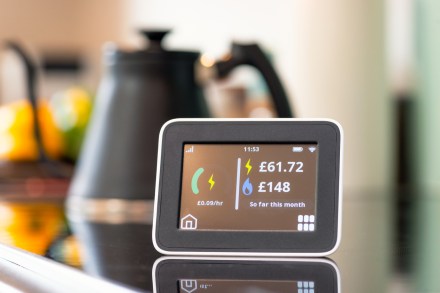
Are you suffering from SMS? Smart meter stress, that is. When we decided recently to accept our energy provider's offer to install a smart meter, I had no clue how anxiety-inducing the digital display on the little black monitor could be. Smart meters tell us (and our suppliers) how much energy we’re using, minute by minute. In theory they make life easier, helping us identify where we can reduce consumption and sending automatic readings so that we’re less likely to underpay or overpay on our bills. There are already 29.5 million smart meters installed across the UK, and by the end of 2025 every home and office in Britain will have been offered one.