Moby-Dick

The man who’s destroying Spain

From our UK edition

Madrid In the mid-1990s, Spain’s socialist prime minister Felipe Gonzalez saw his political career collapse under the weight of a corruption scandal. A Supreme Court investigation revealed a fraudulent contracting scheme that illegally funded the Socialist party’s (PSOE) election campaigns. Despite intense media pressure from government-aligned outlets, two brave judges upheld the rule of law. Three decades later, another socialist Prime Minister – Pedro Sanchez – faces a similar reckoning. But this time, the scandal combines political manipulation, personal ambition and institutional degradation. Corruption is as old as power itself, yet in Sanchez’s case it takes on a uniquely modern and dangerous form.

Has the American novel abandoned God?

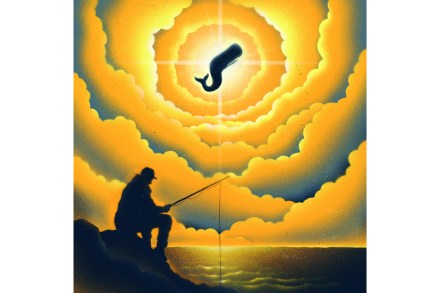
I have always thought “Call me Ishmael” to be a rather camp introduction to a novel. Given the line’s conspiratorial intimacy, I have long imagined it whispered by a drag queen in a dive bar at 3 a.m. This, however, is the fault of my own unseriousness. The resonance of the name Ishmael — Abraham’s illegitimate son by Hagar who is destined to wander the desert — remains the opening example of one of the clearest, cleverest and most consistent of themes in Herman Melville’s magnum opus Moby-Dick, namely, the quest for God. Religion runs through Moby-Dick. We might almost say that the Bible haunts it. There are the names, mostly of Biblical characters, and even the direct invocation of prophets: Ezekiel, Elijah and, of course, the ur-whale wrestler, Jonah.

God