Misogyny

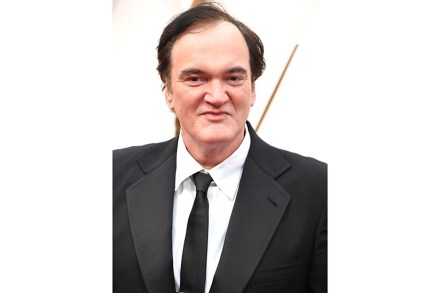
Startlingly sadistic: Once Upon a Time in Hollywood, by Quentin Tarantino, reviewed

From our UK edition

There’s no doubt that Quentin Tarantino is a movie director of brilliance, if not genius. But can he write? Well he can certainly tell a good story. What we have here is Tarantino’s ninth feature film, a 1960s Hollywood yarn about a fictional actor and his stunt double, but rendered in book form. Rick Dalton is the TV and B-movie actor, while his stuntman, Cliff Booth, ruined his own career by beating up Bruce Lee during a shoot. He’s now reduced to being Rick’s driver and drinking buddy. The two of them are on the slide, but things start to look up when Rick lands a role in a new cowboy TV drama.
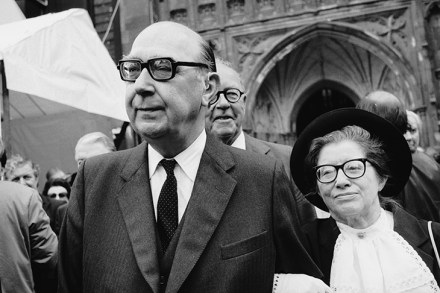
Two of a kind: Monica Jones proved Philip Larkin’s equal for racism and misogyny

From our UK edition

By the time Philip Larkin died in 1985, he’d long since achieved national treasure status: his poems were critically admired as well as widely read; his reticence (‘the Hermit of Hull’) was a matter of affectionate respect; and his cantankerous published remarks about ‘difficulties with girls’, children, left-wing politics, and ‘abroad’ were generally embraced as proof of valiant individualism — or possibly a grouchy kind of joke.

We need Voltaire more than ever

From our UK edition

New York The high life has gone with the wind because of you know what. The last time I went to a glittering ball, Marie Antoinette still had a head on her shoulders, or so it seems, and sweats and leggings are now ubiquitous at intimate dinner parties. Here in the Bagel fashion has followed the street for a long time, making high fashion seem as irrelevant and obscene as Anna Wintour being paid millions to kiss the ass of celebrities. No sweats, no leggings was my only rule for an intimate dinner for Prince Pavlos, expertly cooked by Michael Mailer and attended by Arki Busson and three youngsters of the female persuasion.

Is making misogyny a hate crime really a victory for women?

From our UK edition

Misogyny will now be recorded as a hate crime by police. But is this really the victory for women’s rights that campaigners are claiming it to be? It’s absolutely right, of course, that the law is bolstered so that incidents against women are taken seriously by the police. But the wording of the policy is disappointingly woolly, relying heavily on what the victim perceives as the motivation for the crime. Speaking in the House of Lords, Home Office minister Baroness Williams said that from the Autumn:  ‘We will ask police forces to record and identify any crimes of violence against the person… where the victim perceives it to have been motivated by a hostility based on their sex.

Watch Andrew Marr stare at places where stuff happened: New Elizabethans reviewed

From our UK edition

Congratulations, everyone! It turns out we’re much better than those bigoted old Brits of the 1950s. After all, they were ‘class-obsessed, overwhelmingly white and Christian, and deeply conservative about the role of women’ — whereas we ‘accept difference and diversity in a way that would have been almost unthinkable in 1953’. This was the reassuring message in the first episode of New Elizabethans by Andrew Marr, where Marr surveyed Britain’s changing social attitudes since the Queen came to the throne, and liked what he saw. These days, needless to say, the ‘great man theory’ of history has rather fallen out of fashion — so instead Marr brought us a sort of ‘great activist’ version.

The mix of slapstick and sermonising is certainly original: In Bad Taste reviewed

From our UK edition

In Bad Taste is a slapstick comedy about five female terrorists who murder the governor of the Bank of England. They chop him to pieces, cook him in a casserole and devour the lot. Their plan is to ‘eat the rich’, literally, and to trigger a worldwide revolution. After this grimly hilarious opening the script takes a sharp U-turn when one of the women makes a speech denouncing misogynists. The others agree to drop the revolt against the wealthy and to hunt down nasty men instead. Each woman suggests a candidate for execution: a male colleague who works too sluggishly, a father-in-law who makes judgmental comments, a drunkard who gropes barmaids. The killing begins. Nine victims are axed to death and their bodies cannibalised. The police launch a manhunt.