Migration

The Lampedusa hypocrisy: Italy prefers its migrants dead on arrival

From our UK edition

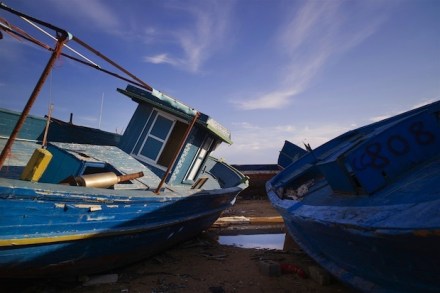
Italy has held a day of national mourning in memory of those who died in the 3 October disaster off Lampedusa. The victims - mostly from Eritrea, Somalia and Syria - were given Italian citizenship posthumously and are now - it was announced yesterday - to be honoured at a state funeral. The desire of the Italian government to salve its conscience following the fire and shipwreck that cost an estimated 250 lives is understandable. But such measures are grotesque and will only reinforce the idea, among would-be refugees and their advocates, that a dead migrant is preferable - at least in the eyes of the receiving country - to a live one. Will the Italian authorities, I wonder, be so keen to grant the survivors citizenship?
Righteous indifference and how to fight it.

From our UK edition

Last week I wrote in the Observer about Qatar's treatment of the hundreds of thousands of migrant labourers, who will build the stadiums and hotels for the 2022 World Cup. They were dying at a rate of one day. They had to cope with inhuman conditions and labour laws that treated them as serfs by giving employers the power to break contracts and stop them leaving the country if they complained. The absolute Qatari monarchy ran a kind of apartheid system, I said. It denied rights it granted the natives to poor workers from Nepal and India. If the image of the old South Africa did not appeal, I offered Sparta as an alternative – 'but instead of a warrior elite living off the labour of helots, we have plutocrats and sybarites sustained by faceless armies of disposable migrants'.

Why doesn’t David Attenborough blame Muslims for overpopulation?

From our UK edition

The national treasure and naturalist, David Attenborough, has been pronouncing, yet again, on the subject of world population growth. In an interview with the Daily Telegraph he opined that the famines in Ethiopia are about too many people competing for too little land and in the circumstances it’s 'barmy' to address the problem by sending them bags of flour. The great thing about being 87 is that you can stop worrying what people think but Sir David seems unusually alert to the 'huge, huge sensitivities' about his opinions. And one is that: 'When you talk about world population … the areas we are talking about are Africa and Asia. To have a European telling Africans that they shan’t have children is not the way to go about things.' It’s a useful admission.

Portrait of the week | 5 September 2013

From our UK edition

Home Having recalled Parliament to debate British military action over Syria, David Cameron, the Prime Minister, found the government defeated, much to his surprise, by 285-272, thanks to 30 Conservatives and nine Liberal Democrats voting with the opposition. He immediately told the Commons: ‘It is clear to me that the British Parliament, reflecting the views of the British people, does not want to see British military action. I get that and the government will act accordingly.’ Next day, Lord Ashdown, the former leader of the Lib Dems, tweeted: ‘In 50 years trying to serve my country I have never felt so depressed/ashamed.

Migration Hotspots, by Tim Harris – review

From our UK edition

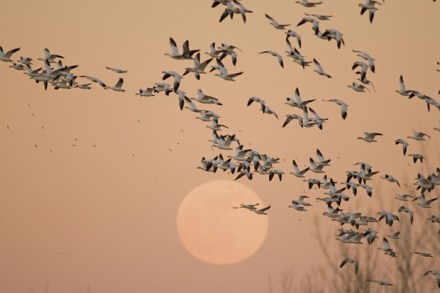
Consider for a moment the plight of the willow warbler. Russian birds of this species fly between eastern Siberia and southern Africa and back every year of their short lives, a distance of nearly 7,500 miles in each direction. Each weighs roughly as little as two teaspoons-full of sugar. But at least these tiny birds can refuel on their journey. Southern bar-tailed godwits are unluckier. These fly the 7,000 or so miles between New Zealand and Alaska over the immense Pacific Ocean — hence non-stop — twice each year. Moreover, Arctic terns migrate from the Antarctic to the Arctic and back again: a fledgling of this species, born on the Farne islands off the Northumberland coast, was recorded only three months later near Melbourne, Australia.

Why, once again, a fall in student immigration is good

From our UK edition

Yesterday came the news that net migration has once again fallen, this time to its lowest level for ten years. In the year ending September 2012, net migration was 153,000. That is a fall of 89,000 on the previous year when it reached a dizzy 242,000. This is undeniably good news. The public have consistently shown their desire to see net migration reduced and we now have a government which is committed to lowering net migration and has so far had considerable success. Many on the left, who cannot bring themselves to admit that net migration of 200,000 per year is too much for a small island such as ours, continue to perpetuate the idea that, in the process of reducing net migration the government is harming the economy.

Falling net migration: A trap for future governments?

From our UK edition

Today’s migration statistics show a marked decline in net migration to the UK (down 34 per cent to 163,000 in the year to June 2012). Although this still leaves the Government some way off their target of reducing net migration to less than 100,000 by 2015, ministers will be pleased to be able to say that things are, in their terms, moving in the right direction. But there is a catch, and the simple maths of net migration mean that the current Government may be, wittingly or unwittingly, laying a trap for themselves, or for a future one. Net migration is the difference between immigration and emigration.  So net migration rises if immigration goes up, or if emigration goes down; and falls if immigration goes down, or if emigration goes up.