Midwest

Fateh vs. Frey

It’s not fair that all the Great American mayoral discussion revolves around the coasts. Sure, Los Angeles has the one who oversaw the burning down of the nation’s second most populous city from halfway across the world. And New York City has been bleeding money as if it were the star of a sequel to “Brewster’s Millions,” but without the promise of a massive payday at the end. Right in the middle of the nation, tucked into the banks and headwaters of the mighty Mississippi River, is Minneapolis: the little city that could, chugging its way full speed ahead – right off the cliff of Midwest sensibility, prudence and normalcy. Woke came to town, and it’s got a bone to pick with common sense.

Minneapolis mayor Jacob Frey after his 2021 victory (Getty)

The plight of the Midwest Protestant church

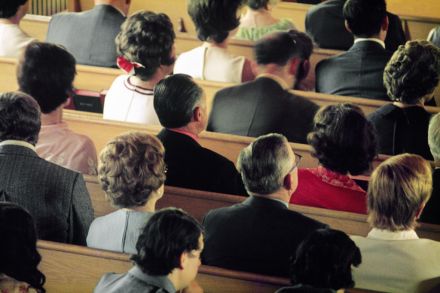
One icy day in January, the 130-year-old First Methodist Church in Princeton, Indiana, burned to the ground after years of slow decline. Through the years the church’s beautiful crescent sanctuary had seen christenings, confirmations, weddings, funerals, the full circle of small-town religious life. Downstairs hosted the Pinewood Derby and the yearly pancake and sausage breakfast. Boy Scouts learned first-aid there; seniors practiced CPR. That was all long ago. The destruction left by the fire was so complete authorities in the small Southwest Indiana county seat couldn’t find a proximal cause. But ultimately, it was gradual social and generational change that left the building underused, expensive to maintain, impractical and finally vulnerable.

church faith

Why German-origin Americans keep quiet about their culinary contributions

Irish Americans are arguably the most ostentatious in their national celebrations. It is hard to imagine any other group getting a day off work and spending it turning the Chicago River green. I wrote of my own Irish pride in these pages last year. March 17 was the highlight of our social calendar. My grandfather inaugurated our city’s St. Patrick’s Day parade, which still runs in Great Falls, Montana, today. Montana — especially Butte — is famous for its Irish population, which makes up 15 percent of residents. But there is a significantly larger ethnic group in Montana, whose traces of national pride are almost imperceptible. According to a US Census Bureau survey in 2020, 24 percent of Montanans claim German ancestry.

German

Kamala picks the ‘Minnesota Nice’ guy

It’s not hard to recognize the sunny optimism that embodies the phrase, “Minnesota Nice.” You must be able to survive in a state where the land-locked upper Midwest weather vacillates between the stiflingly humid ninety-degree summers and dark, subzero winters. It’s those slivers of perfection between each season that make living here worthwhile; people flock to lakes with Native American names like Winnibigoshish and Minnetonka, whose purifying waters were made famous by Minnesota’s favorite native son, Prince. Our professional sports teams suffer from record-setting championship droughts, yet the fan base is never deterred.

tim walz minnesota nice

A Midwest road trip

The Midwest Notre Dame is not an Ivy League university and, in what I assume is some sort of intentional point, its buildings tend to be ivy-free. Perhaps it is the absence of ivy, perhaps I am just flat after a long day’s drive across Ohio and Indiana, perhaps it’s just winter, but the campus seems more sterile than I had expected. It’s Good Friday, and my friend Margot is studying classical architecture here. She’s showing me around the grounds. I don’t really know what I’d hoped to see. Amy Coney Barrett? Multiracial friendship groups, skipping across the green? As soon as I see the stadium, though, I am transfixed. Margot is visibly disappointed when I say that I adore the stadium above all the other buildings.

james donald forbes mccann

What happened to the Disunited States?

Regionalism and the idea of America’s fracture are having a moment. Recent book releases include many titles focusing on American divisions, including Carrie Gibson’s history of the southwestern El Norte region and Kristin Hoganson’s study of the local, insulated, exceptional, isolationist and provincial ‘Heartland’, and Tony Horwitz’s journey deep into the South to understand how its Antebellum roots impact American divisions today.Perhaps the most widely accepted and popular idea of regional differences comes from Colin Woodard. He carved the country into 11 regional 'nations’, each with unique histories and cultures that he believes have shaped their ideologies and politics.

disunited

In our bleak landscape, all those Christmas lights aren’t so much decorations as declarations

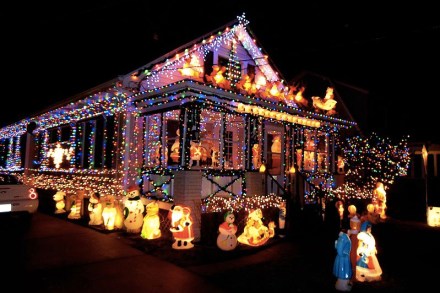
The Midwest loves Christmas. Loves it with all the ingenuity in its mind and vigor in its limbs. Loves it with all the passion in its soul. All you need is a staple gun, a thousand feet of twinkly lights and, hey presto: a house roof bright enough to illuminate the season. Or guide a spacecraft down from Mars. Only Halloween can rival Christmas in the small cities, and rival is too strong a word. Better to say that Halloween is the only other holiday for which Midwesterners are willing to bring out their staple guns and inflatable lawn ornaments. But the effort is almost half-hearted, compared to Christmas.

christmas lights madison wisconsin

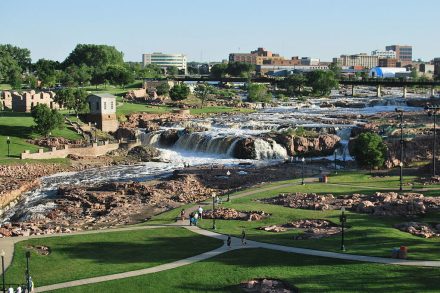
Did the cyber revolution save Sioux Falls?

So, here’s a proposition — an idea, a notion that might be worth exploring: the computer revolution has saved the small city. Four decades into the digitizing of our lives, some of the unintended and unexpected consequences of computerization are coming clear. And one of those consequences may be the possibilities for success found by some small Midwestern cities. The truly great cities of the nation — New York, Los Angeles — are among the most powerful economic engines ever created. The computer revolution proved to be jet fuel for the economics that brought them out of the doldrums of the 1970s. The large Rust Belt cities — Pittsburgh, Cleveland, Detroit — have either succeeded or failed to find a way out of the collapse of American manufacturing.

sioux falls

In praise of Midwestern manners

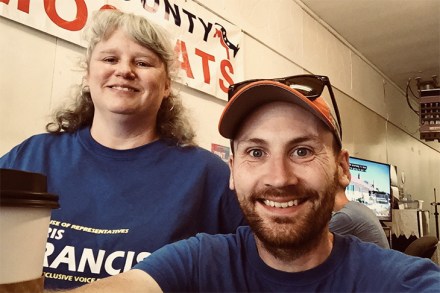
Chris Francis stopped by my table down at the Sundog coffee shop to chat for about 20 minutes last Friday, and he didn’t ask for my vote. Now, in the give and take of daily conversation — the ebb and flow of coffee-shop chatter in a small Midwestern town — lots of people don’t canvass for votes. But Chris is a Democratic candidate for one of the District 8 seats in the state legislature here in South Dakota, and he’s going to need all the support he can get when election day comes in November. The reason Chris didn’t ask may be that he assumed I already planned to vote against him, although I’ve only met the man once or twice when I stopped by the Brickhouse, the local arts centre he runs.

chris francis south dakota midwestern manners