Middle ages

The difficulties of writing historical fiction

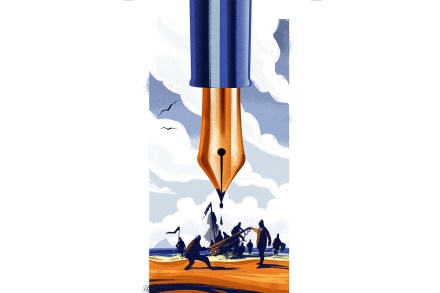
I was dozing, a little hungover, on the morning flight from Prague to London, when I saw them for the first time. Ten men on a beach, dragging a landing craft up the sands. Where? Can’t tell yet. When? The fourteenth century. Who? Don’t know, but they look like trouble. I woke up. Through my AirPods I heard the Blur singer Damon Albarn growling the final song from their 1997 album Blur. “In these towns, the English army grinds their teeth into glass / You know you’ll get a kicking tonight...” I opened my laptop and started making notes. The men came surprisingly well-formed. They were soldiers of fortune in the Hundred Years’ War. They already had names. Faces. Talents. Foibles. Yearnings. Secrets. I wrote down as much as they could tell me before the plane landed.

historical fiction

The culture war over the Middle Ages

There is a war afoot, here in late civilization, over the meaning and legacy of the Middle Ages. Two distinct fronts have emerged from either side of our political spectrum. On the left, in the academy, medievalism is being diversified out of existence, its defining Western characteristics relegating it to a smaller place in a global mosaic. On the right, a certain breed of new conservative is reclaiming the Middle Ages as a keystone period in which order and reason ruled, instead of the swivel-headed “scientism” of pure observation brought on by the Enlightenment. The ground upon which this battle is joined is the traditional Anglosphere understanding of the medieval period, roughly the fifth to fifteenth centuries ad, a period most commonly thought of as the “Dark Ages.

Middle Ages