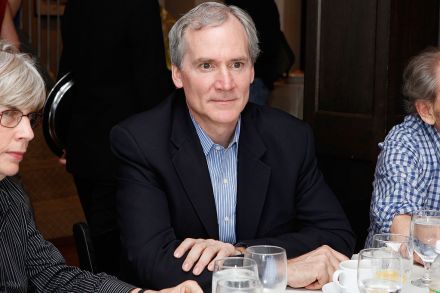
Stanford’s Marc Tessier-Lavigne and the messiness of modern science
The president of Stanford University, neuroscientist Marc Tessier-Lavigne, has resigned in the shadow of an investigation that revealed that some scientific papers he had overseen contained “manipulated data” or evidence of other kinds of scientific malpractice. His resignation may well be warranted — but before he disappears into ignominy, it would be wise to consider the situation. In the now dimly remembered past, a scientist devised experiments and, working alone or with the help of a loyal assistant or two, carried them out. Or he sat in a room, as Einstein did, and thought through deep problems, eventually penning an article in which he said forth a bold new hypothesis.