Malaria

The good, the bad and the grotesque: the mind-blowing diversity of parasites

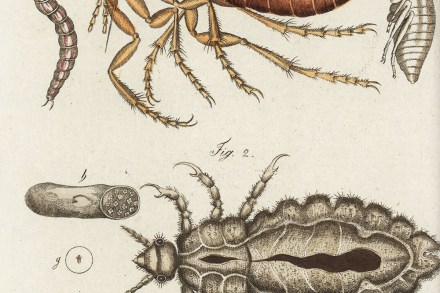
The oldest surviving sentence ever written in the first alphabet is inscribed on an ivory comb found in the ruins of the Canaanite city of Lachish in what today is Israel. Dating back around 3,700 years, it offers the owner a blessing of sorts: “May this tusk root out the lice of the hair and the beard.” As Dino J. Martins points out in his marvelously entertaining tour of the netherworld of parasites, the comb (the design of which is almost indistinguishable from the plastic ones we use for the same purpose today) speaks of the depth of the human relationship with lice – creatures that have traveled with us, fed on us and multiplied with us for millions of years. Martins is the perfect guide.
The good, the bad and the grotesque: the mind-blowing diversity of parasites

The oldest surviving sentence ever written in the first alphabet is inscribed on an ivory comb found in the ruins of the Canaanite city of Lachish in what today is Israel. Dating back around 3,700 years, it offers the owner a blessing of sorts: ‘May this tusk root out the lice of the hair and the beard.’ As Dino J. Martins points out in his marvellously entertaining tour of the netherworld of parasites, the comb (the design of which is almost indistinguishable from the plastic ones we use for the same purpose today) speaks of the depth of the human relationship with lice – creatures that have travelled with us, fed on us and multiplied with us for millions of years. Martins is the perfect guide.

Clear, thorough and gripping: BBC2’s Horizon – The Battle to Beat Malaria

From our UK edition

If you transcribed the narrator’s script in almost any episode of Horizon, you’d notice something striking: an awful lot of the phrases would end with a colon, and for one obvious reason: to play a neat trick on the viewers: that of making them keen to hear what comes next. (You get the idea.) Monday’s programme therefore began by explaining that the mosquito is ‘the target of one of medical science’s greatest quests: the battle to save millions of lives and end a scourge that has shaped human history: malaria’.

The complexities of our colonial legacy

From our UK edition

It happened by accident. In 1829 the naturalist Nathaniel Bagshaw Ward was trying to hatch a moth pupa. He placed it in a sealed glass container, along with some soil and dried leaves, and set it aside. Sometime later he was surprised to find that a fern and some grass had taken root in the soil, despite having no water. As Sathnam Sanghera writes in Empireworld, the discovery ‘revolutionised the logistics of international plant transportation’. Suddenly there was a means of securely transporting seeds and seedlings across vast distances. Empireworld is a sequel to Sanghera’s wildly successful Empireland. Where the latter examined the legacies of empire in Britain, this book seeks to apply that template to the world.