Mafia

What happened to Gomorrah?

From our UK edition

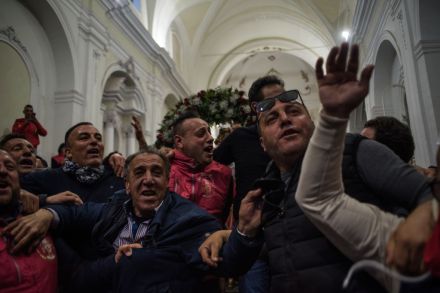
You’re not going to like this and it pains me to say so but Gomorrah: The Origins is not in the same league as Gomorrah. The wardrobe is more stylish, the characters are more approachable, the dialogue is more expensive, the locations are more attractive, the plotting is more comprehensible, and the mise-en-scène is lusher, more cinematic and less spare. But in the context of the original, these qualities aren’t so much a virtue as a capitulation. Gomorrah (or Gomorra – La Serie, as it was in Italian, so one can never remember whether or not to include the ‘h’) ran on Sky Atlantic for five seasons from 2014 to 2021. This was a period where Anglo-American TV had long since begun its inexorable decline into glib, shallow and predictable diversity-cast wokedom.
The mistakes of Prohibition still haunt us

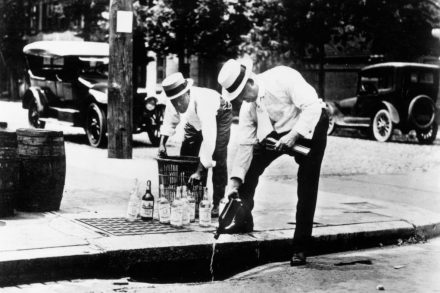
On December 5, 1933, exactly ninety years ago, the Eighteenth Amendment was repealed, formally lifting the ban on alcoholic beverages that defined the Roaring Twenties. Of course, that wasn’t the first time someone tried to outlaw the world’s most popular drug, but it’s probably the best-known case study where the contrast between intended results and reality reached absurd extremes. And yet, the best part of a century later, the same mistakes haunt us.  Saloons had a reputation as pretty rowdy places, filled with whores, card playing and drunken cowboys. The Anti-Saloon League formed to shutter these dens of sin. The League’s leader, Wayne Wheeler, who spearheaded the movement towards Prohibition, told different parties what they wanted to hear.

prohibition

The Vatican and the Mafia – why Italy can’t seem to shake off organised crime

From our UK edition

35 min listen

The Sicilian Mafia is one of the most murderously amoral organisations on the planet – yet babyishly sentimental when it comes to Italian peasant Catholicism. And, like other branches of Italian organised crime, questions exist over whether they have allies in the Vatican, some of whose senior officials are as keen on money-laundering as the Mafia, only not so good at covering their traces.  The relationship between the hitmen and the hierarchy casts an exotic shadow over a new series of thrillers by Alexander Lucie-Smith, the first of which, The Chemist of Catania, has just been published. To quote A.N. Wilson, Lucie-Smith's plots are fast and his characters unforgettable. 'Menace, suspense, lust, love and fear all enliven his narrative.

The making of The Godfather was almost as dramatic as the film: Paramount+’s The Offer reviewed

From our UK edition

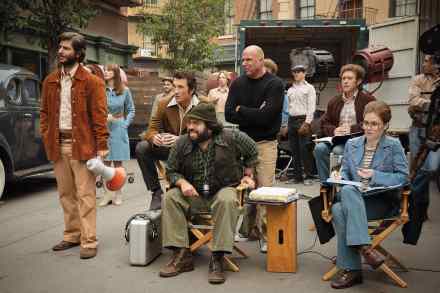
It’s hard to imagine in the wake of GoodFellas, The Sopranos and Gomorrah but there was a time, not so long ago, when the very existence of the Mafia was widely dismissed as an urban myth. What changed was Mario Puzo’s 1969 bestselling novel The Godfather, which sold nine million copies in two years. You might assume, not unreasonably, that the 1972 movie version – now acknowledged as one of the greatest films of all time – was one of the most obvious commissions in Hollywood history. But it was dogged by so much controversy and plagued by so many disasters that it was very nearly stillborn.

Impossibly exciting: Sky Atlantic’s ZeroZeroZero reviewed

From our UK edition

ZeroZeroZero is the impossibly exciting new drugs series from Roberto Saviano — the author who gave us perhaps my all-time favourite TV drama Gomorrah. What I love about Gomorrah is its utter ruthlessness and total artistic integrity. It’s set amid the warring drugs factions of the Neopolitan mafia (the Camorra) and never at any point do you feel that authenticity is being sacrificed for reasons of marketability or politically correct sensitivities or narrative arc. Not without reason has it been called the series ‘where characters die before they become characters’. Saviano himself has paid a terrible price for his honesty.