London

King’s inflation nation

From our UK edition

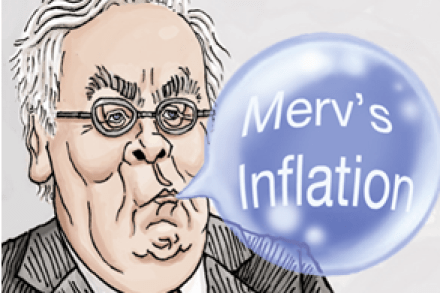
If Mervyn King and his team are trying to deal with Britain's debt crisis by letting inflation rip, I do wish they would just say so - rather than go through this monthly farce. Yet again, base rates have been left at an absurd 0.5 per cent, in an economy expected to grow by a full 2 percent this year but with inflation at 3.3 percent or 4.8 percent depending on how you measure it. Petrol prices are bad, but now they are matched with soaring prices elsewhere - from train travel to groceries. Here's a list of some price rises confronting shoppers:   Add Osborne's VAT rise to non-food items and we will see CPI inflation soon at 4 percent, twice the Bank of England's much ignored target. Here's what puzzles me.

Dave and Boris, united in anger

From our UK edition

A potent Tory tag team in the Sun today, as David Cameron and Boris Johnson join pens to take on the unions. The tone of their article is as blunt as anything we've heard from them on the matter, particularly the Prime Minister. "Let's call these threats what they are," it says about the prospect of strikes during the Royal Wedding and the Olympics: "nothing more than headline grabbing to score political points". And it continues to deliver a warning to union bosses: "you can try to drag this country back to the 1970s, to a time when militants held our country to ransom, but you will not succeed." It's not all frontal assault, though. There's a subtler vein of divide-and-conquer in all this.

Across Europe, students are protesting against the end of their entitlements

From our UK edition

A month ago I found myself in the space of one week in two different countries, yet in the midsts of what felt like the same phenomenon: the political awakening of a new generation. In both London and Rome, students took to the streets to protest against government policies in numbers and in ways that those who graduated just a few years before would have found anachronistic, odd even. Unsurprisingly, given the historical, political and even emotional differences between Britain and Italy, there were differences between the protests. But as I walked the packed streets, listened to the protests, read their slogans, I heard similar arguments - particularly about the lack of fairness. When both events were finished, Whitehall and Via del Corso looked similarly destroyed.

Clegg turns his attention from the students to the banks

From our UK edition

'Tis the season to bash a banker – or it is if you're a Lib Dem, at least. After the stresses of last week, Nick Clegg lets off steam with an aggressive interview in the FT. "They don't operate in a social vacuum," he says of the City's moneymen, before seething that, "it is wholly untenable to have millions of people making sacrifices in their living standards, only to see the banks getting away scot-free." He even suggests that the government should consider a one-off bonus tax, like that introduced by Labour last year.   Will anything come of it? On the evidence so far, probably not. The coalition – from Vince Cable to George Osborne – has certainly not shied away from tough rhetoric on lending and bankers' bonuses.

Baby Steps in the Provinces

From our UK edition

One of the good features in the government's Localism Bill is the proposal for referenda on more directly-elected mayors. At present it seems only a dozen English* towns and cities are taking advantage of these plans but one hopes more will do so in the future. Contemplating this, Bagehot chews on centralisation and London's hegemony in British (and especially English) life. As he observes, generally speaking London has been the dominant city in England for centuries, dwarfing its rivals. But there was a spell when this wasn't the case and one need only look at Town Halls and Corn Exchanges and museums and galleries and Assembly Rooms across Britain to appreciate that there was an era when provincial towns and cities boasted a confidence expressed in brick and stone.

The road to ruins

From our UK edition

Director Patrick Keiller made his name with London (1994) and Robinson in Space (1997), semi-documentaries recounting the peripatetic investigations into ‘the problem of England’ conducted by the unseen narrator and his fellow academic Robinson. The late Paul Scofield’s voiceover, rich in literary reference and understated satire, combined with meticulous shot composition to produce unclassifiable portraits of a country forever in decline from its literary and industrial pre-eminence. In the new film Robinson in Ruins, Vanessa Redgrave assumes Scofield’s role as narrator.

Revealed: The Olympic cash-in

From our UK edition

It’s costing more than the government cuts in welfare, more even than the UK’s Irish bail-out, but what exactly is all that money set aside for the 2012 Olympic Games actually being spent on? You might be surprised. In this week’s Spectator, Andrew Gilligan and I disclose, for the first time, all the petty, legally-binding demands made by the 115-member International Olympic Committee (IOC) of London. This is information that the government, the mayor and the London Olympic organisers never wanted you to see – even though it forms a binding part of the Host City Contract signed when we won the right to host the games in 2005. Paul Charman, a researcher in East London who contributes to the website GamesMonitor (www.gamesmonitor.org.

Now for the real examination

From our UK edition

If William Beveridge were commissioned to write another report into Britain’s social ills, he would find that two of his ‘giant evils’ — ignorance and idleness — still stalk and shame Britain. If William Beveridge were commissioned to write another report into Britain’s social ills, he would find that two of his ‘giant evils’ — ignorance and idleness — still stalk and shame Britain. At the time, one might have argued that this was because schools lacked enough money or because the economy was a ruin. But today, when schools enjoy record funding and immigrants occupy one in seven jobs, only one conclusion can be drawn: that the welfare state has been incubating the very evils it was designed to eradicate.

What Kate should know | 16 November 2010

From our UK edition

CoffeeHousers, you may have heard: Prince William and Kate Middleton are going to marry. Even now, the news helicopters are cluttering the sky above St. James's Park. and their overhead imagery is punctuating the breathless television coverage below. As it happens, The Spectator dealt with this story in 2006, with a piece by Patrick Jephson, Diana's former private secretary, on what Kate Middleton can expect from marriage into the royal family. One or two of its references – such as, "It isn’t just Woolworth’s who are jumping the gun with souvenir wedding plates" – may have dated, but the future Princess Catherine may still care to read it: What Kate should know, Patrick Jephson, The Spectator, 30 December 2006 ‘Perhaps Miss Middleton ...

Some perspective on housing benefit

From our UK edition

Depending on who you read, the planned £400 a week cap on housing benefit is either comparable to Nazi concentration camps, death squads in Brazil, or ethnic cleansing in the Balkans Critics have ranged from the Mayor of London to the ultra Left. So it is worth taking a moment to get some perspective. Firstly, the general caps on housing benefit don't even impact on social tenants because they pay lower, subsidised rents, (though the £26,000 cap on the total amount of benefits per household might hit them). But for housing benefit claimants in the private sector outside London, less than 1% are affected by the cap. And even in London 9 out of 10 of private renters claiming housing benefit will be totally unaffected.

Boris v Dave, this time it’s serious

From our UK edition

Make no mistake about it, Boris Johnson’s rhetorical assault on the coalition’s housing benefit plan is a direct challenge to David Cameron’s authority. The two best-known Conservatives in the country are now involved in a battle that only one of them can win.   Boris told BBC London this morning: "What we will not see and we will not accept any kind of Kosovo-style social cleansing of London. "On my watch, you are not going to see thousands of families evicted from the place where they have been living and have put down roots." What is infuriating the Tory machine is not only Boris’s criticisms, but the language that he is used—which makes Labour’s talk of social cleansing sound positively moderate.

The Islamic Republic of Tower Hamlets

From our UK edition

Andrew Gilligan explains why Lutfur Rahman’s victory in Tower Hamlets is a potentially alarming development. Obviously, this is a humiliation for Ed Miliband. The victory of a de-selected Labour councillor is bad enough, but what does he say about Ken Livingstone’s involvement in Rahman’s campaign? Widening those imploring eyes, offering an apologetic shrug and saying "Ken will be Ken" probably won’t cut the mustard this time. Perversely, Livingstone might benefit from Rahman’s victory, as it has allowed him to resuscitate his ‘Red Ken the insurgent’ pose – and you can’t get much more cynically subversive than this latest stunt.

Osborne gets behind infrastructure

From our UK edition

One of the most significant things we have seen today is George Osborne’s announcement that Crossrail, Mersey Gateway, the big science project Diamond synchrotron and universal broadband would all go ahead. Osborne has decided that it is worth cutting deeper now in other areas to protect the kind of investments that will make Britain a more attractive place to do business down the line. As I said after the Budget, Osborne’s desire to protect this kind of capital spending is a key part of his plan – along with his reductions in corporation tax – to boost the private sector in Britain as the public sector is downsized. The Crossrail announcement is also a big boost to Boris Johnson’s re-election bid.

A solution to the immigration cap puzzle

From our UK edition

The coalition’s immigration cap is, as several Conservative Cabinet ministers have pointed out privately, flawed. It threatens to cap the kind of immigration that bothers almost nobody, high skilled foreign workers coming to this country to do a specific job. As Ken Clarke has told colleagues, the problem is that Labour — albeit right at the end of their time in office — stopped non-EU low-skilled immigration. So all there was left to cap was high-skilled immigration.   But there is a potential solution that would enable the cap — a Conservative manifesto promise — to remain in place, but also deal with Vince Cable and businesses’ objections http://www.thisislondon.co.

Boris well ahead in the first Mayoral poll

From our UK edition

The first Boris vs Ken poll of the season carries an obvious health warning: there are other candidates to come, not to mention another one-and-half years of the current mayoral term. Yet Tories might still be pleased that their man is 9 points ahead of his predecessor and main rival at this stage. And that's even with Labour beating out the Tories, in the same poll, when it comes to London's general election voting intentions. Andrew Gilligan puts two and two together to create a striking parallel: Boris is more popular than the Tory party in London, whereas Ken is less popular than Labour. Stir in the fact that Livingstone is polling lower than he did in the 2008 election, and his enforced spell on the sidelines has clearly done little to bolster his reputation.

Reforming the regulators

From our UK edition

We all know that the state grew enormously under thirteen years of Labour government. The most obvious manifestation of this was public spending – an increase of 60 percent in real terms took Britain from having one of the lowest levels of government spending in the OECD in 2000 (36.6 percent of GDP) to having one of the highest in 2010 (52.5 percent of GDP). But while reducing spending is clearly the most pressing issue facing the coalition government, we should not overlook another area where the state has grown dramatically: regulation. The British Chambers of Commerce’s ‘Burdens Barometer’ estimates that net cost of major regulations passed since 1998 is £88.

Labour caves to divisive Livingstone

From our UK edition

If I was a member of the Labour party I would be feeling pretty uneasy this afternoon as news of Ken Livingstone's victory in the mayoral candidates battle sinks in. There is a cold reality about cuddly uncle Ken which deserves serious examination: he is a ruthless political operative who will sell out everyone, including his own party, to win. But Ken is not just a divisive figure, he was also a sinister Mayor, presiding over an wildly dysfunctional London Development Agency, controlling policy for London through a cabal of advisers calling themselves 'Socialist Action' and getting chummy with divisive and radical islamists including Yusuf al-Qaradawi.

From the archives: Labour election special

From our UK edition

A double hit from the Spectator archives, this week, in recognition of events in Labour land. The first is a recent piece, by Andrew Gilligan, on why the battle between Ken and Oona – now resolved, of course – is the real battle for Labour’s soul. And the second is Boris’s take on Blair’s election to the Labour leadership back in 1994. Enjoy, as they say. The real battle for Labour’s soul, Andrew Gilligan, The Spectator, 11 September 2010 This summer’s election to choose a new deputy regional sales manager of the Co-op, sorry, a new leader of the Labour party, has rather obviously failed to set the nation on fire.

Boris v Ken, round 2

From our UK edition

What we have long expected has now been confirmed: Ken Livingstone will be Labour’s candidate against Boris in 2012. From the moment he lost, Livingstone has been working out how to beat Boris in 2012. He is consumed by a desire to be London’s mayor when the Olympics open in 2012. Boris won the mayoralty in almost the best conditions possible for a Conservative candidate — the Tories in opposition, an unpopular Labour government and an economy in mess. He’ll be running for re-election in almost the worst — a Conservative led government making deep spending cuts.   But if any Conservative can win in these circumstances, it is Boris. The fact Ken is his opponent will also help Boris again turn out the outer Zones.

What it is to be British

From our UK edition

What is it about the British and flag waving? I ask after watching last night's superlative BBC Proms, a brilliant end to the best season for years. On HD and wired to the hifi, it was all the better. As the end approached, my Czech mother-in-law asked: if this is Britain's flagship musical event, why are there so many foreign flags? It's hard to explain. Britain has a mutating relationship with flags and nationality. Twenty years ago, the Union flag was used in England matches, then devolution came and the St George's cross made an emphatic comeback. I'm sure I saw a Cornish flag last night, and at least one Saltire, so part of it is regionalisation.