Liberal democrats

Nick Clegg triumphs – and Cameron gains – in the first TV debate

From our UK edition

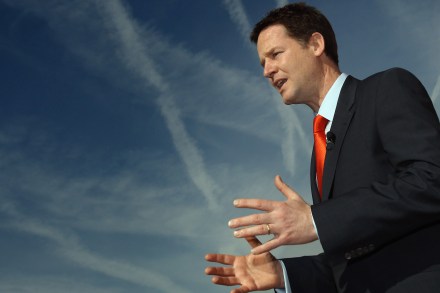
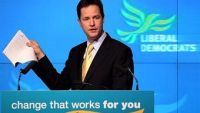
So, who won?  Well, hold your horses, dear CoffeeHouser.  First, it's worth noting that that was a good shade more compelling than I thought it would be.  There were moments of heat, drama and political tension, of course.  But there was also a sprinkling of light as well.  I suspect anyone watching that would have picked up a working sense of the differences and similarities between the parties and their leaders. So, who won?  Well, it depends what you mean by "won".  Nick Clegg certainly gained most from the evening.  He was confident, coherent and had a strong line on almost every policy area, whether you agreed with those lines or not.
The Lib Dems Lose a Voter

From our UK edition

I had my first experience of frontline canvassing in a marginal at the weekend, when I visited my mum in the west country for a few days. She lives in a village in Nick Harvey's North Devon constituency, a key target seat for the Tories. As a lifelong Labour and former activist she is torn between wasting her vote on the Labour candidate or voting tactically to keep out  the Tory, Philip Milton. On Monday we found some Lib Dem canvassers on the doorstep and very cheery in that way Lib Dems have to be. They explained why it made no sense to vote Labour in North Devon and the clincher was when one local Lib Dem said, "You really should vote to keep Milton out, I should know, I'm his cousin." Well, it was almost the clincher.

First poll since all the manifesto launches has the Tories ahead by 9 

From our UK edition

The figures from YouGov's daily tracker have just been released, and they have the Tories on 41 percent (up 2), Labour on 32 (up 1), and the Lib Dems on 18 (down 2) – so a lead of 9 points for Cameron & Co.  It's worth noting, as well, that the Tory manifesto comes out on top in supplementary questions about which has the best policies, which is most honest and which is the best for the country.  But, to my eye, the most striking result is that relatively low level of support for the Lib Dems.  I imagine that they'd certainly hope for better as they continue peddling their anti-"Labservative" message.

The Lib Dems & Labour: Battered Wife Syndrome?

From our UK edition

Pete is right: the Liberal Democrats have their issue and it's a good one. It makes sense for them to be more hawkish on the deficit and debt than either of the larger parties. That way they can present themselves as a sensible restraining influence in the event of a hung parliament that creates room for a coalition. But who should that coalition be with? Understandably Clegg and Cable will do their utmost to avoid answering that question; doubtless they will insist that it all depends on, you know, the result. Nevertheless, having reinvented themselves as Deficit Hawks it would, on the face of it, be absurd to the Lib Dems to climb into bed with the Labour party.

Follow the money | 14 April 2010

From our UK edition

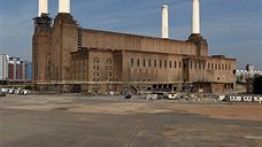
Looking at the papers this morning and watching the news last night, you realise what a benefit in the image stakes the Tory cash advantage gives them. The Tories can afford to hire out better venues than the other two parties. So while Labour launched their manifesto in hospital and the Lib Dems theirs at Bloomberg, the Tories used Battersea Power Station which provided them with much better visuals. We saw the same dynamic on the day the election was called: Labour’s event was in Downing Street, the Lib Dem one in an office and the Tory one on the terrace of County Hall looking over to Parliament The Mirror’s front page today accuses Cameron of using his photo-ops to benefit the firms that are backing his position on National Insurance.

The future might be yellow

From our UK edition

The Liberal Democrats are doing well. Very well. More voters seem actively to want a hung parliament - they neither hate Labour or love the Tories enough to act decisevely either way - and a vote for Nick Clegg seems a safe, fair choice. A few years ago Paddy Ashdown was over the moon to have won far fewer MPs than the party is hoping for at this election. Then came the "Iraq Bounce" with Charles Kennedy's anti-war stance doing the party well. Many assumed that without a clear-cut issue, and having chosen a leader who looked like David Cameron's younger brother, the Lib Dems might struggle. Instead, the party seems to be fighting off Tory inroads.

The Lib Dems have found their issue

From our UK edition

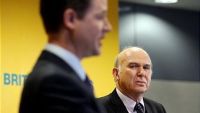
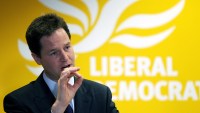
Well, that was quick.  After the Tories' one-hour-and-forty-minutes-long manifesto launch yesterday, and Labour's comparable event the day before, it was quite a relief that the Lib Dems got through theirs in a nerve-soothing 45 minutes.  And that included introductions from Sarah Teather, Danny Alexander and Vince Cable, and a speech from Nick Clegg - all of them short, sharp and snappy.  The only thing which seemed to drag was the Q&A session at the end. But timings aside, it was clear that the Lib Dems have hit on an issue which - they think - separates them from the other parties.  In 2005, it was Iraq.  This time around, deserved or not, it's fiscal responsbility.

The Lib Dems’ turn to convince?

From our UK edition

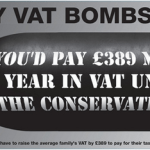
So now it's the Lib Dems' turn to present their prospectus for the country.  And, in some respects, I expect they'll want a fairly uneventful day.  They have, after all, endured the most topsy-turvy campaign of the three main parties so far.  Brown has given us no more, and no less, than what we expected.  The Tories have been riding the crest of a national insurance wave.  But the Lib Dems have bounced around from the highs of Nick Clegg's performance on Newsnight to the lows of their misleading VAT poster, from their continuing Labservative attacks to Ed Balls describing their schools policy as "creditable" on Sky this morning.

Voting blues

From our UK edition

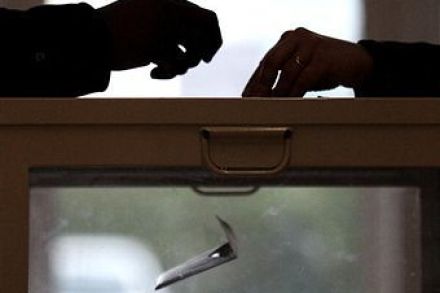
One of the key questions in any election is turnout: whose voters will turn up and whose won’t. People are clearly disappointed in the political class - on a scale from 0 to 10, trust in politicians and parties is hovering around 3 points - but does it mean that they will stay at home, spoil their ballots or opt for fringe parties and single-issue candidates? What about the talk of a hung parliament ? Will it make voters believe that their vote counts - and so bring them to the polling stations -- or make them stay at home, giving up on the idea that any change is possible? In the last three elections turnout was low, relatively speaking: 59 percent of the electorate voted in 2001 and 61 percent went to the polls in 2005.

Will Labour’s manifesto mean the end of VAT attacks on the Tories?

From our UK edition

You know it's the day you've all been waiting for, CoffeeHousers – the day of Labour's manifesto launch.  Last Thursday, Douglas Alexander described the document as a "progressive programme worthy of these testing times".  So, well, it must be good, mustn't it? Problem is, this manifesto risks going the same way as the Budget.  So much of it has been so heavily trailed, that there's a danger we've already heard it all – and that it will be met with weary indifference by the media and the public alike.

Nick Clegg’s self-defeating Scargillian rhetoric

From our UK edition

The transformation of Nick Clegg from moderate Europeanist to a populist continues apace. The Lib Dem leader is very serious about capturing the anti-politics mood among the electorate - no easy feat for some who looks as Establishment as the rest. Though he will likely be pleased with today's Observer interview, I wonder whether he will, in retrospect, feel comfortable with his view that a small Tory majority would somehow make a Cameron government illegitimate and that Britain could be plunged into "Greek-style unrest" if cuts were introduced. Where to begin? The electoral system works the way it does. It has many inbuilt problems - particularly for the Tories - but until it is reformed it produces lawful and legitimate governments.

Even Cable can’t defend the Lib Dems’ misleading poster

From our UK edition

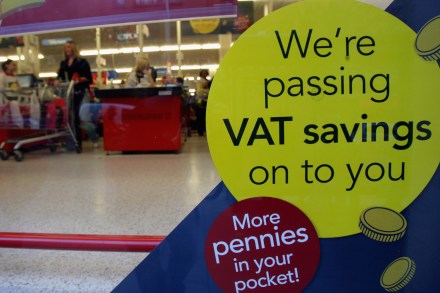
This poster by the LibDems is perhaps the most dishonest one of the campaign so far - and Vince Cable has pretty well admitted it to Jon Sopel on the Politics Show. Here's the exchange. Jon Sopel:  I mean let’s leave aside whether or whether not there is a black hole in the Tory’s finances. Leave that to one side. You don’t know factually, that they are going to raise VAT. That is your conjecture. St Vince Cable: It is a conjecture and it’s a reasonable assumption and I wouldn’t claim anymore than that. JS: And that £389 is a rough figure plucked... VC: "It’s a ball park estimate of what it would require in order to fill that gap, and it seems a reasonable way of expressing that argument.

Does it pay to be mendacious?

From our UK edition

Lying is a politician's occupational hazard. The Independent on Sunday has published a Com Res poll confirming that truism. The majority of voters do not believe that David Cameron and Gordon Brown are being honest about how they will tackle the deficit. We voters resent being taken for fools. If Brown and Cameron are being disingenuous about the economy, the honest Sage of Twickenham benefits - the Liberals are storming the marginals, a hung parliament is odds-on according to some pollsters. Is Vince Cable honest about reducing the deficit? Emphatically not. One minute he’s against a VAT rise, but refuses to rule it out the next. He’s in favour of unilateral charges on banks, but not if they fund a tax break for some married couples.

An ICM marginals poll points to a hung parliament

From our UK edition

The News of the World has its expensive and much-awaited ICM poll of the marginals tomorrow. There is some good news for Cameron, and some not-so-good news. First: 66 percent of voters in the marginals agree with the message "it's time for change". Bad news: a surprisingly large number think that Nick Clegg represents that change. A Lib Dem surge means that Tory swing is just 6 percent in the marginals, versus 5 percent nationally. Where is the Lord Ashcroft magic? In James's political column this week, he says the Tories had been so confident about the marginals that they reckon they need a 5-point lead nationally to win, rather than the 8-point lead previously assumed. The News of the World/ICM poll challenges that narrative.

How Labour and the Lib Dems are attacking the Tories’ marriage tax break

From our UK edition

This morning, we've already seen the two primary attacks which will be used against the marriage tax break outlined by George Osborne in the Times today.  The first came courtesy of Vince Cable, who said it represents a "derisory" sum of £3 a week for those who benefit from it.  And the second was from Ed Balls – who else? – who labelled the policy as "discriminatory," because it doesn't cover every married person, and nor does it account for couples who split.  Or as he rather suggestively put it: "if your husband beats you up and leaves you you get no support." One thing worth noting is how the Tories' opponents aren't majoring on a fiscal irresponsibility angle, as they've been trying to with the national insurance cut.

The VAT dividing line is growing deeper

From our UK edition

Is this a pledge we can count on?  After the Lib Dems suggested they wouldn't increase VAT earlier, the Labour Chief Whip has told ITV's Lucy Manning that his party won't either.  If so, it's quite a turnaround from when both Darling and Cable refused to rule out VAT hikes during last week's Chancellor's debate. I wouldn't be surprised if we see a LibLab pincer movement against the Tories now: the two parties who seem to have ruled out VAT hikes against the one which is being being slightly more equivocal about it.  As I said earlier, it would hardly be edifying politics.  But the real worry is if it dissuades politicians from talking sensibly about how to fill our country's fiscal black hole.

The hyperbole of Westminster

From our UK edition

Campaigns are conducted in poetry, former New York mayor Mario Cuomo once said. This one seems to be conducted in hyperbole. Every party is doing their level best to show that there is a difference, and a big one, between them and their opponents. That's normal. But to do so, they are stretching good arguments beyond what is sustainable. "Brownies" may be a particular mendacious form of hyporbolic campaigning (and governing),  but there are bound to be a few Tory and Lib Dem exaggerations on display during the campaign. Exhibit A. The Tories say a hung parliament will doom Britain as the markets will react badly to a potentially unstable government - with ruinous consequences. Exhibit B. Labour is at it too.

What a difference the start of a campaign makes

From our UK edition

In last week's Chancellor's debate, Vince Cable refused to rule out raising VAT to help fix the public finances.  Now, only a few days later, the Lib Dems are pledging not to do that.  What's more, they're saying that the Tories' plans require a raise in VAT.  And they've even got a 'VAT bombshell' poster to drive the message home. There's more than a dash of Brownite politics about this - the same seasoning I detected in the Tories' Death Tax poster.  Sure, there have been rumblings that the Tories will raise VAT.  But Osborne & Co. have denied that this is necessarily the case in recent days, and it's certainly not current Tory policy.  So the Lib Dems are effectively spinning a lie, and attacking that lie.

The context defeats Brown

From our UK edition

So, mending our broken politics has been shoved to the forefront of the election campaign - at least for the time being. Brown has just given a speech on the issue, which - if you divorce it from all context - was actually fairly effective. Sure, things like reducing the voting age to 16, or a referendum on the alternative voting system, may not be your - or many people's - cup of chai. But there were several proposals which, taken in isolation, will probably be as popular as they are sensible: banning MPs from working for lobbying comapanies, for instance. Or giving the voters the ability to recall MPs who are guilty of gross financial misconduct. But Brown's problem is that his offer isn't divorced from all context.