Liberal democrats

Three points from a remarkable night

From our UK edition

This has been a remarkable election night. To my mind, there are three big stories out of the polls. First, the George Osborne masterminded campaign for a new Conservative majority is on track. AV, barring some shock, has been defeated and the Conservative vote has held up remarkably well in the English local elections. Indeed, right now the Tories have actually gained councilors in England. Add to this that the next election, if the coalition lasts to 2013, will be fought on new constituency boundaries that are more favourable to the Tories and things are looking promising for the party.    The coalition looks secure. Even after last night's drubbing, the Lib Dem leadership is not considering leaving government.

Surprise, surprise … the Lib Dems are taking a battering

From our UK edition

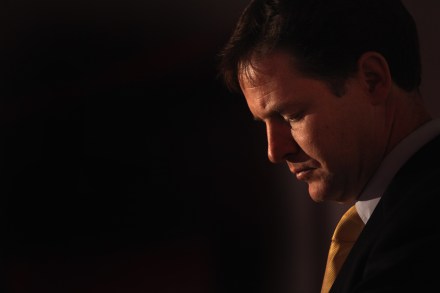
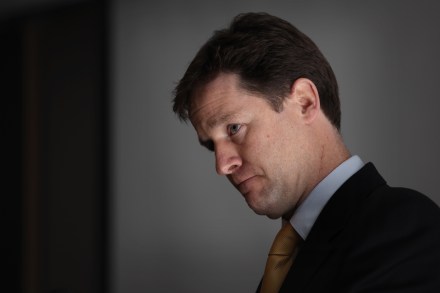
If you fell asleep expecting heavy losses for the Lib Dems, then you will not have been disappointed upon waking up. At time of writing, around 100 English councils, comprising roughly 2,400 councillors, have declared their results – and the yellow brigade have already lost four of them, along with 270 councillors. There's some way to go yet, so the picture could alter, but Labour appear to making sweeping gains, while the Tory vote is holding unexpectedly firm. As it stands, the local wing of Cameron's party has actually gained a council, along with 22 councillors in the process. Stir in the likely result of the AV referendum, and the Tory leader is looking like a net winner on the night.

Will there be TV debates at the next election?

From our UK edition

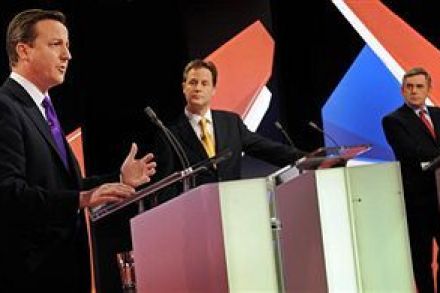
One might have thought that the TV debates would become an immovable fixture in British general elections. But apparently not. Speaking at the launch of a new study of the 2010 election a couple of nights ago, Adam Boulton said that it was far from certain that they will feature at the next election. Will Straw tweeted the news at the time, but it seems to have slipped through the cracks as attention has been diverted elsewhere. Apparently, broadcasters and the parties have reached an impasse at this early stage in the electoral cycle. The Conservatives are reluctant to recommit themselves to something that they believe contributed to their failure to win a majority.

Boris takes on Dave over London’s strikes

From our UK edition

The Telegraph's James Kirkup has already highlighted Boris's suggestion, yesterday, that the coalition is being "lily-livered" over strike laws. But, as there has been no let up in the Mayor's rhetoric today, we really ought to mention it here too. "The government needs to get a move on," is how he put it this morning, in reference to the sort of legislation that might hinder the RMT and their persistent Tube strikes. Boris's latest broadsides against the coalition are all the more notable because he and Cameron were united, arm in arm, against the unions only a few months ago. In a joint piece for the Sun in January, they raged that, "you can try to drag this country back to the 1970s, to a time when militants held our country to ransom, but you will not succeed.

Calamity may lead to concessions for Clegg

From our UK edition

If the expected happens today, the political debate will rapidly move to whether Cameron should offer some concessions to Clegg to bolster his position. I hear there are two camps in Downing Street on this question with Steve Hilton a particularly ardent advocate of the no more concessions line.   Hilton’s position may surprise some but makes sense when you consider how his public service reform programme has, as Ben Brogan writes today, already been diluted for political reasons.    My current expectation is that there won’t be many concessions to Clegg. One well placed Tory told me last night that "Clegg picked the question and the date. He can have no complaints.

Election day is here at last

From our UK edition

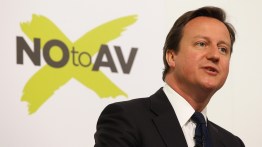
The usual form, on mornings such as these, is to put up a post setting the scene for the elections ahead – although, really, there's not much more to add than was said yesterday. Apart from a readers' survey in the Metro this morning, the only poll to hit after yesterday's ICM bombshell is a YouGov one for the Sun, and it gives No a 20-point lead. Even given the complications of turnout and geography, it looks as though Team No are heading for a straightforward victory. As if to underline his increased personal involvement in the campaign, and perhaps tie himself that little bit closer to the eventual result, David Cameron has not one, but two, comment pieces in the papers today – in the Mail and in the Sun.

Your guide to tomorrow’s elections

From our UK edition

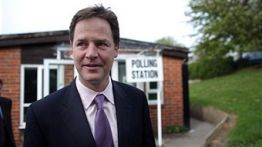
In light of ICM's latest poll, Lib Dems might be relieved to hear that tomorrow isn't all about the AV referendum. But it's a meagre sort of relief: they're facing a drubbing in the local elections too. We've put together a quick guide to those elections, as well as those in Scotland and Wales, so that CoffeeHousers know what to look out for, and Lib Dems know what to fear. Here it is: England The main question hovering over England's local elections is: how big will Labour's gains be? There are around 9,400 seats up for contention, of which the Conservatives currently hold about 5,000; Labour, 1,600; and the Lib Dems, 1,900.

A very quiet exchange

From our UK edition

PMQs today was dominated by the parties trying to get their lines out ahead of the voting on Thursday. David Cameron accused "Labour local authorities of playing politics with people's jobs" and urged voters "not to let Labour do to your council, what they did to our country." He received plenty of chances to make his local election case as Tory backbenchers served up one patsy question on councils after another. Ed Miliband jibed that the coalition was no longer two parties working together in the national interest but "two parties threatening to sue each other in their own interest," a reference to Huhne’s hyperbolic threat to sue over the No campaign’s claims. The Lib Dems were oddly quiet today.

PMQs live blog | 4 May 2011

From our UK edition

VERDICT: A sedate sort of PMQs today, particularly in comparison to the fizz and fire of recent sessions. The reason is simply the date: with the local elections tomorrow, much of the emphasis was on making a straightforward pitch for votes. Miliband's was to attack the "broken promises" of the coalition — a charge that, if not exactly new, is one he is deploying more and more. Whereas Cameron's was to emphasise that councils can make cuts while improving services — and that Tory councils have been particularly successful in doing so. Both men broadcast their messages today, without really scarring the other. The winners and losers will be better judged on Friday morning. 1231: And that's it. My short verdict soon.

Whatever the Lib Dems claim, Michael Gove will be voting No tomorrow

From our UK edition

A senior Liberal Democrat is putting it about this morning that Michael Gove, the education secretary, will be voting for AV tomorrow. But a very close friend of Gove tells me that ‘this is categorically untrue. Michael will be voting to keep first past the post.’ This Lib Dem’s briefing strikes me as rather ham-fisted. One might even call it disorganised wickedness. UPDATE: Michael Gove is not only voting No tomorrow, he's getting out the vote for No. The education secretary, who has up to now stayed out of the referendum campaign, will be making phone calls to remind Conservatives to go out and vote No tomorrow from CCHQ this afternoon.

Yes to AV on the ropes as the final round approaches

From our UK edition

Thanks to this ComRes poll, the question floating around Westminster this morning is: how much?! You see, with only a day to go until the AV referendum, it has the No camp on 66 per cent, and the Yes camp on 34. That puts No a punishing 32 points ahead of its rival. Even allowing for the peculiarities of a bank holiday weekend – as noted by Anthony Wells here – it's still an astonishing gap. It augurs a landslide. Or does it? To my mind, much still rests on turnout and on the voting patterns of Wales, Scotland, etc. Yet there's no denying that Yes are up against it – and in a major way. Their problem, and the problem that they have faced throughout this campaign, is perfectly encapsulated by this morning's newspaper editorials.

The significance of today’s Cabinet bust-up

From our UK edition

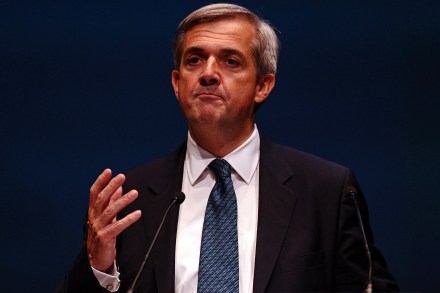
On the Today Programme this morning, David Cameron stressed that for all the tensions about the AV referendum, ministers were still capable of sitting round a table and working together. But within a couple of hours of saying this, Chris Huhne had destroyed this argument by using Cabinet to continue his attack about the tactics of the No campaign.   When the Energy Secretary is demanding that the Prime Minister and the Chancellor justify their behaviour to him it is impossible to pretend that it is business as usual. It is now indisputable that the fallout from the AV referendum campaign is having an impact on the functioning of the government.   What is also noteworthy is that Osborne didn’t try and defuse the conversation with a joke or anything like that.

Clegg’s implicit attack on the Tories

From our UK edition

Up until a few months ago, David Cameron and Nick Clegg tried to avoid doing big set piece broadcast interviews on the same day. This was driven by a desire to both maximise the coalition’s dominance of the media agenda and to avoid having to give a running commentary on what the other had said. But this rule has gone out of the window as the AV referendum has got rougher and rougher. So, following on from their both doing separate interviews on Andrew Marr on Sunday, they both were on the Today Programme this morning. Clegg even told Justin Webb to ask Cameron about the split between the two of them on internships when he was on in forty minutes time.   Clegg isn’t, unlike Cable and Huhne, openly attacking the Tories. But he is doing so implicitly.

Huhne lays into Cameron and Osborne at Cabinet

From our UK edition

At Cabinet this morning, I am told that Chris Huhne directly challenged David Cameron and George Osborne about the claims that the No campaign have been making. He asked them both in turn, if they were going to — or could — defend them. Osborne responded by telling Huhne that his behaviour was inappropriate and that Cabinet wasn’t the place for such disputes. The fact that this row broke out in Cabinet shows just how badly relations within the coalition have been damaged bv the AV campaign. That Huhne is leading the anti-Tory charge even within Cabinet will also stoke the rumours about what the Energy Secretary is planning to do after Thursday’s referendum.

How a degree of separation will strengthen the coalition

From our UK edition

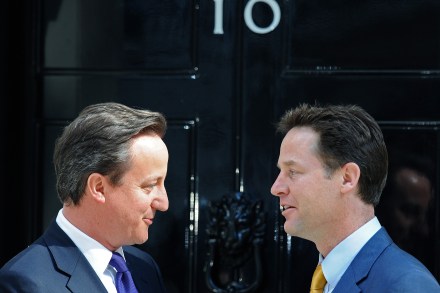
Almost a year ago, David Cameron and Nick Clegg staged their love-in at the Downing Street rose garden. As I say in the News of the World (£) today, this era is now at a close. When they come back from the 5 May elections, Clegg and Cameron have agreed that they cannot go on as before. An agreement has been struck for an amicable separation. Not divorce — the coalition will keep going. But Cameron and Clegg will put clear blue (and yellow) water between them and drop the pretence that they agree on everything. The coalition is about to enter its Phase Two.   Clegg’s analysis is that Phase One was, perhaps, too successful. His over-riding mission was to prove to a sceptical Britain that coalition governments can work and don’t lead to sclerosis.

Chris Huhne pitches to the left

From our UK edition

We're used to AV platform-sharing by now — so it's not the fact that Chris Huhne has written an article for the Observer alongside Labour's John Denhan and the Green's Caroline Lucas that shocks. It's the words he then puts his name to. "Britain consistently votes as a centre-left country and yet the the Conservatives have dominated our politics for two-thirds of the time since 1900," begins the article. "No wonder David Cameron says the current system 'has served us well'," it continues. Although subsequent paragraphs are more conciliatory — claiming, for instance, that Tory voters in the north also suffer thanks to our electoral calculus — this is nonetheless a provocation to rile Huhne's coalition colleagues.

Temper, temper

From our UK edition

I have rarely heard the House as loud as it was after David Cameron’s ‘calm down, dear’ put down to Angela Eagle. The Labour benches roared at the Prime Minister and Cameron turned puce, while the Liberal Democrats looked distinctly uncomfortable. There is already a rather over-blown debate going on about whether the remark was sexist or not. But whether or not it was, it was certainly ill-judged. It was a tad too patronising and directing it at one of the more junior members of the shadow made it seem bullying. The Labour benches were heckling Cameron more than usual today, a result of him losing his rag with Ed Balls at PMQs last month. After today, they’ll turn the volume up another notch.

PMQs live blog | 27 April 2011

From our UK edition

VERDICT: To paraphrase that famous football cliché, this was a session of two halves. Cameron put in a confident performance against what should have been the trickier set of questions: on the economy. But when it came to Ed Miliband's second topic of choice, the NHS, it all went suddenly awry. The PM's arguments were unusually messy and convoluted, lost in themselves. And he only made matters worse with his Winner-esque exhortation at a Labour frontbencher, "Calm down, dear!" You can argue whether it was sexist of the PM, or not, particularly as it's not clear whom the remark was aimed at (although the smart money's on Angela Eagle). But it was, at least, a moment of frustration that played up to the worst Flashman caricatures of the PM.

Why I’m sceptical of all the early election talk 

From our UK edition

Something has undoubtedly changed in the coalition in the past fortnight. Even those at the centre, who have been most loyal to the concept of coalition, are now happy to complain about the other side and its behaviour. But I’m still sceptical of all the early election speculation which has been sparked by Jackie Ashley’s very clever Guardian column. The main reason why I don’t think it will happen is the Cameron brand. Ever since David Cameron became leader of the Conservative party, the top of the party has believed that the protection of the Cameron brand is essential to electoral success. Cameron has too much personally invested in showing that the coalition can work to let it fail. The coalition is now key to Cameron’s whole political persona.