Liberal democracy

Stalemate over Taiwan is the best we can hope for

From our UK edition

The United States of China, anyone? The idea that a federal China might be able to accommodate within it a relatively autonomous Taiwan is one of the more radical solutions mooted to the thorny problem of Taiwan’s status. The difficulty, of course, is that neither the Chinese Communist party nor Taiwan’s leaders would find such an outcome remotely acceptable. The CCP will not countenance a loosening of its control over mainland China; the Taiwanese, for their part, see in Hong Kong’s recent sad trajectory a vision of their own future should their politicians ever accept an offer of special status within China.

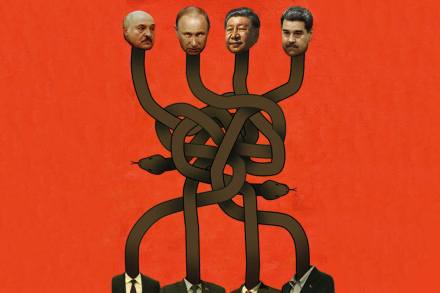
Anne Applebaum’s solutions to the ‘threat’ of autocracy

Liberal democracy is endangered more by its friends than by its enemies. Neither Moscow nor Beijing lured the United States into strategic humiliations in Iraq and Afghanistan. Nor was the rise of China to the rank of a great power brought about by Westerners sympathetic to Beijing’s communist system. If liberal parties and movements in the United States and Europe seem to be losing ground to populists, this is not thanks to Facebook ads purchased by Vladimir Putin in support of Donald Trump or Brexit. Liberals themselves sabotaged liberal democracy by prioritizing liberalism over democratic legitimacy for three decades after the Cold War — on fundamental issues ranging from trade and foreign policy to immigration and national values. Anne Applebaum’s latest book, Autocracy, Inc.

Applebaum

Who won the Cold War, anyway?

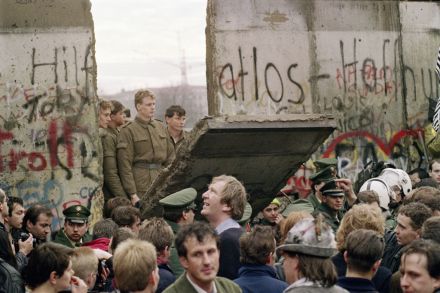
Thirty years ago this December 26, the impossible happened. One of the bloodiest states of the twentieth century (a horrific and highly competitive category) dissolved without violence. The Union of Soviet Socialist Republics had all but ended months earlier, when Russians took to the streets to defy the communist hardliners who had seized the government from an impotent Mikhail Gorbachev. That popular countercoup was itself largely bloodless: the soldiers called upon to enforce the hardliners’ rule refused to shoot their own countrymen. The Cold War is often said to have ended with the toppling of the Berlin Wall in 1989. Had things turned out differently in Moscow two years later, the struggle might well have resumed.

Cold War