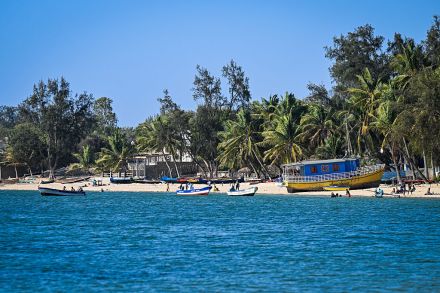
Madagascar offers peace – and lemurs – in abundance
Madagascar, by rights, should be rich and flourishing. It has everything: natural resources, a heavenly climate, picture-book scenery, tropical weather, friendly people. But it is one of the poorest countries in the world – on account of centuries of exploitation, first by the French, and latterly by corrupt elites. With luck, all that is about to change. If the new regime (which came to power in October when a student-led revolution sent the last one packing) can resist the lure of looting, it could just succeed. No jet skis, no music, no bars. Maybe a lone fisherman or a sailboat in the distance As yet the spacious main square of the capital, Antananarivo (known as Tana), is not safe at night, when it becomes the domain of pimps, prostitutes and pickpockets.