Latin america

The long history of kidnapping Latin American chieftains

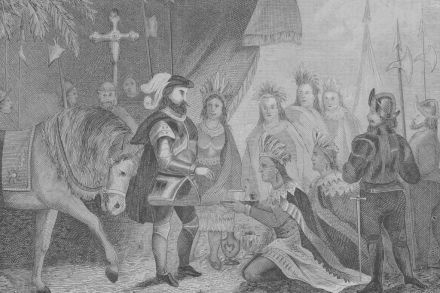
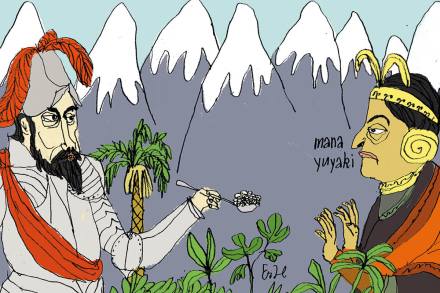
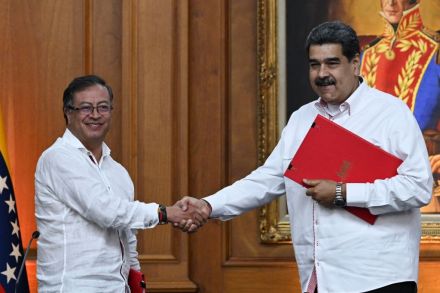
One of the few benefits of being an anthropologist is the uncanny exhilaration one feels watching novel current events as re-runs from previous episodes in the history of mankind. Donald Trump’s capture of Nicolás Maduro, President of Venezuela, is no exception. Kidnapping Latin American emperors is a continental tradition. It’s simply the most practical method for breaking the chain of command in the region. It triggers succession chaos, enables the extraction of resources and keeps the rest of the hierarchy more or less intact. In earlier centuries, it was Spain and Portugal. Today, it’s the United States. In the colonial era, the objective was to secure enough gold to beat European rivals.

latin american

Chile turns rightward

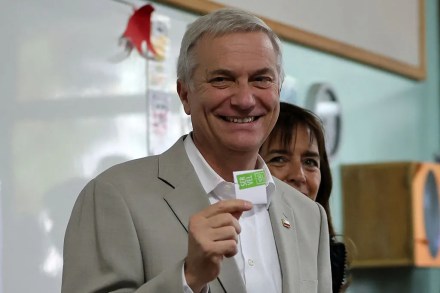
Chile has joined the right-wing trend sweeping Latin America by electing the ultra-conservative candidate Jose Antonio Kast as its first rightist president since the demise of Pinochet's military dictatorship in 1990. Kast, 59, leader of the Republican party, trounced Jeannette Jara, a communist party member, and the candidate of Chile’s current ruling left-wing coalition, winning almost 58 percent of the vote in Sunday’s poll. Jara, a former Labor minister, conceded victory to Kast, saying “Democracy has spoken loud and clear” and wishing her opponent success “for the good of Chile.

Kast Chile

Bolsonaro’s conviction reveals a divided Brazil

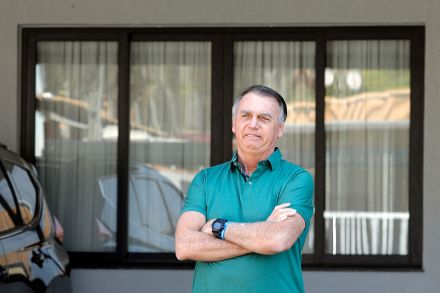
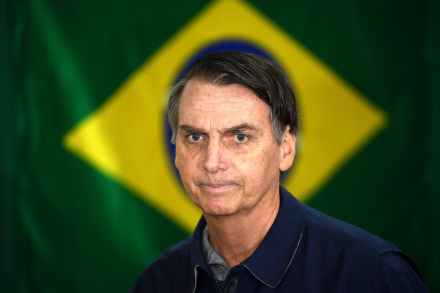
Brazil’s former right-wing president Jair Bolsanaro has been sentenced to 27 years in jail after being found guilty by the Supreme Court in Brasilia of plotting a coup and attempting the assassination of his leftist successor, the current President Luiz "Lula" da Silva. The five-person court panel trying the case delivered a verdict, with four judges voting guilty and one voting to acquit. The casting guilty vote was returned by a female judge, Carmen Lucia. Donald Trump, who regards Bolsanaro as a personal friend as well as an ideological ally, has described the trial as a "witch hunt" and a "political assassination." He has imposed 50 percent tariff charges on Brazil in response, and has threatened to increase the sanctions if Bolsanaro goes to jail.

Bolsonaro

Trump’s strike on the Venezuelan ‘narco terrorists’

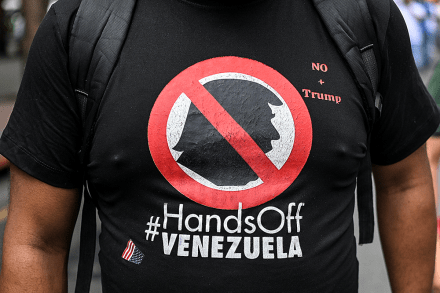
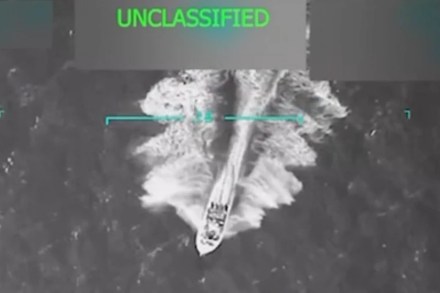
President Trump has authorized what he called a "kinetic strike" from a US warship that destroyed a boat allegedly carrying drugs from Venezuela bound for the US, killing 11 so called "narco terrorists" aboard. The action by a US naval task force in international waters in the southern Caribbean is the first since the President threatened armed intervention against narcotics smuggling by Venezuela’s drugs cartels in January. Trump said that the attack was aimed at members of Venezuela’s Tren de Aragua drugs cartel which the US branded a terrorist organization in February, and which it claims is controlled by Venezuela’s socialist Maduro regime. The US Department of Justice has called Venezuela’s President Nicolas Maduro "the world’s No.

Tren de Aragua

Socialism ends in Bolivia after two decades

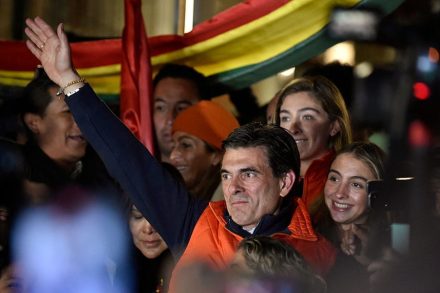
Bolivia is to be treated to a nail-biting run-off this autumn between two conservatives in the race to be the next president after the spectacular collapse of the socialist movement that has dominated the landlocked state for the past twenty years. A presidential race between two right-wingers is unusual in Latin America whose countries in recent years has been largely run by democratically elected leftists after the fall of the brutal military dictatorships that ruled so many states in the 1970s and 1980s. The second round of Bolivia’s presidential race will be decided on October 19th between the veteran former President Jorge "Tuto" Quiroga, 65, who gained 26 percent of the poll, and his center-right rival Rodrigo Paz Pereira, 57.

Trump on Mexican cartels: ‘You know what the only solution is’

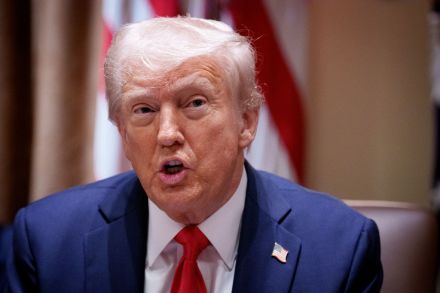
Donald Trump’s second term has been revolutionary in many ways, particularly in his administration’s approach to foreign affairs. From the get-go, the nomination of Marco Rubio as his top diplomat and Chris Landau as Rubio’s deputy signaled a break from orthodoxy. In picking Rubio, previously the most vocal senator on hemispheric affairs, and Landau, Trump’s ambassador to Mexico in his first term, the message was clear: our neighborhood is a top priority.  In his first exclusive magazine interview of his second term, Trump met with The Spectator’s Ben Domenech in the Oval Office, where a large portion of the conversation delved into Latin-American affairs.

Why did Spain leave behind such terrible food?

I can still remember it: probably the worst seafood dinner of my life. A slice of fish that was simultaneously cold, hot, dry, crumbly and rubbery, surrounded by overcooked vegetables and accompanied by a mysterious whiff of cigarette smoke. It was so repellent that even though I was famished, I summoned the waiter, returned the dish and retired to my room, there to endure a dinner of Pringles from the minibar. What made it worse was that I was in a celebrated fishing port. All I had to do was look out the window and I could see trawlers bringing in some of the world’s finest fish from some of the planet’s richest seas. It was dismaying, saddening, deflating and left me starving. What it was not, however, was surprising.

Spanish

Will the US apply pressure to combat Maduro’s election fraud?

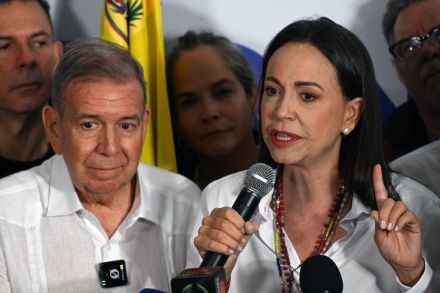
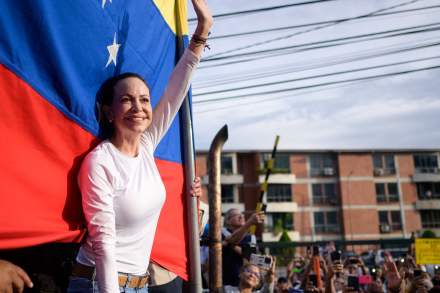
Sunday night was a long one in Venezuela. At midnight, the much anticipated yet dubious results came in for the South American country's election. The head of the National Electoral Council, Elvis Amoroso — a close ally of Venezuelan president Nicolás Maduro who has served as a deputy for his party — said that with 80 percent of ballots counted, Maduro had won with 51 percent of the vote. His rival, Maria Corina Machado’s replacement, Edmundo González, ended with 44 percent. The opposition has a different story. “Venezuela has a new president and his name is Edmundo González Urrutia. We won! And everyone knows it,” Machado said from a press conference following some silence after Maduro’s announced win.

maduro fraud

Why Joe Biden’s Latin America policy is failing

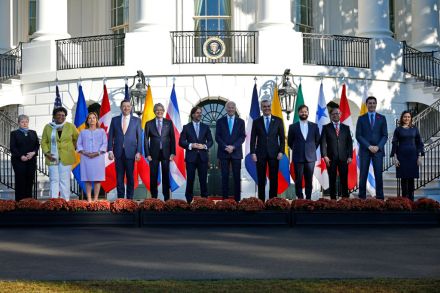
At the opening ceremony of the Summit of the Americas in Los Angeles last year, President Joe Biden announced the Americas Partnership for Economic Prosperity, which the White House described as “a historic new agreement to drive our hemisphere’s economy recovery and growth and deliver for our working people.” The plan has become the administration’s signature Latin America policy. As noted by the White House, the region matters not solely because it’s where the US is situated, but because it also accounts for 32 percent of global GDP. Even more so, the region is rich in resources that are crucial in the development of emerging technologies.

latin america

The growing bipartisan backlash against ‘Latinx’

Since its emergence, the term “Latinx” has been unpopular with Hispanics. Yet despite this opposition, progressive activists and organizations continue to use it as a means of identifying people of Latin American heritage in a supposedly more sensitive way. The term's origins remain a subject of debate, although its users argue that the word "Latino" reinforces the patriarchy while the "x" recognizes nonbinary people. According to the Wall Street Journal, it made its debut in academic literature a decade ago in Puerto Rican psychology periodicals as part of an effort to "escape the gender binaries encoded in the Spanish language." Since then it has been adopted by many progressives as part of their ever-expanding twenty-first-century lexicon.

latinx

Why Louis C.K. has a point on immigration

During a recent appearance on The Joe Rogan Experience, comedian Louis C.K. stated a position that many on the left believe but are unwilling to admit: America should open its borders to the world. “My feeling is they should open the border,” he explained. “Just let everybody pour in… Then there will be all these problems, well, there should be. It shouldn’t be so great here. It is a weird thing to sequester a certain group of people and keep upping their lifespan and their lifestyle.” As someone who's spent most of his journalistic career railing against mass immigration, my initial reaction was one of scorn.

Democracy in Peru is under attack

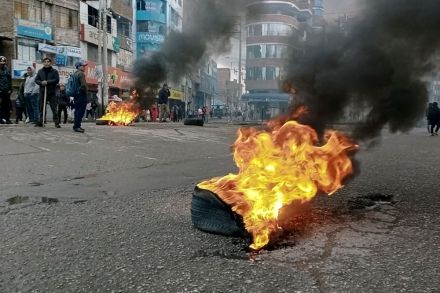
For over a month, Peru has been in a state of near-constant unrest. In December, as the legislature threatened to impeach President Pedro Castillo for, among other things, allegations of corruption, Castillo tried to dissolve the legislature and “govern through decrees.” By all measures, this was an attempted coup, and it resulted in his impeachment (by a vote of 101-6), arrest, and condemnation from left and right. In his place, Vice President Dina Boluarte was sworn in as president, having denounced her former boss’s attack on the country’s democracy. This was a success in a country that has seen six new presidents in the past seven calendar years. The Congress has repeatedly been at odds with the president, and scandals have rocked administration after administration.

The Pink Tide returns to Latin America

As the dust settled on Jair Bolsonaro’s seismic victory in Brazil back in 2018, one might have spared a thought for those dedicated to the cause of international socialism. Having bathed in the glory of the so-called "Pink Tide" and the commodities boom of the early 2000s that allowed socialist governments such as Hugo Chávez's Venezuela to seemingly prosper, any hopes that Latin America would forever unify in the cause of left-wing anti-imperialism seemed well and truly dashed. In many of the continent’s wealthiest countries, right-of-center politicians had swept to power with a view to restoring their nation’s former glory. These included Bolsonaro in Brazil, Sebastian Piñera in Chile, Ivan Duque in Colombia, and Mauricio Macri in Argentina, among others.

Why does the media never call world leaders ‘far left’?

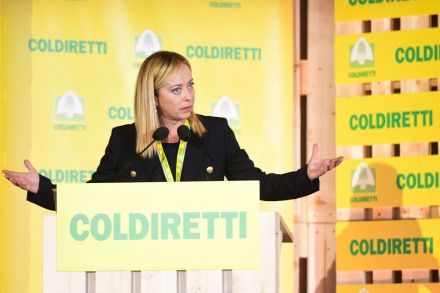
Italy is about to have its first female leader and the American left is furious. Giorgia Meloni grew up in a working-class neighborhood in Rome and was raised by a single mother, after her father, a communist, fled to the Canary Islands and was later convicted of drug trafficking in Mallorca. She wrote in her autobiography that her mother planned to have an abortion when she was pregnant with her but changed her mind at the last minute. Meloni worked as a nanny, a waitress, and a bartender before getting into politics, but she’s no AOC. Meloni, 45, is the leader of the right-wing populist Brothers of Italy party, which recently won Italy’s general election with 26 percent of the vote. She’s widely expected to be named Italy’s first female prime minister.