Labour party

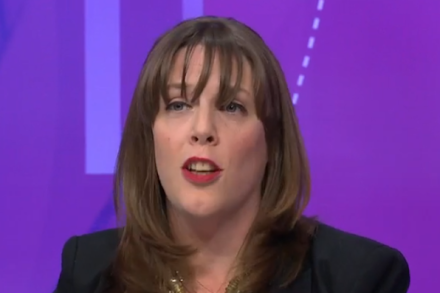
Jess Phillips puts her foot in it: ‘Cologne attacks similar to a night out in Birmingham’

From our UK edition

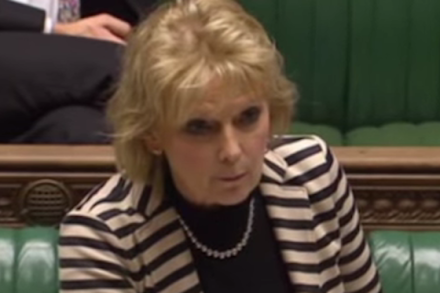
Since Jess Phillips was elected as the MP for Birmingham Yardley in May, the Labour politician has become known for her outspoken views -- previously telling Diane Abbott to 'f--- off'. However, her straight-talking approach reached new heights during last night's episode of Question Time after she likened the Cologne sex attacks to a night out in Birmingham. Discussing the refugee crisis on a panel made up of Angus Robertson, Patrick McLoughlin and Yasmin Alibhai-Brown, Jess Phillips was asked whether Britain could cope with more immigrants in light of the Cologne sex attacks in Germany or the woman who was killed in Sweden.

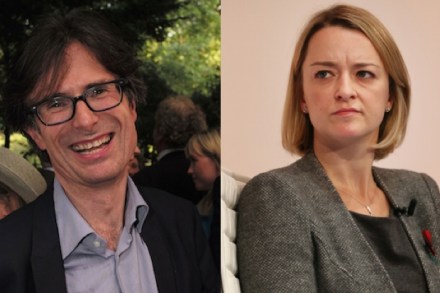
Watch out Laura! Corbynistas strengthen ties with Robert Peston

From our UK edition

Even though Robert Peston has only been in his new job as ITV's political editor for little more than a week, he has already managed to slip-up. On top of experiencing difficulties getting into the ITV building, the former BBC economics editor -- who Marr once described as a man ‘crippled by a sense of his own lack of self-worth’ -- managed to refer to Liz Kendall as 'Liz Corbyn' during one of his first broadcast interviews. However, should any of his former BBC colleagues struggle to take him seriously, they may now need to reconsider. With relations between Labour and the BBC at an all-time low over accusations of anti-Corbyn bias, ITV look set to cash in on their rival's ongoing feud.

Google tax row is convenient for Labour

From our UK edition

In the Google tax story, which continues to run in the papers today, Labour has found a theme that it can exploit in the Commons and in speeches over the next few weeks. Given so many Tories were prepared to criticise the 'derisory' amount the tech giant has agreed to pay back when the Commons discussed the matter on Monday, Jeremy Corbyn will feel he is on reasonably safe ground raising the issue at PMQs today.  Tax is always a handy issue, not just because it allows oppositions to promise to spend more using only the fruit of the magic money tree of cracking down on tax avoidance, but also because it taps into that feeling of one rule for the big guys and another for the ordinary voter, which is why MPs across the house were annoyed earlier this week.

A Trident debate could send chaos into the heart of Scottish Labour

From our UK edition

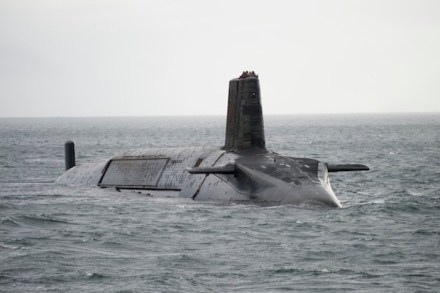
When will ministers hold their vote on Trident renewal? The Sun reports today that the ‘main gate’ decision on the size of the fleet will take place by the end of March, throwing Labour into disarray ahead of elections in Scotland, Wales, London and local government. Cunning thinkers in the Tory party point out that for the vote to have maximum political effect, it needs to take place closer to the start of March. This is so that MSPs can also have a debate on Trident in the Scottish Parliament before Holyrood rises on 23 March for the election campaign.

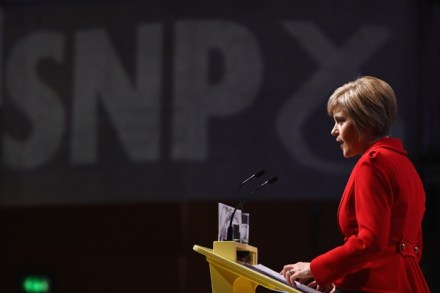
Nicola Sturgeon ridicules Labour’s ‘tortured’ Trident debate

From our UK edition

Given last year’s election was so much about the possibility of the SNP and Labour working together in government, Labour figures will be smiling ruefully at Nicola Sturgeon’s interview on the Andrew Marr Show today, in which she stuck the boot into the party she once suggested a ‘progressive alliance’ with. The Scottish First Minister is of course thinking more about fighting Labour in this year’s Holyrood elections than about the Westminster Parliament, and so she wanted to paint her main challengers as weak and confusing.

Corbyn didn’t consult Shadow Business Secretary over controversial business policy idea

From our UK edition

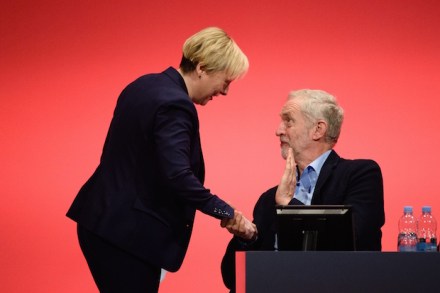
Angela Eagle wasn’t told about a controversial plan to ban companies who do not pay a living wage from paying out dividends to shareholders before Jeremy Corbyn floated it in a speech last week, Coffee House understands. I have learned that the Shadow Business Secretary was not consulted over the proposal, which is believed to have triggered the resignation of the Labour leader’s Head of Policy and Rebuttal, Neale Coleman. Corbyn floated the idea in his speech to the Fabian Society on Saturday, saying 'another proposal would be to bar or restrict companies from distributing dividends until they pay all their workers the living wage'.

Tories worry about plan to Short change opposition parties

From our UK edition

Labour is a very poor opposition at the moment, and no amount of money could fix that. But the government is currently pursuing a policy that seems intended to weaken even decent oppositions. In the Autumn Statement, George Osborne announced a 19 per cent cut to Short money, which is the state funding for political parties to be able to do their job of representing the millions of voters who want them in parliament. The 19 per cent cut is in line the reductions made to unprotected spending departments in the spending review, and is quite easy for ministers to defend, because they can talk about reducing the cost of politics, and voters like that idea. Naturally, the opposition parties involved don’t like the idea, and have been complaining about it.

Trying to analyse the election spending data? Follow Deep Throat’s advice…

From our UK edition

The publication of expenses for last year’s election is a useful reminder of the reality of much of politics. It turns out it’s not all barnstorming speeches and televised debates. There are an awful lot of invoices involved too. The claim everyone is obsessing about is that Labour spent just £16,000 on Facebook adverts, compared to more than a million spent by the Conservatives. Indeed, Labour seems to have spent less on Facebook adverts than each of the Liberal Democrats, Ukip, and Greens. No one disputes the fact that the Conservatives outspent Labour on digital campaigning. For public consumption, Labour used to pretend that this didn’t matter – and that their grassroots activists would trump the Conservatives’ virtual campaign.

RIP ‘EdStone’: the fate of Labour’s 8ft policy cenotaph is finally revealed

From our UK edition

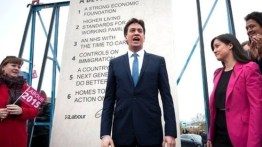
There was one infamous invoice missing from the Electoral Commission's campaign spending data yesterday -- that of the EdStone. Labour claimed that the missing invoice was simply down to an 'administrative error' rather than a reluctance for the public to know how much money was spent on the disastrous election gaffe. Happily Bloomberg News have been on the case. They report that recently unearthed invoices show that the 8ft stone with Labour’s election promises inscribed cost just under £8,000. While that is significantly less than the £30,000 reported by newspapers at the time, it can hardly be called a bargain.

Corbynglish as a second language: a political dictionary of terms

From our UK edition

Corbynterpretation [n]: The inevitable process of debate, after Jeremy Corbyn is interviewed, over what he actually meant. Does the Labour leader believe the killing of Osama bin Laden was a tragedy, or not believe this? Would he like Britain to negotiate with Daesh or would he be opposed to that happening? Would he, or would he not, abandon the Falkland Islands? As in, ‘Well, that’s a matter of Corbynterpretation’ or, ‘No, no, those remarks have been totally misCorbynterpreted.’ In order to Corbynterpret [v] one must first consider 1. Whether the Labour leader brought up the disputed view himself (invariably not) 2. Whether the Labour leader clearly said ‘yes’ after somebody asked him whether he held this view (invariably not) and 3.

PMQs sketch: Labour’s yellow submarine

From our UK edition

A new face at PMQs becomes samey after a few months. Corbo reached that point some time ago and Cameron can now contain him without breaking a sweat. He’s not threatened by the Labour leader for the simple reason that Corbyn lacks any forensic guile. To prepare, mount or press home an attack is beyond his powers so he just reads out his set questions in a low verbal moan, like next door’s Hoover. Today they tussled over the scrapping of bursaries for trainee nurses. Cameron said this reform makes it easier to fill the wards with bustling sisters and swishing matrons. No, said Corbyn. It’s harder. Amazingly, some light was shed on this difference. It depends where they come from. Corbyn wants vacancies filled from any old place.

Revealed: Labour spent £184,000 on Miliband’s debate coach

From our UK edition

Today the Electoral Commission have released the campaign expenditure returns of the six political parties that spent £250,000 or more on campaigning in the General Election. While the Conservative's £15,587,956 campaign bill could be argued to be money well spent given their majority win, Labour have a bit more explaining to do it when it comes to £12,087,340 they splashed on their failed campaign. So, where exactly did the money go? Almost £600 went on chicken suits, while a grand total of £223,573 went to Miliband's hot shot US Advisor David Axelrod's company AKP&D Message and Media. However, the bill that is of most interest to Mr S relates to Michael Sheehan.

Beckett report will change little in Labour

From our UK edition

Few Labour MPs had expected Margaret Beckett's report into the 2015 election loss to be the thing that saved the party. But they had hoped that it might give the current leadership pause for thought with a reasonable distance before the next election. Instead, much like an IMF report, the document contained something for everyone, with its author even describing it as a 'compilation' when interviewed about it on Today. What is odd about the report and about Beckett's own tone is that both don't really convey what many Labour MPs believe is the desperation of the situation. This might be because the party leadership doesn't think there's anything desperate about a party signing up many more members and most of those members being happy.

Beckett report into Labour’s loss is uncomfortable reading for all party factions

From our UK edition

Labour’s report on its election defeat is finally out, and it says there are four reasons for its defeat: Failure to shake off the myth that we were responsible for the financial crash and therefore failure to build trust in the economy. Inability to deal with the issues of ‘connection’ and, in particular, failing to convince on benefits and immigration. Despite his surge in 2015, Ed Miliband still wasn’t judged to be as strong a leader as David Cameron. The fear of the SNP ‘propping up’ a minority Labour government. These are not surprising, and the report’s narrative verdict on how the party lost is far more interesting.

Labour and pollsters confront what went wrong in May 2015

From our UK edition

Two post-mortems into the general election come out today: the pollsters' examination of how their surveys got the election so wrong, and Labour's latest internal inquiry into how it lost that election. The first report, which is the preliminary findings of an independent inquiry set up by the British Polling Council and the Market Research Society, has more surprising information in it than the Beckett report which, when it it published later today, is expected to say that Labour lost because voters didn't trust the party on the economy, leadership, or immigration. The pollsters seem to have succumbed to 'herding', which is when individual companies alter their sampling formulae to ensure they are producing results in line with those published by others in the same field.

Labour struggles to be an Opposition as MPs mock its Trident tribulations

From our UK edition

Emily Thornberry might not know why Jeremy Corbyn made her Shadow Defence Secretary, but she will have known that this afternoon’s departmental questions for the Ministry of Defence was going to be a difficult session. She came armed with two questions that she knew few would listen to, and delivered them well. But for the rest of the session, she had to listen to MPs on all sides of the Commons attacking not the government of the day, but the policy of the Opposition party. In fact, the government was barely scrutinised at all today, so intense was the focus on Labour and its potential U-turn on Trident.

Will Corbyn take the nuclear option on Trident?

From our UK edition

Jeremy Corbyn’s remarks about Trident have, unsurprisingly, been picked up everywhere this morning. The Labour leader told Andrew Marr yesterday that he could consider a ‘deterrent’ in which submarines continued to patrol the seas, but just without any nuclear warheads.

What David Aaronovitch’s brilliant memoir tells us about British communism

From our UK edition

Like most trade unionists in the 1970s and 80s I worked with a fair few communists. Men like Dickie Lawlor, Jock Cowan and Maurice Styles, postal workers for whom all events were viewed through the prism of ‘scientific socialism’. Communism gave them a philosophy by which to live their lives, and they were respected as men of principle even by those who abhorred their politics. Marx may have disparaged religion as the opiate of the people (and, in an even more memorable phrase, the sigh of the oppressed), but it was difficult to avoid the term ‘religious zeal’ when describing the way men like Dickie, Jock and Maurice approached their union work. By the time I knew them they’d long passed the stage of seeking converts.

Forget Corbyn’s shambolic reshuffle: the Labour leader is winning

From our UK edition

No amount of reports in the press that Jeremy Corbyn’s shadow cabinet-making is farcical and his party is divided should distract us from the fact that he is winning. I don’t mean that he will become prime minister, or even (though this seems quite possible) that he will survive as leader until the general election. It is just that he is gradually bringing more and more of Labour under his control, and grinding down his opponents. Besides, his public positions are coherent — in the sense of being internally consistent — and he is quite accomplished at adhering to an undeviatingly hardline, left-wing ideology while sounding mild and decent.

Diary – 14 January 2016

From our UK edition

Whatever you do, don’t allow your six-year-old to be caught short at Crewkerne station. With the rain pouring and the wind howling, my daughter needed the loo. But it was locked. And no staff anywhere to be seen. So I pressed the ‘Help’ button on one of those machines that have replaced stationmasters. ‘How can I assist you?’ responded a warm South Asian voice. ‘Er, we need someone to open the loo at Crewkerne.’ ‘Where exactly are you?’ she came back, sounding lost. ‘You know, in Dorset, after Yeovil. On the Exeter line. How far away is the help centre?’ I was thinking Bristol, maybe Swindon. ‘Oh, we are in Mumbai,’ she declared.