Labour party

Spectator’s Notes | 23 March 2016

From our UK edition

Why have David Cameron and George Osborne overreached? Why are so many in their own party no longer disposed to obey them? Obviously the great issue of Europe has something to do with it. But there is another factor. Victory at the last election, followed by the choice of Jeremy Corbyn as Labour leader, has convinced too many Tories, including Mr Osborne himself, that they will be in power for ten more years at least. So they get careless and cocky. Then they make mistakes. Then they come up against the most admirable fact about parliamentary democracy, which is that you can never guarantee being in power for ten years. (You can’t even guarantee it for the prescribed five, though the iniquitous Fixed-term Parliament Act of the coalition has made this easier than before.

What’s behind Labour’s little list of ‘hostile’ MPs?

From our UK edition

Why have Jeremy Corbyn’s allies drawn up a list ranking Labour MPs according to how hostile they are to the leadership? It’s not the first list that categorises MPs: I revealed in the Times recently that the moderates who are plotting to destabilise the Labour leader had drawn up their own list that ranged from the ‘signed-up Corbynistas’, the ‘nervous soft left’, the ‘organisational left’, ‘centrists’ and the moderates. It might be that the Corbynites are simply trying to understand the Labour party a bit better and finally improve their parliamentary operation.

PMQs unifies Tory MPs and weakens Jeremy Corbyn

From our UK edition

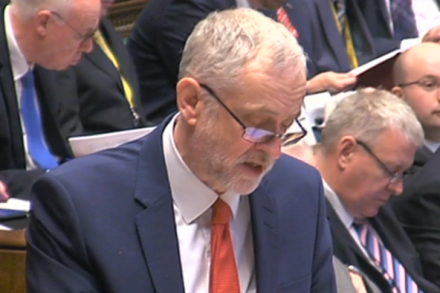
On Sunday at noon, few would have predicted that Tory MPs would have come out of PMQs cheered and unified. But thanks to The Times’ Sam Coates revealing this morning that the Labour leader’s office have ranked their MPs from core group to hostile, David Cameron won this session hands down and cheered up Tory MPs in the process. Jeremy Corbyn had plenty of material of his own to work with, Iain Duncan Smith’s resignation letter should be a rich seam for Labour. But when Cameron started quoting the rankings at every turn, Corbyn — remarkably, given that his team had had all morning to come up with one — had no comeback. He was reduced to, rather pathetically, telling Cameron to leave the theatre. The Tory benches meanwhile were loving it.

Corbyn’s PMQ performance receives a ‘hostile’ verdict from Labour MP: ‘f—ing disaster’

From our UK edition

Today's PMQs ought to have been a walk in the park for Jeremy Corbyn following days of in-fighting and rebellion in the Conservative party. However, a secret document changed all that, with the Times today publishing a spreadsheet which categorises all the Labour MPs in terms of their loyalty -- or lack there of -- towards Corbyn. John Woodcock -- who is on the 'hostile' list -- was left unimpressed when Cameron was able to ridicule the party over the list at PMQs: 'Mr Speaker there are five categories. We've got "core support" -- I think you can include me in that lot. We've got "core plus", the Chief Whip's being a bit quiet because she's in "hostile".

George Osborne starts a fight in the Commons and comes out unscathed

From our UK edition

George Osborne turned up in the Commons chamber with a clear plan to get through this Budget debate: turn it into a partisan slug fest. His aim was to make it a straight Labour/Tory fight and by doing that, rally the Tory benches to him. With some help from the whips and the PPSs, he largely succeeded in doing that. Crucially for him, he got through the speech without incurring any further damage. As soon as Osborne began talking about the Budget, Labour started trying to intervene on him. Chris Leslie was first up, demanding an apology for the proposed PIP cuts. Osborne, in a response that set the tone for the rest of the speech, demanded that Labour apologise for the financial crisis.

Watch: Jackie Baillie’s disastrous Sunday Politics interview — ‘to call that a “car-crash” would show a lack of respect to automotive accidents’

From our UK edition

With the Scottish Parliament elections set to take place in May, the SNP are expected to once again top the polls. As for the other parties, Kezia Dugdale's beleaguered Scottish Labour will be attempting to fight off Ruth Davidson's conservatives for second place. So, with Dugdale desperately needing to win back disillusioned voters, she may live to regret sending Jackie Baillie, the Scottish MSP, onto yesterday's Sunday Politics. In an interview with Gordon Brewer, Baillie attempted to put forward her party's new economic policy which claims to offer a way to end austerity which is not 'prescriptive'.

Sadiq Khan’s pledge to tackle Labour anti-Semitism hits a bump in the road

From our UK edition

Since Jeremy Corbyn was elected Labour leader, the party has been dogged by rumours of anti-semitism in certain factions of the party. Matters were only worsened last week with the re-admittance and then re-expulsion of Vicki Kirby, a former Labour parliamentary candidate who has suggested that Isis ought to attack Israel. Now there are concerns that the negative publicity could damage Sadiq Khan's London mayoral bid. Last week, Jonathan Arkush -- the President of the Board of Deputies -- claimed that the Labour candidate could struggle to win votes from London's 180,000 Jews. While Khan has made clear that Labour needs to ditch its 'anti-Jewish' image, he may wish to take a closer look at who he takes an interest in on social media.

How Jeremy Corbyn may split – and, thereby, destroy – the Conservative Party

From our UK edition

‘Why this sudden restlessness, this confusion?’ asked C.P. Cavafy in his poem ‘Waiting for the Barbarians’: Because night has fallen and the barbarians have not come. And some who have just returned from the border say there are no barbarians any longer. And now, what’s going to happen to us without barbarians? They were, those people, a kind of solution. All through your and my life the Labour party have been at the gates of Downing Street, and often enough stormed them, only to be beaten back at a subsequent election. What might happen to the Conservative party if those barbarians disappear? At first, Tories rejoiced at the Labour leadership election. The barbarians are fighting among themselves and no longer threaten us! Hurrah!

New YouGov poll puts Labour ahead

From our UK edition

When an ICM phone poll this week had Labour level with the Tories for the first time since Jeremy Corbyn became leader, even the pollster cast doubt on the finding. But today, YouGov has Labour ahead by a point—34% to 33%. YouGov’s Anthony Wells says that this suggests ‘something is genuinely afoot’. Now, as the election reminded us polls are not all seeing. It is also doubtful what the value of a poll is this far out from a general election: Ed Miliband was regularly ahead by large margins during the last parliament and still went on to lose the election.

It’s the Labour moderates who need to get real

From our UK edition

It has become commonplace to remark that there exists in Britain a mainstream political grouping that seems to be dwelling on another planet. Lost in fantasy, harking back to days long-gone, it lives on illusion. Time and the modern world have passed it by. Fleet Street and fashionable opinion rage against these mulish daydreamers for turning their backs on the voters and depriving Britain of an effective opposition. And all this is true. In only one detail are Fleet Street and fashionable opinion mistaken. They’ve got the wrong grouping in their sights. It is not Jeremy Corbyn, John McDonnell and their crew who fit this picture: it is the Labour moderates. Neo-Blairites and neo-Brownites are in cloud cuckoo land — and in control of the parliamentary Labour party.

Full text of Jeremy Corbyn’s Budget speech

From our UK edition

[audioplayer src="http://rss.acast.com/spectatorpolitics/georgeosbornesbudget-2016/media.mp3" title="Fraser Nelson, Isabel Hardman and James Forsyth discuss the Budget"] Listen [/audioplayer]Thank you Mr Deputy Speaker. The Budget the Chancellor has just delivered is actually a culmination of six years of failure. This is a recovery built on sand and a Budget built on failure. The Chancellor has failed on the budget deficit failed on debt, failed on investment, failed on productivity, failed on the trade deficit, failed on his own welfare cap and failed to tackle inequality in this country. And today Mr Deputy Speaker, he’s announced growth is revised down. Last year, this year, every year they forecast business investment revised down, government investment revised down.

Watch: George Osborne promises to ‘abolish’ the Liberal Democrats

From our UK edition

Of course no Budget announcement would be complete without some customary 'banter' from the Chancellor of the Exchequer. With George Osborne's leadership chances seen to be dwindling, he did his best to show that he had got his 'mojo' back. Clearly free of any guilty feelings over how things turned out for the Liberal Democrats in the General Election, Osborne couldn't resist a taking a pop at the beleaguered party as he discussed his plan for pensions: 'For the past year, we've consulted widely on whether we should make compulsory changes to the pension system but it was clear there was no consensus. Indeed the former pensions minister, the Liberal Democrat Steve Webb said I was trying to abolish the lump sum.

Burnham makes the case for Labour not supporting the Investigatory Powers Bill

From our UK edition

The saying ‘the House of Commons at its best’ is normally a pompous description of parliamentarians agreeing with one another on something it is impossible to disagree on. However, when MPs come together to scrutinise legislation involving the security services, they do come rather close to being at their best, as they grow rather anxious about whether the legislation will actually work. So far the debate on the Investigatory Powers Bill has largely been detailed and thoughtful and without much silly knockabout. But the closest the second reading session has come to knockabout was when Andy Burnham was offering Labour’s response.

Labour’s former election star distances himself from Jeremy Corbyn

From our UK edition

In 2010, Ross Kemp appeared in a party political broadcast urging the public to vote for Labour in the General Election. In this, the EastEnders actor, who plays Grant Mitchell in the BBC soap opera, warned the nation against voting for David Cameron: 'It only takes around 60 seconds to cast your vote. 60 seconds to protect the economy, 60 seconds to protect your jobs, 60 seconds to protect the services your family relies on. And a lot is at stake during those 60 seconds, David Cameron and George Osborne would cut child credits and tax funds. They would put police numbers and schools at risk. With George Osborne at the helm, we would risk driving us straight back into recession by taking billions out of the economy at the wrong time.

Meet Labour’s alternative shadow Treasury team

From our UK edition

Jeremy Corbyn is preparing for his first response to a Budget since becoming Labour leader. The last time he spoke in a debate following an economic statement from the Chancellor was in 2012, when he complained about the ‘granny tax’, the benefit cap, proposals for regional pay, transport spending and Heathrow and housing. The MP for Islington North concluded: ‘I want a Budget that helps the poorest in this country, that creates jobs, that encourages local authorities to build council housing, and that shows that there is a sense of the reality experienced by those living in inner urban areas. If we do not provide jobs for young people, we will reap the whirlwind.

Labour unease over Investigatory Powers Bill

From our UK edition

The Investigatory Powers Bill has its second reading in the Commons this afternoon, with Labour planning to abstain and make its support for the timing of the legislation conditional on the Home Secretary satisfying a number of concerns that the party has. Separately, I understand that Tory MPs such as Liam Fox are pushing for a generous timetable for the legislation, including committee stage taking place on the floor of the Commons. Fox points out that 'there's not much other legislation about', though this has never stopped ministers giving controversial pieces of legislation very tight timetables for debate. So far, though, Theresa May has been in a very consensual mood while drawing up the legislation.

Pollster finds Labour level-pegging with the Tories. Pollster panics.

From our UK edition

Look! All this sniping at Jeremy Corbyn is wrong and now we have proof. The Labour leader is not in fact trashing his party’s brand. Today a poll from ICM puts the Conservatives and Labour level on 36 per cent, a jump of four points for the opposition and a drop of three for the governing party. But before Corbynistas have had a chance to gather up their red flags and take to the sunny streets to celebrate, ICM has already issued a clarification which, in essence, trashes the poll’s finding.

Watch: Seema Malhotra’s car-crash Sunday Politics interview

From our UK edition

With the Budget due next week, George Osborne appeared on the Andrew Marr show to warn of the need for further spending cuts. Keen to put forward an alternative vision for the UK economy, Labour's Treasury team have also taken to the airwaves this morning. John McDonnell told Marr of the need for more long-term investment, arguing that at least 3 per cent of GDP should be used for investment compared to Osborne's 1.4 per cent. Alas it seems that Labour's shadow Chief Secretary to the Treasury had failed to catch this. When Seema Malhotra appeared on the Sunday Politics to help explain McDonnell's vision she appeared to lack knowledge of any of the specifics.

John McDonnell tries to repair Labour’s economic reputation 

From our UK edition

What is Labour's biggest obstacle to getting back into government any time soon? Those who've spent any time thinking about the general election result - and the party still doesn't talk that much about May 2015 - will say that until voters trust the party on the economy, it is not going to succeed. John McDonnell's team clearly agrees, briefing the media today that the reason the Shadow Chancellor is making a major intervention on the economy as he prepares for the Budget is that voters were wary of Labour on the economy.  McDonnell's speech today sounds remarkably similar to the messages Ed Balls offered before the election, that Liz Kendall annoyed members with in the leadership contest and that Rachel Reeves produced in her own speech just days ago.