Labour party

An election before 2015 could soon be illegal

From our UK edition

Amazingly, the forces of conservatism derided by Tony Blair, are in the ascendant, their enemies scattering and in retreat. Bin Laden is dead, the oil price tumbling, the Royal Wedding was a triumph and now Labour and the Lib Dems beaten at the ballot box. Surely, we tell ourselves, this is an alignment of the stars, a Conservative moment. David Cameron must seize the day, or at least the year, by abandoning the Coalition and calling a general election soon. Landslide, here we go! Hold your horses. Britain’s electoral machinery is off the road, its parts all over the workshop floor. Thanks to the constitutional tinkering of the Coalition, the procedural and practical obstacles to holding a general election in the next four years are substantial and rising.

The winners and losers from Thursday’s elections

From our UK edition

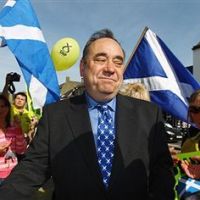
After every election, the political stock exchange goes into a frenzy trying to work out who is a buy and who is a sell. Thirty-six hours after the polls closed, it is a little clearer who the winners and losers of this election season have been. Here are our selections: Winners Alex Salmond, the biggest winner of Thursday night. Salmond has achieved what the Scottish electoral system was meant to prevent, an overall SNP majority in the Scottish parliament. Salmond now has the votes he needs for a referendum on independence.

Now Salmond can begin his battle for indepedence

From our UK edition

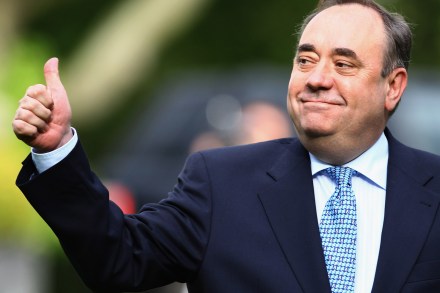
After all the carry-on with the new Scottish Parliament building, they may have to rebuild it yet again to accommodate Alex Salmond’s head. Never the smallest object, it will have swelled dangerously today – and (I hate to say it) deservedly. This was his victory. Only Smart Alec can pitch simultaneously to the left and the right, and get away with it. “The SNP has become the conservative party of Scotland,” a banker friend emails from Edinburgh. “Almost every Scot I know who is a conservative in London is now strongly pro-SNP”. Salmond talks about low tax and enterprise, etc, while vowing to keep state spending up at Soviet levels. My gran once summed up his debating technique. “If he knows the answer, he gloats.

Lessons for the Lib Dems

From our UK edition

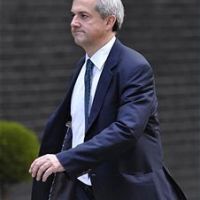
Chris Huhne’s behaviour still has everyone at Westminster talking. Earlier in the week, senior Liberal Democrats were saying that once the voting had happened, Paddy Ashdown and the party president Tim Farron would communicate the party’s anger at the behaviour of the No campaign, while the party’s Cabinet ministers began to rebuild relations with their coalition colleagues. Vince Cable, for example, has been far more restrained today than he was during the campaign, blaming AV’s defeat on the failings of the Yes campaign not the No campaign’s tactics. But Huhne either didn’t get these instructions or has chosen to ignore them.

Another disappointment for Ed Miliband

From our UK edition

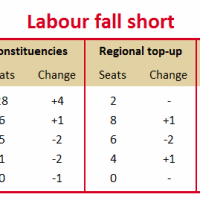
The final tally from Wales is just in — and it's a minor disappointment, on a day of many disappointments, for Ed Miliband. There was a time when Labour looked set for a comfortable overall majority in the country. But it isn't to be. They did gain four seats, yet that leaves them one short of an overall majority. Now, with thirty seats — exactly half of those in the Welsh Assembly — they will have to make do with a tighter, working majority. Far from terrible, but not the red groundswell that Miliband might have hoped for. The problem for Miliband is the overall picture: a precarious sort of victory in Wales; solid, but unspectacular, results in England; an evisceration in Scotland; and, most likely, defeat for AV.

Salmond’s next stop: testing the Act of Union

From our UK edition

Fresh from his astonishing victory in Holyrood, Alex Salmond has declared his next stage is an independence referendum. This is scoffed at: technically he has no powers to do so and a maximum of a third of Scots back independence. But it's a brave man who'd bet against Alex Salmond right now, and there are many reasons to take seriously the prospect of Scottish independence. Here are some.   1) Scotland is making a mockery out of received wisdom. A few weeks ago, Labour was cruising towards victory. When the Scottish Parliament was designed, the prevailing wisdom suggested that the SNP could never win a majority because the electoral system was rigged against them. Even the SNP believed this.

Surprise, surprise … the Lib Dems are taking a battering

From our UK edition

If you fell asleep expecting heavy losses for the Lib Dems, then you will not have been disappointed upon waking up. At time of writing, around 100 English councils, comprising roughly 2,400 councillors, have declared their results – and the yellow brigade have already lost four of them, along with 270 councillors. There's some way to go yet, so the picture could alter, but Labour appear to making sweeping gains, while the Tory vote is holding unexpectedly firm. As it stands, the local wing of Cameron's party has actually gained a council, along with 22 councillors in the process. Stir in the likely result of the AV referendum, and the Tory leader is looking like a net winner on the night.

Salmond’s victory

From our UK edition

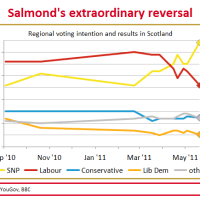
When I stood down as political editor of The Scotsman five years ago, the country looked to be forever Labour – even if they called in Salmond for some Puck-style light relief. Not so now. The SNP seems to have pulled off a minor revolution. Scotland wakes to find Labour MSPs being toppled from former strongholds like Glasgow Shettleston – the city itself is now almost all SNP. The BBC say Alex Salmond is heading for a majority, and in a Holyrood which was designed to make it almost impossible for any party so to do. Salmond is already pledging that his next mission is an independence referendum. The Lib Dems have taken what seems to be a punishment beating for coalition with the Tories in Westminster.

Will there be TV debates at the next election?

From our UK edition

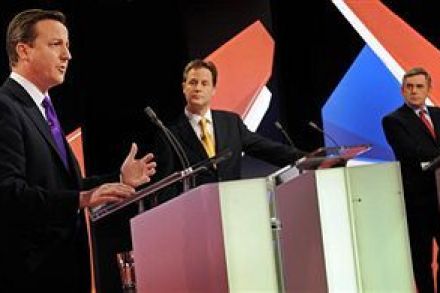
One might have thought that the TV debates would become an immovable fixture in British general elections. But apparently not. Speaking at the launch of a new study of the 2010 election a couple of nights ago, Adam Boulton said that it was far from certain that they will feature at the next election. Will Straw tweeted the news at the time, but it seems to have slipped through the cracks as attention has been diverted elsewhere. Apparently, broadcasters and the parties have reached an impasse at this early stage in the electoral cycle. The Conservatives are reluctant to recommit themselves to something that they believe contributed to their failure to win a majority.

The ghost of David Miliband hovers over Ed’s election results

From our UK edition

While the focus remains fixed on the dramas of Coalitionville, it's worth remembering that today's votes are meaningful for Ed Miliband too. The Labour leader may not be facing the prospect of resignations, nor even outcry, at their various outcomes. But this is, nonetheless, the first major electoral moment of his leadership. He might well be judged on it. In which case, much will depend on the extent to which Labour advances in England have already been priced into the electoral calculus. If the party's footsoldiers regard sweeping gains — of perhaps around 1,000 seats — as some sort of default, then attention may turn instead to the turnaround in favour of the SNP in Scotland, and to the likely defeat for Yes to AV.

Election day is here at last

From our UK edition

The usual form, on mornings such as these, is to put up a post setting the scene for the elections ahead – although, really, there's not much more to add than was said yesterday. Apart from a readers' survey in the Metro this morning, the only poll to hit after yesterday's ICM bombshell is a YouGov one for the Sun, and it gives No a 20-point lead. Even given the complications of turnout and geography, it looks as though Team No are heading for a straightforward victory. As if to underline his increased personal involvement in the campaign, and perhaps tie himself that little bit closer to the eventual result, David Cameron has not one, but two, comment pieces in the papers today – in the Mail and in the Sun.

Your guide to tomorrow’s elections

From our UK edition

In light of ICM's latest poll, Lib Dems might be relieved to hear that tomorrow isn't all about the AV referendum. But it's a meagre sort of relief: they're facing a drubbing in the local elections too. We've put together a quick guide to those elections, as well as those in Scotland and Wales, so that CoffeeHousers know what to look out for, and Lib Dems know what to fear. Here it is: England The main question hovering over England's local elections is: how big will Labour's gains be? There are around 9,400 seats up for contention, of which the Conservatives currently hold about 5,000; Labour, 1,600; and the Lib Dems, 1,900.

A session of Dickens, Ernie the Milkman and Jack Dromey

From our UK edition

There was an eerie, eve-of-battle calm about today’s PMQs. The real bust-up isn’t due till Friday. The votes will be in, AV will be out, Clegg will be down and Huhne will be calculating his next move. Before today’s session everyone expected Labour to co-ordinate an ambush and try to light Cameron’s ever-combustible fuse. But the chamber was under-populated and the opposition hadn’t troubled to devise a battle-plan. Miliband carried the fight to the PM. With an assured forensic performance he methodically built up the case against Cameron as a promise-breaker, a question-dodger and a budget-slasher. Cameron dealt with the assault by absorbing rather than repulsing it.

PMQs live blog | 4 May 2011

From our UK edition

VERDICT: A sedate sort of PMQs today, particularly in comparison to the fizz and fire of recent sessions. The reason is simply the date: with the local elections tomorrow, much of the emphasis was on making a straightforward pitch for votes. Miliband's was to attack the "broken promises" of the coalition — a charge that, if not exactly new, is one he is deploying more and more. Whereas Cameron's was to emphasise that councils can make cuts while improving services — and that Tory councils have been particularly successful in doing so. Both men broadcast their messages today, without really scarring the other. The winners and losers will be better judged on Friday morning. 1231: And that's it. My short verdict soon.

Labour are still off course in Scotland

From our UK edition

Of all the election results due in on Thursday night, those for the Scottish Parliament may be the most significant. Labour's Scottish base, which has been the party's bedrock for almost 50 years, seems to be dissolving. Two more opinion polls yesterday gave details. One, in the Mail on Sunday in Scotland, gave the SNP a ten point lead on the constituency vote and a six point lead on the list vote: this would give the Nationalists 62 seats to Labour’s 51. With the Greens on course to pick up three seats according to the Progressive Opinion poll, Alex Salmond would have enough votes to hit the magic 65 he needs for a majority to pass his independence referendum bill.

Purnell stakes out a new welfare battleground

From our UK edition

I said a few days ago that the spirit of James Purnell lingers over the welfare debate in Britain. Well, you can now scratch out "spirit". The real-life, corporeal version of Purnell is giving a speech in Australia today — and, judging by its write-up in the Guardian, it is one that should have some resonance on this side of the planet. This is not just an address by a former Labour MP on where his party should go next — although it is partially that — but also the staking out of new ground on welfare policy. Whether you agree with it or not, it deserves some attention. So what does Purnell say? Much of it is a straight disavowal of New Labour's money-centric approach to welfare and poverty.

Hain puts his foot in it

From our UK edition

Crude politics has intruded on the Royal Wedding after all, and all courtesy of Peter Hain. The Shadow Welsh Secretary has complained — on Twitter, naturally — that the BBC's coverage of the event dwelt too long on David Cameron and Nick Clegg, and ignored Ed Miliband. "BBC airbrushing Labour like the Palace?" he asked leadingly. The Tory minister David Jones has since admonished him, "time, place, Peter." If Labour have much sense they'll play this down as efficiently as possible. Miliband, it is true, barely featured in the television coverage — but that's really beside the point. It is rarely smart politics to take on the Palace at any time. Yet on the day of the Royal Wedding it's just downright foolish.

Why David Blanchflower has it wrong

From our UK edition

Gordon Brown may have gone, but advocates of his calamitous policies remain. David Blanchflower, the chief exponent of borrowing more, has a piece in The Guardian today which is worth examining. Written with his trademark chutzpah, it’s a very clear exposition of the Labour argument — along with its flaws. Here are some extracts, and my comments: "In his budget speech last month, Chancellor George Osborne suggested that he was hoping for 'an economy where the growth happens across the country and across all sectors. That is our ambition". Sadly, to judge by Wednesday's GDP figures, growth under this coalition remains just an ambition, a mere illusion." And why would that be? The GDP figures showed growth of 0.

Cameron’s new cuts narrative

From our UK edition

Aside from the "Calm down, dear" drama, there was something else worth noting from today's PMQs: David Cameron trying for a calmer debate on the deficit. He admitted that his government is not really being that much more aggressive than Gordon Brown would have been. They're cutting £8 for every £7 that Brown and Darling proposed for 2011-12, he said. It's a line that Nick Clegg road-tested in his speech to the IPPR last week, and it represents a new and welcome strategy. To date, the rhetorical differences have been stark. The Tories have said: we’re the big bold cutters, Labour are deficit deniers. Labour has replied: your cuts are too deep and too harsh, and the GDP figures prove it.