Labour party

Labour could use Budget legislation to force mansion tax vote

From our UK edition

Labour's current plan to embarrass the Lib Dems over its clothes-stealing mansion tax policy is an Opposition Day debate in the Commons. But, in a mark of how serious the party is to score a political point on this matter, I understand that it is also considering tabling an amendment involving a mansion tax to the Finance Bill after the Budget. Labour sources tell me that this threat will be enacted if the government doesn't allocate time for an Opposition Day debate before the Budget. A source says: 'We want to be clear that we are serious about this. This is a test for the Lib Dems to see if they can keep just one of their promises. It's a test for Nick Clegg as leader.

Newcastle Labour leader founds a big society

From our UK edition

Labour's Nick Forbes is a great pioneer of austerity. As leader of Newcastle City Council he bravely decided to shut half the city's libraries, close two respite centres for disabled people and cut 100 per cent of funding to arts institutes. He said he had to do it, because the Government had reduced the council's funding (though the city still gets more per household than most areas) and he needed to protect services for vulnerable people. Forbes wrote a letter to The Observer predicting 'the break up of civil society'. Some of us wondered though – did he really need to cut 100 per cent of the arts funding and close the libraries? Were the numbers more flexible than he suggested? Forbes was amazed at our cynicism.

The taxing question Labour can’t answer

From our UK edition

The details of Labour’s mansion tax proposal remain, to put it politely, sketchy. Here’s the exchange between Andrew Neil and Sadiq Khan on the Sunday Politics on how Labour would work out which homes are worth more than two million pounds: AN: Do you rule out a re-evaluation of all properties? SK: There are a number of options to look into. AN: Do you rule out a re-evaluation?

Labour’s mansion tax debate won’t be a crunch vote (or very interesting)

From our UK edition

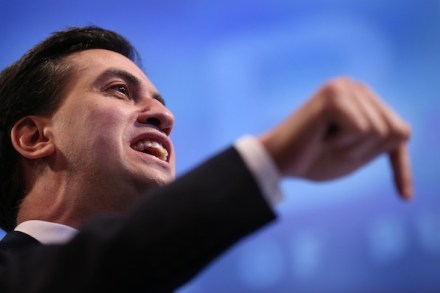
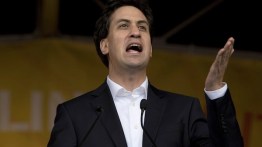
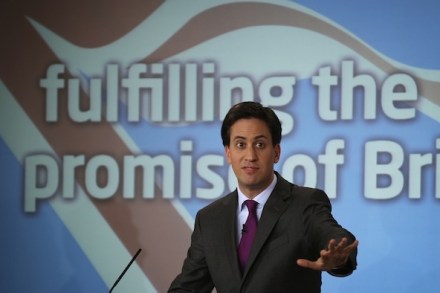
So Labour is going to force a vote in the House of Commons on the mansion tax. It's the key announcement trailed as part of Ed Miliband's visit to Eastleigh today, and yet it's the sort of thing that only really excites people who look forward to hearings of the Public Accounts Committee rather than the average voter who has a more normal perspective on life. The idea behind these Opposition Day debates is that Labour flushes out any rebels or unhappy Lib Dems, or that its MPs can later tweet 'Lib Dems voted against their own policy in the Commons tonight #evil #nevertrustalibdemagain'. Miliband says that very thing today: 'And what about the Lib Dems? There could be a majority in the House of Commons when it votes on our proposal. But only if the Liberal Democrats vote with Labour.

No 10 attacks Miliband’s ‘admission of economic incompetence’

From our UK edition

Here's an interesting thing: Number 10 has released a statement on Ed Miliband's 10p tax rate pledge. The Downing Street press machine hasn't been in the habit of doing this sort of official reactive spinning, although this may be in part because Miliband's speeches thus far have been pretty light on anything you can actually react to. This is what a No 10 spokesman said: 'This is a stunning admission of economic incompetence from Ed Miliband and Ed Balls – that their decision in Government to scrap the 10p tax rate hurt millions of working families. People will never trust Labour again. The low income working people who lost out the most from Labour’s 10p tax hike now pay no tax at all thanks to this Government’s record increases in the tax free personal allowance.

Labour’s Valentine’s policy gimmick

From our UK edition

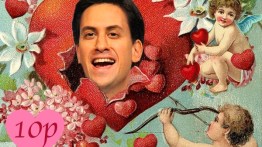
At long last, Ed Miliband delivered us a Valentine's Day present that everyone in the political world has been waiting for: a new policy! And a tax policy at that! Not just content with maintaining support for a temporary VAT cut, reversing the Coalition's tax credit restraint and reversing the 50p tax rate cut (all of which would worsen the deficit), the Labour leader has nailed his colours to a new mast. He wants to bring back the 10p rate of income tax, which his former boss Gordon Brown abolished, paid for by a mansion tax on homes worth £2 million. Now, there are many observations which can made about this. First, this is a huge u-turn for Miliband personally.

Ed Miliband’s bold redistributive rebuke to Brown

From our UK edition

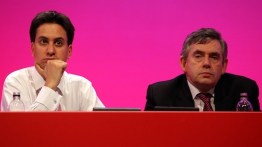
Those close to Ed Miliband stress that if elected, Labour will introduce a mansion tax to pay for the return of a 10p tax rate. I’m told that ‘short of publishing the manifesto two years early, we couldn’t be any clearer’. This new 10p band will apply to the first thousand pounds of income, making it a £100 a year tax cut. (Although the Cameroon think tank Policy Exchange calculates that low-paid working families would actually only be 67p a week better off under this policy.) The politics of the move, which has been in the works since Christmas, is fascinating. It is both a bold redistributive gesture and a rebuke to Gordon Brown, who scrapped the 10p rate. It also appealed to Miliband because it fits his whole critique of how politics works in this country.

Miliband steals a march on Tory tax campaign

From our UK edition

Ed Miliband has just started his economy speech in Bedford, so as he gets underway, here's a quick thought on his plan to reintroduce the 10p tax band. Doing this steals a march on a brewing Conservative campaign. Robert Halfon has been pushing over the past couple of months for the restoration of the 10p tax band to help those on low incomes. He's badged it the 'Great Gordon Brown Repeal Bill', and David Cameron set some pulses racing yesterday at PMQs when he told Yvonne Fovargue that 'we will not forget the abolition of the 10p tax rate that clobbered every hard-working person in the country'. But on yesterday's Newsnight Jon Cruddas also dropped a hint that Labour could bring back the rate, and Miliband will shortly confirm this in his speech.

Labour’s Eastleigh by-election fight

From our UK edition

The Eastleigh by-election machine is well and truly up and running this weekend, with ministers starting to make their way down to the Hampshire constituency to start campaigning. The focus is on the two coalition parties who have now both chosen their candidates, but it's also interesting to see what Labour's up to in the constituency. Labour came second in the 1994 by-election, but as the graph below shows, the party then embarked on a slide which saw it poll third in the four subsequent elections. What's interesting, though, is that though the party hasn't yet announced its candidate, it's had a stall down in the town for two weeks already, when there wasn't even a by-election on the cards until last Monday.

Labour prepares to enter the battle of the best ideas

From our UK edition

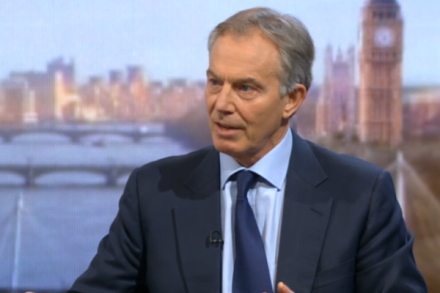
Tony Blair usually grows rather awkward when asked about the current direction of the Labour party under Ed Miliband. Clearly afraid of appearing a backseat driver, the former Prime Minister tries as hard as he can to avoid delivering any kind of verdict, other than a vaguely supportive bundle of words. He certainly did the latter in his interview on Marr this morning, but Blair also made some important points about how crucial this year will be for Labour. He said: 'So I understand the Labour party message. And by the way, what Ed’s trying to do is tougher than what I had to do. When I became Labour leader, we’d lost four elections. This is attempting to bounce back and win after a heavy defeat.

Cameron encourages his party to bang on about Europe

From our UK edition

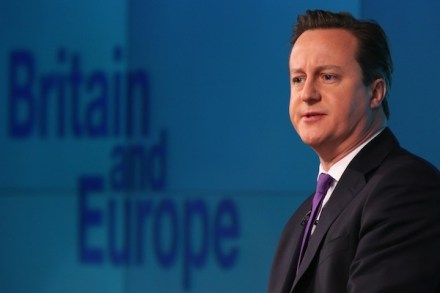
Something quite curious is going to happen in the Commons this afternoon. David Cameron is encouraging his party to bang on about Europe. He has called a general debate, with the motion 'that this House has considered the matter of Europe', and it promises to be rather strange. The strangest thing is that a month ago, David Cameron would never have dreamed of tabling this sort of debate: his camp were busy in October trying to quell an uprising of backbenchers over the EU Budget. But after the speech that delighted even Mrs Bone last week, Cameron finally doesn't have to wait for a backbencher to pounce on him with entreaties on referenda and renegotiations: he's got nothing to hide now.

Why I’m not keen on referenda

From our UK edition

It did not, in the end, take very much to outfox Ed Miliband. You wonder what he had been expecting the Prime Minister to say about a referendum on withdrawing, or otherwise, from the EU. As it was, Ed floundered, and felt obliged to say that Labour would not be promising a referendum – that will lose him even more votes to UKIP. Later ex shadow cabinet and existing shadow cabinet members had to defend this position, which they did by stating that this was Labour’s intention ‘at the moment’. Great. There’s increasing evidence that UKIP is taking more and more votes from the Labour Party, whereas once they thrived on disgruntled ex Tory votes.

Can’t we even throw out Lynne Featherstone?

From our UK edition

I gave a talk to the Hornsey and Wood Green Labour Party last night. If you don’t know the area, the constituency covers Highgate, Muswell Hill and Crouch End: leafy north London villages, where the metropolitan middle class go, if not to die, then at least to produce babies. There are pockets of high unemployment and council housing, but the seat is generally prosperous and in places very prosperous. Its fortunes illustrate how the political parties have attended to the needs of the urban bourgeoisie. The Conservatives are nowhere now. As late as 1992, Hornsey and Wood Green was a Tory seat. This year they closed their local office and gave up, as they have given up in so many British cities.

Labour opposes benefit cuts: for now, anyway

From our UK edition

Last night's debate on the bill capping benefit rises at 1 per cent was far more revelatory than it might first have appeared. It wasn't Labour's conclusion that the Tories were evil and the Lib Dems (those that turned up, at least: there were nine rebels, but a further 11 Lib Dem MPs were mysteriously absent) just as bad. But the most interesting revelation was the way the party handled this exchange: Charlie Elphicke: Is it therefore the right hon. Gentleman’s and the Opposition’s policy that uprating should be not by 1%, but by inflation? Is that a commitment? Stephen Timms: Uprating should indeed be in line with inflation, as it always was in the past. This was significant.

The Labour MPs who could make trouble for Ed Miliband on Europe

From our UK edition

So the Prime Minister's speech is, as James hinted yesterday, going to be on Wednesday, and in London to avoid any further strikes of the Curse of Tutancameron's Europe speech. His official spokesman confirmed the date this morning. Thanks to briefed extracts and further briefings over the weekend, we now have a rough outline of what's going to be in it, which will mean it's impressive if anything the David Cameron says causes anyone in the audience to gasp with surprise. What is more exciting is what the response will be from the other benches in the Commons. Labour spokesmen on the broadcast rounds yesterday were squirming rather when asked about whether the party might offer a referendum too.

Lib Dems and Labour to push for changes to benefits uprating bill

From our UK edition

Round two of the row over rises in benefit payments is on the way, with Lib Dems and opposition parties tabling a series of amendments to the government's legislation. I have learned that Lib Dem Andrew George has already laid his proposals for changing the welfare uprating bill, which will return to the House of Commons for the report stage and third reading next Monday. George's amendments are backed by four other Lib Dem MPs: and two of them were neither rebels nor abstainers at last week's second reading vote. While Charles Kennedy and John Leech abstained and rebelled respectively on the second reading, Dan Rogerson was loyal, and Alan Reid was absent.

Ed Miliband’s economic lacuna

From our UK edition

Refusing to publish your 2015 manifesto at the start of 2013 is, obviously, a sensible one. However uncomfortable Labour frontbenchers have felt over the past two and a half years about not being able to respond to the jeers of 'well, what would you do then?' from ministers at departmental questions, writing another one of the longest suicide notes in history would have left them in still greater discomfort at the polls. But how do voters know whether to trust you or not when they've only recently booted you out of government? Ed Miliband was trying to explain this tension to James Landale on Marr this morning. Miliband: But, James, I've tried to explain to you why it isn't reasonable for an opposition at this stage of a parliament to set out precisely what will be in the manifesto.

David Miliband is out of exile: but what happens next?

From our UK edition

Reports of his return to frontline politics certainly seem to have woken up David Miliband. He has given a very energetic speech in the Commons this afternoon in the Welfare Uprating Bill: so energetic, in fact, that he managed to steal poor Sarah Teather's rebellious thunder, speaking directly after the former Lib Dem minister. Shortly afterwards, he was spotted at the top of the Portcullis House escalators shaking the hand of admiring Labour MPs who passed by. As Dan Hodges points out on his blog, the Blairite MP was perfectly happy to attack the Welfare Uprating Bill from the Left, calling it 'rancid', and arguing that it undermined the Tories' confidence in their welfare reforms so far.

Ed Balls reverses over his own progress on fiscal responsibility

From our UK edition

The battle-lines over the Welfare Benefits Up-rating Bill — which faces its second reading in the Commons this afternoon — have been drawn. Labour has tied its opposition to the Resolution Foundation's analysis showing that the bulk of the policy will hit working families. As Ed Balls put it last week, 'Two-thirds of people who will be hit by David Cameron and George Osborne’s real terms cuts to tax credits and benefits are in work.' They've labelled the move a 'strivers' tax', a continuation of the divisive rhetoric from both them and the Conservatives that seeks to pit 'hardworking families' against 'people who won't work' (as a recent Tory ad put it).

Tories make hay with Labour’s welfare stance

From our UK edition

The Welfare Uprating Bill won't fall into difficulty when it has its second reading in the Commons today, but with around five Lib Dem MPs expected to vote against or abstain on the 1 per cent rise in benefit payments, it's going to be a lively debate. The Conservatives are focused on making the debate less about Sarah Teather and other angry colleagues in her party and more about Labour's welfare stance. Grant Shapps has a new, bald poster campaign today on six sites in London. Shapps' new posters simply read: 'Today Labour are voting to increase benefits by more than workers' wages. Conservatives: standing up for hardworking people.' Iain Duncan Smith has taken the same line on his morning tour of the television and radio studios.