Labour party

Ed Miliband is back on the front foot, for now at least

From our UK edition

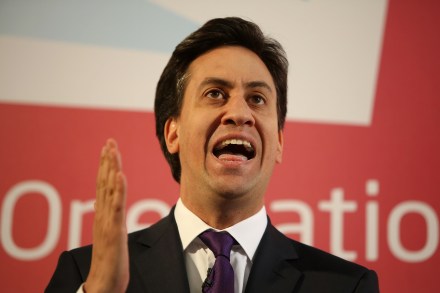
There was a point in Ed Miliband's speech on a 'better politics' where it became clear that for the rest of our lives we're all going to be trapped in an endless cycle of opposition politicians announcing that they are going to forge a 'new politics', as though some other chap hadn't said the same thing only a few years before. There really is nothing new under the sun. But it would be unfair to dismiss the Labour leader's speech as meaningless simply for saying what others have said before him: perhaps he was hoping that the goldfish bowl of the Westminster Village would turn out to contain a bunch of people with goldfish memories, too. His speech was in many ways impressive politically.

Ed Miliband’s speech on reforming Labour’s relationship with trade unions: full text

From our UK edition

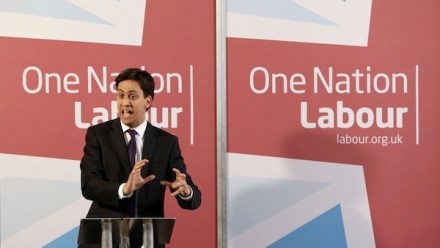
Let me start by saying how pleased I am to be here at the St Bride’s Foundation. Only a few hundred yards from where the Labour Party was founded over a century ago. And especially to be here with so many community organisers and Labour Party members from right across the country. I am here today to talk about how we can build a different kind of politics. A politics which is truly rooted in every community of the country. And reaches out to people across every walk of life. That is what I mean by One Nation. A country where everyone plays their part. And a politics where they can. It is about a politics that is open. Transparent. And trusted. Exactly the opposite of the politics we’ve recently seen in Falkirk. A politics that was closed.

God forbid that unions try to influence the Labour Party

From our UK edition

I think it was the arrival into the debate of those Blairite ghosts Mandelson and Reid which helped me make my mind up. Somehow, Ed Miliband has been coerced into taking on the Unite union on the grounds that they are doing shady business on the matter of selecting candidates. Mandelson and Reid are both demanding Miliband stand firm (an interesting thought) and stick it to Len McCluskey: Unite is trying to influence Labour’s agenda, they howl. Well god forbid that unions have any input into the Labour Party’s policies.

Who owns Labour? Unite turns on the Right

From our UK edition

Ed Miliband's speech today isn't an attempt to close down the row over Falkirk, but to get back on top of the issue, rather than appearing to be bounced along by events. What it will do is open a huge row with the union bosses: one the Labour leader needs to be seen to have won at the end of it all. Here is a briefing on what to expect from Miliband. The Tories are pleased this morning that Len McCluskey has written in this morning's Guardian that 'switching to an "opt-in" for the political levy wouldn't work… would debilitate unions' ability to speak for our members and would further undermine unions' status as voluntary, and self-governing, organisations'.

Ed Miliband’s ‘Clause IV moment’: what you need to know

From our UK edition

Ed Miliband is giving a speech tomorrow morning on 'the biggest Labour party reforms for a generation' to shake up the party's relationship with the unions. It's a 'One Nation Politics' speech, which shows the Labour leader thinks his 'One Nation' tag can even be applied to cleaning up a mess in your own party, and will contain what spinners are briefing is a 'radical' shake-up of the party. He will say that 'One Nation is a country where everyone plays their part and a politics in which they can'. This politics is the 'opposite of the politics we saw in Falkirk. Here's your guide to what he'll say tomorrow, and what appears to have been left out: 1. Opt-in arrangements for union members to choose whether or not to join Labour.

Can Ed Miliband dodge the ‘weak’ tag?

From our UK edition

When a political party repeatedly uses an attack line it is nearly always because their polling shows that it works. This is certainly why the Tories keep calling Ed Miliband ‘weak’. Indeed, they’re so keen to keep hitting him with this charge that they’ve stopped accusing him of knifing his brother for fear of undercutting it. This is one of the many things that makes Miliband’s speech tomorrow so important. The Tories are desperate to portray Miliband as a weak leader being pushed around by the ‘bully boys’ of the trade union machine. If Miliband is seen to have ducked the issue, the Tories will have yet more ammunition for their ‘weak, weak, weak’ attacks.

Ed Miliband prepares for his most testing week yet

From our UK edition

While the Tories bask in the glory of Abu Qatada's deportation, the progress of James Wharton's Private Member's Bill, and the general good atmosphere in the party, Labour is trying to work out what the best response to its terrible week is, and how to get to a situation where it is on top of the story, rather than jogging after it. The Independent on Sunday quotes one senior figure today as saying that Ed Miliband only has two weeks in which to resolve the Falkirk row, and his acolytes were out in force today to underline that the fightback is already under way. Michael Dugher has just appeared on Pienaar's Politics to say that the 'process of change, if anything, has got to accelerate and I think that's what you will see in the days and weeks coming after this'.

Ed Miliband and Len McCluskey’s acrimonious rally

From our UK edition

Wham! Len McCluskey and Ed Miliband have spent this afternoon hitting criticisms back and forth over the Falkirk row. Earlier, the Labour leader sent a challenge shooting over the net to the Unite boss, telling McCluskey he 'should be facing up to his responsibilities'. Then the Labour party said it was referring the matter to the police. McCluskey slammed back on Sky News, saying Unite had 'done nothing wrong'. He said: 'I'm afraid the way it has been handled by the Labour party headquarters is nothing short of disgraceful.' And he warned Ed off having a confrontation with the unions: 'It's depressing that Labour leaders seem to want to have a Clause 4 moment, they have got to have a situation where they front up union leaders. Well, Ed doesn't need to front up me. I'm his friend.

‘Len McCluskey should be facing up to his responsibilities’: Ed Miliband stands up to Unite

From our UK edition

Ed Miliband's supporters have been arguing that he needs to show muscle on the Unite row before his opponents successfully argue that he is a weak leader in thrall to the union puppet masters. While Conservative MPs joked abut Tom Watson's 'Buddha' comments in the Chamber this morning, the Labour leader did speak out about Len McCluskey and the Falkirk row. To his credit, he has shown that muscle. He is referring the Falkirk allegations to the police this afternoon, and this morning, he said: We will act without fear or favour. Instead of defending what happened in Falkirk, Len McCluskey should be facing up to his responsibilities. He should not be defending the machine politics involving bad practice and malpractice that went on there, he should be facing up to it.

Douglas Alexander’s evasive EU referendum speech suggests his party could change its mind

From our UK edition

The Tory party have been having a very fun morning in the Chamber so far. The debate about James Wharton's Private Member's Bill for an EU referendum has had the atmosphere of a children's party. David Cameron was smiling on a frontbench like the indulgent father watching his child getting a little over-excited. William Hague played the part of conjurer, producing a magnificent speech attacking Labour and, to a lesser extent, the Lib Dems, for not giving voters a say.

Len McCluskey tells Labour how it should be done

From our UK edition

Yesterday Len McCluskey made it very clear that Ed Miliband was definitely, definitely the leader of the Labour party. He said: ‘There can be absolutely no question about who runs the Labour party: it is Ed Miliband and he has my full support. Yes, there may be issues we disagree on, that is allowed in a democratic party, but Unite is fully behind Ed Miliband and after today’s performance by Cameron the sooner he is prime minister the better.’ Which was unhelpful, really, as it's never good when the unions have to issue a statement clarifying who the leader of the Labour party really is. But Len's hands-off approach doesn't mean he can't still tell the party exactly how things should be done.

What Tom Watson’s resignation means for Labour

From our UK edition

Tom Watson’s resignation from the shadow Cabinet won’t draw a line under the row about Unite’s influence over Labour. But, rather, it will escalate it. This is now a serious enough issue to have drawn a shadow Cabinet resignation. Watson’s self-indulgent resignation letter makes clear that he’s going partly because of Blairite criticism. As he puts it, ‘There are some who have not forgiven me for resigning in 2006’. This puts the whole Blairite / Brownite narrative back at the heart of Labour politics. It is a reminder that a party does something awful to its soul when it removes a totemic, election winning Prime Minister mid-term.  I also suspect Watson’s departure will make those around Len McCluskey feel under pressure.

Breaking: Tom Watson resigns

From our UK edition

Tom Watson has announced he is standing down from his role as Labour general election co-ordinator. You can read the full text of his resignation letter to Ed Miliband below. Given the letter says he offered to resign on Tuesday, the lines prepared by Miliband on Watson for yesterday's PMQs make a little more sense now. James also reveals in his column this week that 'several of those close to Miliband have doubts about [Watson's] work rate and priorities' when considering whether he should be running the party's 2015 campaign. Dear Ed, I said that I’d stay with you as general election co-ordinator within the Shadow Cabinet as long as I was useful. I think it would be a good idea for you, and me, if I stood down from the role now.

‘Weak, weak, weak’ Labour will have to avoid looking panicked on any referendum pledge

From our UK edition

David Cameron's statement on the European council was another example of how easy it is at the moment for the Tories to portray Ed Miliband as a weak leader. He made it perfectly clear what he wanted those watching to take away by stealing Tony Blair's 'weak, weak, weak' line in 1997 when attacking John Major (which is well worth watching again). Today the PM told the Commons that Ed Miliband's position on Europe could be summed up in three words: 'weak, weak, weak'. He said: 'What I thought was interesting about the right hon. Gentleman’s response was that we heard not a word about the referendum that we are going to discuss and debate on Friday. I think I know why. The right hon.

‘Who governs Labour?’ is perfect new Tory attack line on Miliband’s weakness

From our UK edition

A row in Labour over union influence that doesn't benefit the Tories in some way is as rare as hen's teeth. But the latest revelations about Unite's attempt at 'transforming Labour' (as reported by Rachel Sylvester in her explosive Times column) are even more of a gift to the Conservative party than usual because they feed perfectly into the line of attack the party has chosen. As Coffee House reported recently, Lynton Crosby told Tory MPs that he wanted to focus on Miliband's weaknesses as leader, identifying clear weak spots rather than the 'he makes the coffee' line. That the unions are enjoying such success in stitching up the selection process contributes to that impression of weakness, particularly if Miliband finds himself unable to do anything decisive.

Pro-referendum MPs to plot for Labour and Lib Dem manifesto commitment

From our UK edition

MPs from all parties who want a referendum are meeting this week to discuss how to get a pledge into the Labour and Lib Dem manifestos, I hear. The All-Party Parliamentary Group for an EU referendum will meet tomorrow, partly to look ahead to James Wharton's Private Member's Bill on Friday, but also to draw up a strategy for a referendum commitment from the other two parties. Speaking alongside Wharton at the meeting will be Labour's Kate Hoey and Lib Dem John Hemming, who backed John Baron's Queen's Speech amendment. Labour donor John Mills, who the Times reports this morning as warning that his party could lose the next election because it hasn't offered voters a choice, will also speak.

Miliband’s EU referendum dilemma

From our UK edition

Friday’s vote on James Wharton’s EU referendum bill is going to push the whole Europe question right back up the political agenda. The Tories will try and use it to highlight their support for a vote and the opposition of the other major parliamentary parties. It will be very hard for Ed Miliband to go into the next election opposed to a referendum. It would look like he was opposed to giving the public a say. I also suspect that it will become almost politically impossible to oppose a referendum after the European Elections in 2014. Patrick Wintour reports today that Labour is toying with the idea of either amending the Wharton Bill to back an instant In / Out vote or committing to one within the six months of the next election.

Spending review – a response from a Labour marginal

From our UK edition

The Spending Review was a political device that the chancellor clearly hoped would get him through to the end of this parliament. But if the spin doesn’t match the realities of life, I don’t think the public will buy it. A big risk for both governing parties is that high increases in the cost of living define the next election. The Liberal Democrats cling to their £10k personal tax allowance as the policy that will get them through the general election in 2015, and the dry-run coming in next year’s local elections. 10k’s a natty round number that’s easy to remember, and I would be the first to admit that straight forward practical solutions that the public can understand are important in politics.

The Tories can’t attack Labour without undercutting their own arguments

From our UK edition

One thing that was noticeably absent yesterday was Tory crowing about Labour having signed up to the coalition’s current spending plans. Instead, George Osborne’s response to Balls concentrated on whether Labour would borrow more. Given the Osborne-Balls relationship, you might have thought that the Chancellor would have relished the idea that Balls had been forced into an intellectual surrender. But the Tory leadership is acutely aware that going on about Labour having accepted their spending limits undercuts their argument that it is the same old Labour party, addicted to spending and borrowing. So instead they’ve chosen to argue that Labour’s pledges of fiscal rectitude simply aren’t credible.

George Osborne’s big idea

From our UK edition

What are the Ashes? This question was put to former England cricket captain Ted Dexter, the guest of honour at the launch last night of the writer and broadcaster Simon Hughes’s latest book. Dexter replied that the Ashes is an idea; the terms of engagement that had united two sporting nations in rivalry for nearly 150 years. Few things in life are more durable than a simple idea. The idea of ‘austerity’ drives our political debate and yesterday's spending review has extended the life of the idea deep into the next parliament. It is a political concept rather than a purely economic issue.