Labour party

Britain’s immigration debate must address three key issues

From our UK edition

Politicians tend to get all the blame for immigration policies not working. But politicians are often doomed to fail on migration questions because there are deep-rooted problems with the way we all debate immigration and with what we expect of immigration policy. Following UKIP’s success in the European elections, and given the likely failure of the government to meet its net migration target by 2015, immigration is guaranteed to be a key focal point of public debate in the run-up to the general election next year. There is widespread agreement that Britain needs a ‘better’ immigration debate - but how can that be achieved? Over the past year I have been developing an online course on international labour migration for Oxford University which deals with this question.

How Wales was betrayed by its (Labour) government.

From our UK edition

In England, success in life is bound up with where you went to school. In Wales, where I come from, the standard of education can be so miserable that you’d do better to get expelled. I did. I’d just spent three days in ‘isolation’ in my south Wales comprehensive — banished to a cubicle with a CCTV camera — for misbehaviour. As I left the grounds, I lit a cigarette. A teacher accosted me. I got lippy and she smacked me across the face. I was expelled soon after. Thank God. If you want good schooling in Wales, you’d be best to go private. If you’re taken ill, make sure you’re treated in the English NHS, not the Welsh version. If you want a private-sector job, best leave Wales. You get the picture.

We are all numbers in Labour’s computer now

From our UK edition

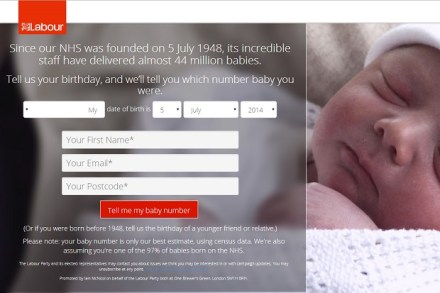
In 1975 Margaret Thatcher said in her 'Free Society' speech to the Conservative Party Conference: ‘Some Socialists seem to believe that people should be numbers in a state computer. We believe they should be individuals. We are all unequal. No one, thank heavens, is like anyone else, however much the Socialists may pretend otherwise. We believe that everyone has the right to be unequal but to us every human being is equally important.’ Mr S could not help but recall these fine words after an email arrived from the Labour Party asking him to enter chunks of personal data into its website, such as his postcode and date of birth, in order to find out his ‘number’. Since Labour created the NHS 66 years ago, croons the propaganda, it’s delivered 44m babies.

Miliband’s main man blames the voters

From our UK edition

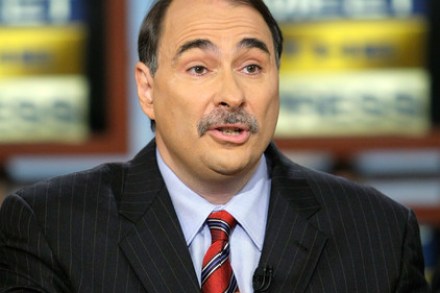
Labour Party guru David Axelrod popped up in Sunday's New York Times, presumably to promote his new book. He spoke candidly to columnist Maureen Dowd, attempting to explain why Barack Obama is plummeting in the polls: 'Reagan significantly changed the trajectory of the country for better and worse. But he restored a sense of clarity. Bush and Cheney were black and white, and after them, Americans wanted someone smart enough to get the nuances and deal with complexities. Now I think people are tired of complexity and they're hungering for clarity, a simpler time. But that's going to be hard to restore in the world today.' That's right; apparently, President Obama is just too complex for the simple American public.

Labour’s true believers ask Ed Miliband to repeat past Tory mistakes.

From our UK edition

The first, and perhaps most important, thing to say about the 2015 general election is that it is Labour's to lose. The second thing to say is that Ed Miliband might be just the man to do it. Nevertheless and despite Miliband's awkwardness Tory optimists should ask themselves a very simple question: Which seats will we win in 2015 that we failed to win in 2010? Perhaps a handful will be taken from the Lib Dems and perhaps another handful can be snatched elsewhere but, overall, the battlefield picture is pretty damn bleak. But perhaps Labour will help. Miliband's problem is that his position is not secure to hunker down, do bugger all, and just wait for victory. He must move.

Video: The week ahead — Westminster abuse allegations and Miliband’s localism

From our UK edition

In our latest View from 22 video, James Forsyth and Isabel Hardman discuss the two top stories from this weekend — the allegations about a paedophile ring in Westminster and Ed Miliband's localist agenda — and how they will play out over the coming week. We're still playing with the format of this: two-subject discussions, or one? 5 mins, 10 mins or longer? Any thoughts welcome.

Tristram Hunt won’t condemn the NUT’s strike, but is he ready for a confrontation?

From our UK edition

Tristram Hunt is getting a fair bit of stick from the Conservatives for refusing to condemn the strike action planned by the National Union of Teachers on this morning's Andrew Marr Show. The Shadow Education Secretary merely said 'it's not up to me to tell trade unionists what to do - what I want is teachers in classrooms in a conversation with the Secretary of State so we get over these kind of hurdles'. He said the current stand-off was 'as a result, partly, of some of the incendiary language from the Secretary of State'. Certainly when you read some of the NUT's literature around its industrial action, it's difficult not to conclude that this isn't as much about a dislike of Michael Gove as it is a particular policy.

Baldwin’s blunder

From our UK edition

Labour’s ‘media grid’ for this week had Miliband’s millionaire spinner Tom Baldwin pencilled in to brief Times journalist Rachel Sylvester and give her an exclusive story for Tuesday's paper. When the paper landed it was actually lots of Labour figures slagging off the leader, and saying how Ed had lots of policies but not the character to be PM. That's some class A spinning for you.

Briefing: The three main parties’ offers on localism

From our UK edition

How much common ground do the political parties have on localism? As Isabel pointed out this morning, Labour and the Conservatives are engaged in an arms race to see who can out do the other on plans to devolve powers from central government. All politicians love to talk up localism — particularly in opposition, where there’s no Whitehall machine to deal with — but their dreams and slogans frequently change. This is what the three main parties have said, and currently believe, on empowering the regions: Conservatives In opposition, David Cameron put forward plans to devolve power in a more radical way than ever before.

Labour run a mile from ‘nuts’ McBride return

From our UK edition

Mr Steerpike's suggestion that things could be getting so bad for Labour that they may have to call on the services of Damian McBride, based on the disgraced former spin doctor's helpful recent interventions, has ruffled a few feathers in Westminster. A Labour source pours an ice bucket on the idea: 'I think it's an audition for a post-2015 role. But it's nuts. The book killed him. It made any return a delusion. He could have apologised. Instead he was smug. Disgusting.' We'll take that as a maybe then. Predictably the Conservatives are gleeful at the prospect of McBride redux. A Tory source teases: 'Labour need all the help they can get. And let's face it McBride would do a better job than Tom Baldwin who is barely house trained.

Minister demands apology from Miliband after stats blunder

From our UK edition

The Tories are very keen to sabotage Ed Miliband's big speech about rebalancing the British economy, which is probably a compliment to the Labour leader as it suggests that they think he might be onto something. Both parties are certainly engaged in a localism arms race at the moment, arguing that they're the party that really trusts voters and wants to give them back the power over their own lives. But Miliband appears to have made a bit of a statistical error which is allowing his opponents to create a bit of a sideshow to distract from the launch of Lord Adonis' final report on growth. In his speech, the Labour leader said 'independent experts say four fifths of all new private sector jobs created since 2010 are in London'.

Labour’s localism arms race

From our UK edition

How can politicians encourage this country's economy to grow more evenly? Do you build a nice big railway line? Or try - and largely fail - to devolve greater power to cities using directly-elected city mayors? Today Labour sets out its answer in Lord Adonis' growth review. Ed Miliband has already said that he will accept the central recommendation, which is to allow city and country regions to create combined authorities (like the Greater Manchester combined authority) which will gain control over all, rather than half, the revenue from business rates. George Osborne was making similar noises recently about greater powers for regional groups headed by elected mayors.

Damian McBride’s Labour audition

From our UK edition

Is Damian McBride auditioning for a job as the saviour of the Labour Party spin operation? His re-energised blogging would certainly indicate as much. In the last few weeks the Brownite bad boy has left his job with Catholic aid charity Cafod, and returned to writing full time. He's also managed to make a compelling argument for why his misdemeanours cannot now be compared to those of Andy Coulson, despite the best efforts of the Prime Minister and the Chancellor: 'So if the Tories want to keep using the ‘What about Damian McBride?

Video: The week ahead — Juncker and Cruddas

From our UK edition

In our latest View from 22 video, James Forsyth and Isabel Hardman discuss the two top stories from this weekend — the ascension of Jean-Claude Juncker and Jon Cruddas's intervention on Labour's 'dead' hand — and how they will play out over the week.

Jon Cruddas is right – Miliband’s dole policy is punitive. And pointless

From our UK edition

I’ve always admired Jon Cruddas, and worried a little at his being placed at the centre of Ed Miliband’s policy unit. What happens if he talks sense? Well, my fears were well-founded: a good dollop of common sense has emerged from Cruddas, through the medium of today’s Sunday Times splash. On 21 June, we learn, Cruddas was speaking to Compass, a left-wing policy group, and was kind (too kind) about the IPPR’s ‘Condition of Britain’ report – which I’d recommend to conservatives with a taste for schadenfreude as it’s almost comically vacuous and exposes a Labour movement entirely bereft of new ideas. Cruddas was speaking about the report, saying that it took the IPPR nearly two years to come up with it.

David Cameron is acting in a principled way over Juncker – so let’s back him

From our UK edition

It’s pretty rich hearing the Labour Party criticize Cameron for taking a principled stance on Europe. How vulgar, they say, how amateur. Doesn’t he know that the job is to (as Douglas Alexander put it yesterday) ‘balance’ domestic interests and European ambitions? When I thought that Cameron was following Labour’s ‘sophisticated’ approach – ie, being sellouts – I lambasted him. I had egg on my face pretty quickly: my Telegraph column was published on the day that he said ‘no’ to the Eurozone deal. In my defence, he had set out to sellout – he’d wanted to take a figleaf of protection from the French.

Ed Miliband’s problem isn’t his image. It’s us

From our UK edition

[audioplayer src="http://traffic.libsyn.com/spectator/TheViewFrom22_26_June_2014_v4.mp3" title="Fraser Nelson and Isabel Hardman discuss whether Labour should let Miliband be Miliband" startat=934] Listen [/audioplayer]That bacon bap earlier this month was not the cause of Ed Miliband’s unpopularity. Ed Miliband’s unpopularity was the cause of the bacon bap. Scant comfort this will give the Labour leader and his fabled ‘advisers’, but they can stop worrying about food-related photographic gaffes because once the world is out to get you, the world will get you, and if they don’t get you one way they’ll get you another. Sooner or later Mr Miliband will have to eat, and sooner or later a shutter will click as he opens his mouth.

Gove vs Labour on Cummings, round 56

From our UK edition

Michael Gove has this afternoon replied to Labour's questions about Dominic Cumming's access to the Education department since finishing as a special adviser. Coffee House has got hold of the letter first. Labour became oddly fixated on whether or not Cummings was still visiting the department, rather than on his stinging criticisms of David Cameron and the Number 10 operation as 'bumbling' and a stumbling block for reform. So Gove's reply to Kevin Brennan's letter demanding more details is quite easy. He says he doesn't know how often Cummings has visited the department. And that's that, save for a gratuitous and teasing reference to the long-term economic plan... Here's the letter in full: Thank you for your letter of 17 June about my former special adviser, Dominic Cummings.

There’s poison in the Shadow Cabinet – and it could cost Ed Miliband the election

From our UK edition

That Ed Miliband is even having to state that he wants to carry on as Labour leader if he loses the general election when his party is ahead in the polls shows what a mess the operation around him is. There are a number of Shadow Cabinet members who seem more interested in what happens after the 2015 election than in their party's chances in that election. Perhaps this is because they have decided that though their party is ahead now, voters will panic about Miliband as they start to try imagining him as Prime Minister. Better to get your off-the-record briefings in now, and not make too much of an effort batting for this guy when you think you're doomed. The problem is, of course, that this becomes a self-fulfilling prophecy.