Labour party

Clacton to Ukip, Britain’s anti-politics were long in the making

From our UK edition

Talking to people in Clacton-on-Sea this week, there was a sense that, as much as they thought there were too many people in Britain, they felt politicians had it too easy. Over and over again people told me that MPs in Westminster didn’t understand working people. Politics is becoming less about policy and more about empathy; voters just don’t want to be ruled by aliens. In a famous article in 1955, Henry Fairlie described the chasm between the aliens and normal people: I have several times suggested that what I call the 'Establishment' in this country is today more powerful than ever before.

Ukip’s breakthrough night

From our UK edition

Ukip has won its first by-election: Douglas Carswell is the party’s first elected MP. In a stunning night for the party, it also ran Labour mighty close in Heywood and Middleton—coming in just 617 votes behind.

Ukip is a disaster for Labour. And then there’s Scotland…

From our UK edition

Heywood and Middleton is a far worse result for Labour than for the Tories: we can agree on that, surely. Clacton is grim for Dave, of course, but I'm interested in what happens in the rotten Labour heartlands. Here's something else for Ed Miliband to worry about: the SNP. Loathsome party, humiliated last month, but so angry and looking for revenge. The turnout in Scotland come the general election will surely be higher than usual. And much of it will be made up of occasional voters energised by the referendum. The SNP won't take safe Labour seats: they're hugely behind – we're talking 20-point margins. But the electorate has changed. Peter Kellner reckons the Nats could capture 26 seats, which is fanciful.

Ukip’s logo is quite successful – in communicating a spirit of gung-ho crapness

From our UK edition

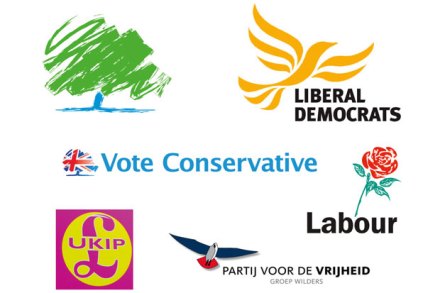
Now that the conference season is over, we can compare not just the party policies, but their logos too. Last week’s Tory conference taught us the patriotic adaptation of their tree — now draped in the Union Flag — doesn’t work any better than the original green-tree symbol. The old symbol demonstrated Conservative values as imagined by the Innocent smoothie design team. It said ‘Tradition’. It said ‘the Environment’. It said, ‘Look what I can do with my crayons, Mummy.’ Stephen Bayley, design expert and Spectator colleague, was one of the hapless advisers tasked with picking the old logo. ‘Not so great,’ he told me, ‘but you should have seen the alternatives.

Who are Ukip’s new voters? The kind of people who decide elections

From our UK edition

An opinion poll to be published next week will reveal that Labour leader Ed Miliband is slightly less popular with the public than the vibrant Islamic State commander ‘Jihadi John’ and the late BBC disc jockey Jimmy Savile, and only two points more popular than His Infernal Majesty, Satan. The same poll will also put Labour slightly ahead of the Tories and therefore on course to be the largest party in a hung parliament come next May, with Ed Miliband as prime minister. This is but one reason why the next general election will be the most fascinating within living memory; the pollsters do not really have a clue what’s going on. The Labour party is reasonably popular, but its leader is considered useless.

Danny Alexander indicates that the Lib Dems wants £5 billion in tax rises

From our UK edition

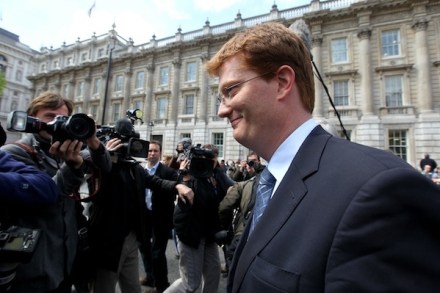
In a sign of his enhanced status in the party, Danny Alexander has been one of the main attractions on the conference fringe this year. This evening, it was standing room only when he was interviewed by The Independent’s Steve Richards. Alexander was on feisty form. He declared that ‘both the other parties are pretty useless’ and that the Liberal Democrats had ‘done a bloody good job for this country’. Marking his own homework, he gave the party 10 out of 10 for being credible and effective. But he said that the Lib Dems had to shout louder to get their share of the credit for the economic recovery.

Vince Cable accuses George Osborne of lying about tax rises

From our UK edition

Vince Cable’s speech today was loyal and funny. Cable was, unlike in some previous years, very much on message. He lavished praise on Clegg for having turned the Liberal Democrats into a party of government. He ended his speech by telling the activists that ‘there is a lot to be proud of and we must be proud of it’ to the delight of Nick Clegg, who was rather distractingly wearing jeans in the conference hall. Cable also attacked both the Tories and Labour. He joked that the Tories were turning into Ukip without the beer and Labour into Hollande-style socialists but without the sex. The most aggressive part of his speech was when Cable alleged that any politician, eg George Osborne, who told you the books could be balanced without new tax rises was lying.

Clegg attacks ‘economically extreme’ Tories

From our UK edition

The Lib Dem message in Glasgow this week in simple, you can’t trust either Labour or the Tories to run the country on their own. On Marr this morning, Nick Clegg said that the country was being offered a ‘dismal choice’ between ‘sticking your head in the sand’ with Labour or ‘beating up on the poor’ with the Tories. Clegg was determined to get his anti-Tory lines out there. He accused George Osborne of a plan to ‘savage unprotected public services’ and again and again attacked the Tories for being ‘economically extreme’ and supposedly wanting to balance the budget on the backs of the poor.

Chris Grayling is an advertisement for a Labour government

From our UK edition

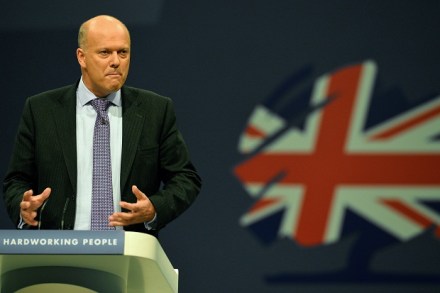
Thank heavens for Ed Miliband, eh? The leader of the opposition remains the single most compelling reason to hope the Conservatives remain in power next May. A shame, then, that cabinet ministers appear determined to promote the idea that a Labour victory would be garlanded with at least some silver promise. Chiefly, Chris Grayling would no longer serve as Justice Secretary. This is a non-trivial consideration that's worth pondering before anyone casts their ballot next May. There is some dispute over whether the Conservative's plans to rewrite Britain's human rights legislation can really deliver all they promise; some disagreement, therefore, over whether they're as dangerous as they initially appear. Is a half-baked nonsense worse than a fully-baked monstrosity?

Britain doesn’t need hateful laws to defeat hate preachers

From our UK edition

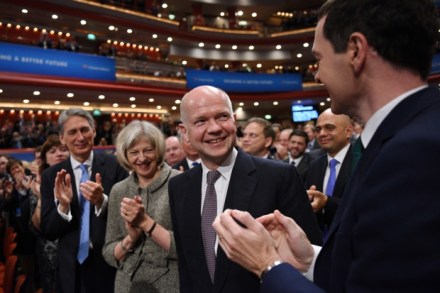
If the Labour party conference in Manchester felt like a funeral, the Conservatives’ gathering in Birmingham had the air of a wedding. It had jazz bands, champagne bars and a near-universal mood of celebration — which is odd, given that every opinion poll and bookmaker reckons the Tories are on course to lose power next year. Almost every speech delivered from the floor was more substantial, forceful and credible than any delivered at the Labour party conference. And one of the highlights was the tour de force delivered by Theresa May. For almost two decades the job of Home Secretary has been a political graveyard. Theresa May has made it into a power base. Several home secretaries tried to deport Abu Qatada; she succeeded.

Why are the Tory party in such a good mood?

From our UK edition

Two things have been puzzling Tory high-ups in Birmingham this week: does Nigel Farage have another defector in his back pocket, and why is the Tory party in such a good mood? Many expected that a second MP defecting to Ukip would have plunged the party into the slough of despond. One influential Tory, though, has an explanation for what’s going on. ‘The mood here is so upbeat because people think we’ve got Labour beat.’ He is, however, quick to add, ‘It is Ukip that is the problem.’ This is the paradox of British politics at the moment: it is easier to explain why either main party shouldn’t win the election than to advance an argument as to why they will.

David Cameron’s message to Britain: winter is here but spring is coming

From our UK edition

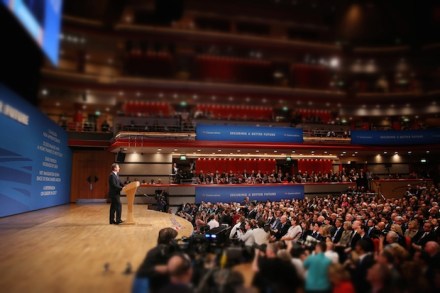
Better than Miliband is as fine a demonstration of the soft bigotry of low expectations as you possibly hope to find. Nevertheless, David Cameron's speech to the Tory conference today was better than Miliband's chat in Manchester last week. Quite a lot better, in fact. It was almost, gosh, good. listen to ‘Podcast special: David Cameron's speech’ on audioBoom True, it's not altogether clear how the promised tax cuts - for ordinary and less ordinary hard workers alike - will actually be paid for and, in the context of speech that promised no unfunded tax cuts, this might ordinarily be seen as a small problem. Presumably they will be back-loaded to come into force once the national accounts are balanced in 2018. If they are balanced by 2018, that is.

Once upon a time David Cameron had a story to tell; he needs to remember it and tell it again

From our UK edition

It is easy to inflate the importance of speeches made at party conferences. Particularly when those speeches are the last such set piece events before a general election. But they are still, in the end and at bottom, a distillation of what matters most to a leader. A guide to his priorities; a demonstration of his faith. Somewhere along the line David Cameron has lost that faith. He was elected leader of the Tory party in desperate times and became Prime Minister in dismal times. In both instances he triumphed, at least in part, because he persuaded his audience that though he might look like a traditional Tory he was in fact a rather different type of Tory from those voters had grown fond of despising. Once upon a time, you see, David Cameron had a story to tell.

Tory conference: Bitter jokes at the Tax & Spend Inn

From our UK edition

The Conservative conference pub is back again this year, with its usual bitter jokes about Labour. Mr Steerpike had an exclusive peek at the posters they're using to poke fun at Ed Miliband's party. The pub this year is called the 'Tax & Spend'. Funnily enough, they've decided to remind the Labour leader of the deficit, just in case he's forgotten: Perhaps someone could set up a Campaign for Real Deficit Reduction.

Commons vote for strikes against IS in Iraq

From our UK edition

By 524 votes to 43, the House of Commons has voted to support air-strikes against Islamic State in Iraq. The margin of victory is not surprising given how limited the motion was, it rules out ground troops and makes clear there’ll be another vote before any action in Syria. But in a sign of the unease of some on the Labour side, Rushanara Ali, who represents George Galloway’s old seat of Bethnal Green and Bow, has resigned from the front bench over Labour’s support for the motion. Indeed, the first estimates are that 24 Labour MPs voted against while just five Tories opposed. The question now is whether, and when, Cameron might return to the Commons to try and gain approval for action in Syria.

Portrait of the week: Cameron visits UN HQ, Scotland checks its bruises, and a Swede sells his submarine

From our UK edition

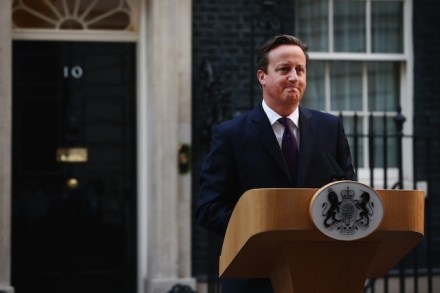
Home David Cameron, the Prime Minister, visited New York for talks at the United Nations; he said Britain supported the American air strikes on the Islamic State. ‘These people want to kill us,’ Mr Cameron said on NBC news. Mr Cameron met President Hassan Rouhani of Iran in New York, the first such meeting since the Iranian revolution in 1979. Mr Cameron was caught by cameras in New York saying to Michael Bloomberg, its former mayor, that when he rang the Queen with the Scottish referendum result, ‘She purred down the line.’ Alex Salmond resigned as First Minister of Scotland and leader of the Scottish National Party, with effect from November. This followed the referendum for Scottish residences, which rejected independence by 2,001,926 votes (55.

Beware: Scottish Labour is a zombie party and the undead still walk

From our UK edition

David Mundell, MP for Dumfriesshire, Clydesdale and Tweeddale, is not often granted much respect. He is not a natural television performer, which does not help. He is a Scottish Conservative, which does not help either. But give him this: he predicted that the Scottish National Party would enjoy a surge of new members if Scotland voted No to independence. But what a surge it has been. The SNP has doubled its membership in a week. More than doubled it, in fact. The party now claims more than 60,000 paid-up members. To put this into some perspective, that's akin to a UK-wide party having 600,000 members. The combined membership of the Conservative and Labour parties is less than 400,000. Much less.

Boy, can Alan Johnson write

From our UK edition

Alan Johnson’s first volume of memoirs, This Boy, is still in the bestsellers’ list, but the Stakhanovite postman has made a second delivery, timed impeccably for the party conference season. It charts his escape from the urban jungle of Notting Hill to Britwell council estate in Slough, via a succession of GPO sorting offices and eventually to high office in the Union of Communications Workers. Like its predecessor, Please, Mister Postman takes its title from a Beatles classic. The boy left in the care of his 16-year-old sister after their mother’s death dreamed of becoming a rock star.

Four reasons why this year’s Labour party conference felt so weak

From our UK edition

There are many reasons why Labour conference felt flat this year, and many of them are out of the party's control. It cannot help that its MPs and a number of its delegates are tired after an energetic Scottish campaign. It cannot help that the Scottish campaign saw a level of engagement in politics that cannot be replicated, save by another vote with a clear question and clear implications, and that would always have contrasted badly with the Labour conference. It cannot help that the referendum took place just days before the conference began, and that therefore it was impossible to get the same sort of coverage you'd expect in the run-up to your conference in the press.