Labour party

Peer review

From our UK edition

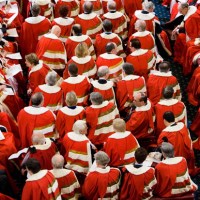
When I took my seat in the Lords as a very nervous 21-year-old, Manny Shinwell, the redoubtable Labour peer, welcomed me with the words ‘I knew your grandmother Nancy. She was a rebel like me. Enjoy yourself. You won’t be here long before they chuck you out.’ Forty-two years later I am still here — perhaps past my sell-by date. The House of Lords is bursting at the seams. The numbers must come down. And yet David Cameron must appoint more peers in the forthcoming honours list. Every Prime Minister in history, from Harold Wilson with his ‘lavender list’ to Tony Blair with his cronies, has caused controversy when creating peerages.

Jeremy Corbyn: suggestions I’m anti-semitic are ‘disgusting and deeply offensive’

From our UK edition

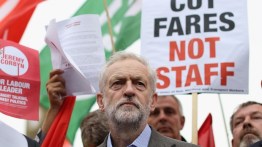
Jeremy Corbyn has hit back at suggestions he has been hanging out in a rather bad crowd. The former Conservative MP Louise Mensch has dug up a press release on her blog that suggests Corbyn invited Dyab Abou Jahjah, a Lebanese extremist who once said the ‘death of every British soldier is a victory', to speak in Parliament. On the World at One, Corbyn responded to the accusation he invited Jahjah to speak in Parliament: ‘Sorry who? I saw the name this morning and I asked somebody who is he?’ He went to dismiss the idea that he is racist or anti-semitic: ‘My views are that the Holocaust was the most disgraceful and vile process of the history of the 20th Century if not the wider world.

Jeremy Corbyn is far less popular with Labour MPs than he is with members. Is that a problem?

From our UK edition

Why haven’t some Labour MPs ever met Jeremy Corbyn? Mr Steerpike picks up on the discussion between former Miliband aide Anna Yearley, and MPs Barbara Keeley and Lucy Powell about his non-attendance at PLP meetings and the fact that Powell has ‘never, ever met or spoken to him’. This is odd: Corbyn has been a member since 1983 and has managed to find time to befriend Ukip’s Douglas Carswell, who cheerily offered to introduce Yearley to Corbyn in the tearooms at some point. It’s not unusual, though: on Sunday night Tory backbencher Mark Field was singing the praises of the friendly Corbyn on Westminster Hour.

The left is rapidly losing its moral authority on racism

From our UK edition

On Monday, Jeremy Corbyn was questioned by Channel 4 News about yet another Holocaust denier and anti-Semite of his acquaintance.  And now the BBC's World at One has asked Corbyn about another. There are plenty more, and this will be able to go on for quite some time.  But Corbyn’s defence was interesting in that it went to the heart of the political inequality of our time: that is the assumption that the motivations of the left are good even when they do bad things, while the motivations of their opponents on the right are solely bad even when they do good things.

David Blunkett is the latest Labour grandee to attack Corbyn. But is this the right strategy?

From our UK edition

Day after day, Labour's big beasts are being wheeled out one by one. Yesterday it was Neil Kinnock, today it’s David Blunkett's turn to warn against the impending doom if Jeremy Corbyn is elected leader. On the Today programme, the former home secretary made a coded attack on Corbyn, suggesting the party needs a leader who can win elections: 'I want someone who can be radical, can have a very clear vision of where Britain will be in five years’ time and above all can actually do something about winning. See, I’m speaking really as an activist: I’ve been a member for 52 years. 30 years of those years we’ve been in opposition.

Jeremy Corbyn and the Labour Party: one of them must go

From our UK edition

I suppose I'd insult Jeremy Corbyn if I compared him to an American. Jews (sorry 'Zionists') and Ukrainians rank high in the far-left's demonology. But Corbyn and his comrades agree that Americans are the worst. So I should say that I mean no offence when I point out that 'if Corbyn were American' his campaign for the leadership of the Labour Party would make sense. In the United States, or any other presidential democracy, the winner of a party's nomination selects his or her team from among their supporters. If they win power, they appoint their own cabinet. The executive and legislature are separate. Whatever deals they must cut with their senates or parliaments, the membership of their administration is ultimately their concern.

Cheat sheet: what Jeremy Corbyn stands for

From our UK edition

Given by most metrics Jeremy Corbyn is on track to win the Labour leadership contest, his policies deserve to be examined and discussed. Based on his speeches and pamphlets, here is a summary of what Corbyn has pledged to do in key policy areas. There is a surprising amount of detail. Economy Corbyn’s economic ideas have been outlined in a document: The Economy in 2020. His approach for ‘growth not austerity’ is one of his most comprehensive policy areas. Corbynomics, which we’ve looked at in the past, is based on raising taxes and using the proceeds to invest in the economy. He has promised to ‘cut some of the huge tax reliefs and subsidies on offer to the corporate sector,' which would amount to some £93 billion a year.

Yes, Jeremy Corbyn actually is the most dangerous man in British politics

From our UK edition

No, Nicola Sturgeon does not have much reason to be worried about Jeremy Corbyn. But the rest of the country does. To borrow from the tabloids, Corbyn is The Most Dangerous Man in Britain because, though no-one in London seems to appreciate this, he could be the man whose leadership of the Labour party leads to the end of Britain as we know it. Now I know people in England have tired of Scots banging on about the constitution. And I know that some things don't have to be viewed through the prism of the constitution. Nevertheless, it's a much more important issue than anything anyone says about trains. Or the health service. Corbyn tells the Herald today that he's not a Unionist, he's a socialist which, frankly, does not come as much of a surprise.

Andy Burnham: it’s not ‘three against one’ with Jeremy Corbyn

From our UK edition

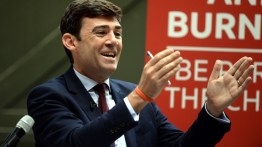
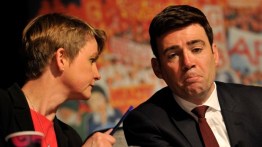
The Labour leadership race is rapidly turning sour. None of the warnings from party grandees are denting Jeremy Corbyn’s support, so talk has turned back to whether candidates should drop out. Yvette Cooper’s campaign has called for Andy Burnham to quit the race. ‘If he isn't prepared to offer an alternative to Jeremy, he needs to step back and leave it to Yvette’, a spokesman said last night.

Corbynomics: A path to penury

From our UK edition

The expansion of capitalism and free markets in recent decades has led to incredible economic and social progress; the fastest fall in extreme poverty in human history, rising life expectancy and plummeting levels of global hunger. Jeremy Corbyn’s anti-capitalist economic programme seems simply to ignore that history of success. The premise of Corbynomics is therefore that free market capitalism has failed in the UK with sectors ranging from energy to housing showing that markets cannot function to the benefit of society. This is deeply misguided. As John Maynard Keynes once said, this is 'an extraordinary example of how, starting with a mistake, a remorseless logician can end up in bedlam'. Of course many markets are not functioning as we would like them too.

Cooper vs Burnham: ‘A panicked, desperate stunt straight out of the Ed Balls playbook’

From our UK edition

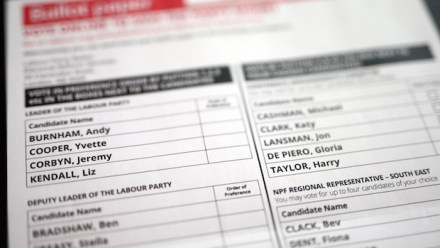
Yvette Cooper has rounded on Andy Burnham this evening, demanding that the Labour leadership contender oppose Jeremy Corbyn or stand aside. Burnham gave a speech this morning that was widely reported as him snuggling up to Corbyn, in which he praised his rival’s ‘energy’ and said ‘I want to capture that and would involve Jeremy in my team from the outset’. Cooper and Liz Kendall have both urged their supporters to use their second and third preferences on their ballot paper to block Corbyn by supporting any of the other three candidates, but Burnham has not joined them. A spokesman for Cooper said that ‘if [Burnham] isn’t prepared to offer an alternative to Jeremy, he needs to step back and leave it to Yvette’.

Sadiq Khan: the man who can beat Zac Goldsmith in London?

From our UK edition

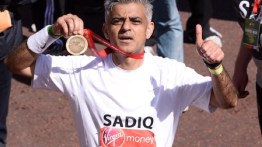
The dynamics of Labour’s other ongoing election appear to be shifting. While Tessa Jowell remains the favourite to be the party’s candidate for the 2016 London Mayoral election, Sadiq Khan is making some headway. Firstly, Survation has released a new poll that suggests he can beat Zac Goldsmith — the most likely Tory candidate. 50 per cent said Khan would be their first preference, compared to 37 per cent for Goldsmith and 13 per cent for another candidate. Plus, 58 per cent said they had heard of Khan, compared to 55 per cent for Goldsmith. Khan’s wider appeal is in part a result of his ability to appeal to voters of all ethnicities.

Ed Miliband won’t say anything until after the Labour leadership contest is over

From our UK edition

Why is Ed Miliband not intervening to stop Jeremy Corbyn? Some Labourites see the former leader’s silence on the issue as a dereliction of duty, and hope to increase the pressure on him to say something about the importance of not lurching further left. But sources have told Coffee House that he plans to say nothing at all until 12 September, when the new leader is announced. His spokesman says: ‘His view is that the precedent was set by Neil Kinnock and Gordon Brown. He thinks it is right that the debate about the new leaders should not involve the outgoing leaders. It is right that the candidates speak for themselves.’ Miliband is refusing all interview requests, and only once there is a new leader will he work out how he wants to be involved.

Could Jeremy Corbyn be removed as Labour leader?

From our UK edition

If Jeremy Corbyn is elected as Labour leader, how long would he last? Blairities, such as John McTernan, have promoted the idea of an instacoup — taking him out as soon as possible. Or the party might decide further down the line they've had enough. In either scenario, there is a formal procedure for removing a leader. Under the 2014 Labour rule book (produced after the Collins review), clause two of chapter four explains how a leader can be challenged: ‘Where there is no vacancy, nominations may be sought by potential challengers each year prior to the annual session of Party conference. In this case any nomination must be supported by 20 per cent of the Commons members of the PLP.

Yvette Cooper and Liz Kendall deny Peter Mandelson asked them to drop out

From our UK edition

He may be out of power but Labour’s Prince of Darkness is still attempting to pull the strings. Today’s Daily Telegraph reports that Peter Mandelson suggested to Yvette Cooper and Liz Kendall that they should drop out of the Labour leadership contest in order to have the whole thing called off. One source told the paper ‘Lord Mandelson and other Blairites were saying – this is a disgrace, let’s get this thing pulled. But it was not going to happen’. On the Today programme, Yvette Cooper gave a guarded answer as to whether there had been any contact with Mandelson.

Andy Burnham, we have got news for you!

From our UK edition

In an interview with Labour Uncut, Andy Burnham admitted a dark secret: that throughout the 90s he lived in fear that his early-career journalism gigs -- from his time working for B2B magazines -- would wind their way onto Have I Got News for You. He recently repeated his reason for not going on the programme in an interview with GQ: 'Have I Got News for You bid for me almost ten times a year and the reason they do it, I am certain, is they have some of my old articles - so I refuse it every time.' While Mr S can't vouch for the Beeb, Steerpike has at least managed to track down a copy of one of Burnham's early journalism efforts; Passenger Rail Management: Vol. 1, Issue 1, from May/June 1993.

Gordon Brown’s speech provokes scuffles amongst Labour MPs

From our UK edition

So, funnily enough, Gordon Brown's speech about his party's leadership election hasn't been that well-received by some quarters of Labour. There are some interesting people who are inevitably claiming he's a Tory, but what's more interesting is the way it has gone down with Labour MPs. Clive Lewis, for instance, seems to be quite keen to help the Tories out by saying that the guy who was Labour Chancellor and then Prime Minister during its last time in power isn't credible: https://twitter.com/labourlewis/status/632899854641971200 Graham Allen thinks Brown should have been talking about something else: https://twitter.com/JasonCowleyNS And supporters of rival camps are starting to do the Twitter equivalent of mud-wrestling: https://twitter.

Gordon Brown tries to save his party

From our UK edition

Gordon Brown has just given one of his saving-the-world-at-the-last-minute speeches. He was speaking just as the ballot papers for his party’s leadership election are being sent out, and in keeping with his other saving-the-world-at-the-last-minute speeches, particularly the one he delivered shortly before the Scottish referendum, it was a barnstormer. His main theme was the importance of getting Labour into shape so that it can be in power in order to carry out its moral mission. Brown argued that ‘it is not an abandonment of principles to seek power and to use that power in government. It is the realisation of principles’.