Knowledge

The unstoppable rise of stupidity

Hold the front page: I’ve found a very good contemporary novel to occupy my time. Such things have become vanishingly rare, even if one is grateful for David Mitchell’s metafiction, the occasional blast from Michel Houllebecq and Ben Marcus’s engaging lunacy. By and large, modern novels lack depth, originality of form and language, political unorthodoxy (i.e. freethinking) and a vaulting fictional imagination. Where, today, would you find the J.G. Ballards, the David Storeys, the Anthony Burgesses? In the sensitivity reader’s rejected pile, I suspect.

The pleasure of not knowing

From our UK edition

A few years ago the podcaster Lex Fridman published a list of books that he was hoping to read in the year ahead. It included works by George Orwell, Fyodor Dostoyevsky, Hermann Hesse and others. If he had published this in the world of print media he might have got back some encouraging noises. But because he put the list online – worse, on the platform then still known as Twitter – he received mostly mockery. ‘Who hasn’t read Animal Farm?’ was the general tenor of the blowback, as though a man who had been a researcher at MIT was next to being a neanderthal.

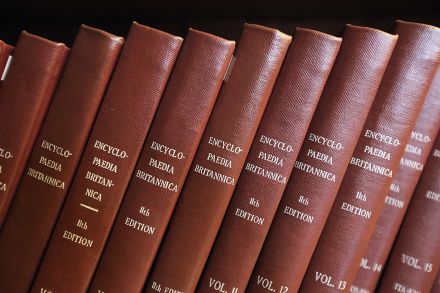
In praise of encyclopedias

Simon Winchester recalls the time — he was not yet three — when, stepping into his rubber boot, he was stung by a wasp. He rates this penetrating moment as his first “acquisition of knowledge.” Readers of his many books may thank that wasp for starting Winchester on his ever-widening path to further knowledge. His new book, Knowing What We Know: The Transmission of Knowledge, from Ancient Wisdom to Modern Magic (KWWK for short), is what that wasp hath wrought. It follows close on the heel of Simon Garfield’s entertaining study, All the Knowledge in the World: The Extraordinary History of the Encyclopedia (AKW for short). Despite the title, Garfield’s ambitions are more cabined than Winchester’s.

knowledge

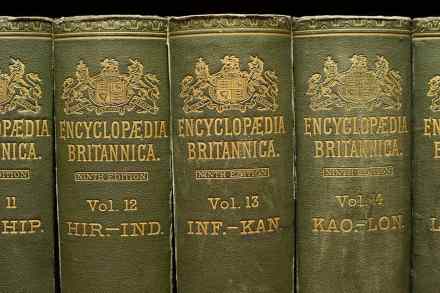
An old Encyclopaedia Britannica is a work to cherish

From our UK edition

Two thousand years ago, a young Cilician named Oppian, wanting to rehabilitate his disgraced father, decided to write Halieutica, an account of the world of fishes, as a gift for Marcus Aurelius. It was a mixture of possible fact and definite fiction – if only there were octopuses that climb trees and fishes that fancy goats – and it was a success. His father was forgiven, and the son’s written work accepted as authoritative knowledge.