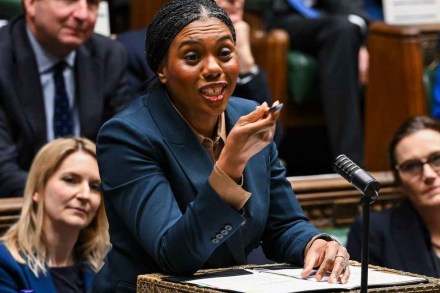
Kemi badenoch

I didn’t want to like Rod Liddle

One of the joys of being director of digital at The Spectator, back in 2015, was seeing the magazine proofs before they went to print. Rod Liddle’s column was the first thing I looked for, always the one I was most eager to read. He made me laugh every single time, something very few columnists are able to do. I was annoyed I liked those columns, because I didn’t want to like Rod Liddle. All I knew of his personal life was through the scandal that followed him leaving his wife during the so-called “Sextator” years. I took a dim view of that. Although we both worked for The Spectator, I didn’t actually meet Rod for a long time because, woke snowflake that he was, he only ever worked from home. The first time we met was at a Spectator summer party, years later.

rod liddle

The Keminisation of the Tory party

From our UK edition

Since succeeding Rishi Sunak in November 2024, Kemi Badenoch has had two jobs to perform. Firstly, her constitutional obligation as leader of the opposition, which she has fulfilled well. In parliament, depleted Tory ranks have been marshalled effectively, harrying successive Labour notables from office by tabling questions and demanding answers from, among others, Peter Mandelson and Morgan McSweeney. Her despatch box style has impressed – though, after the departure of Keir Starmer, aides concede that a tonal shift might be necessary for the ‘very different beast’ that is Andy Burnham. Now, with her position secure, it is the second task to which she must turn: her role as leader of the Conservative party. Most Tory leaders have a strained relationship with their party.

Portrait of the week: No. 10 North, Burnham meets Zelensky and European wildfires  

From our UK edition

Home Andy Burnham, the Prime Minister, summoned cabinet ministers for a day at No. 10 North – Heron House in central Manchester, shared with intelligence agencies – which he reached by private jet to Glasgow, where he had an appointment, and another private jet south to Manchester. President Volodymyr Zelensky of Ukraine became the first international visitor to Mr Burnham, who told him: ‘You can count on the UK for as long as it takes.’ He decided to speed up the independent review of adult social care being undertaken by Baroness Casey of Blackstock. He said that he wanted schools to offer technical courses to children aged 14 and over.

How to approach women successfully 

From our UK edition

Rights and wrongs Sir: As one of those centre-left weirdos who reads your magazine to see what the other side is thinking, I was surprised by your assertions regarding Britain’s wrong economic turn (‘Labour’s inheritance’, 25 July). There is a reason why Britain’s economy has grown so slowly since 2008 and it is directly related to the financial crisis you mention in the same paragraph – the bailout for which was laid on the taxpayer, resulting in the austerity agenda, both of which significantly dragged on GDP. There was a cross-party faith that the financial system would regulate itself. The same thinking applied to Margaret Thatcher’s Right to Buy policy on council houses: buy your house and let the market sort the rest.

It’s time the Tory party got properly nasty again

From our UK edition

In the 2024 American and British national elections, it was no mystery why the incumbents lost. Both the Democratic and Conservative parties had abandoned their core principles. Democrats veered so far left that they fell off the edge of the world. Tories squandered 14 years in power competing with the sopping opposition over who could be more wet, a strategy perfectly designed to alienate the entire electorate. Left-wing voters will not – surprise – vote ‘Conservative’. Conservative voters want – surprise – conservative representatives and instead got sheep in sheep’s clothing. Although I’m seldom keen on purity tests, Kemi Badenoch now heads a party that resembles Britain’s sewage-mucked rivers, and it could use some purifying.

How the right can fight Burnham

From our UK edition

Andy Burnham has not yet entered No. 10, but the Conservatives and Reform are already preparing for the possibility of an early general election. Resources are being redeployed, attack lines sharpened and campaign plans drawn up for the aftermath of Labour’s coronation. Nigel Farage wants a snap showdown. Kemi Badenoch insists defence must be properly funded before the country is returned to the polls. The rapid elevation of the MP for Makerfield poses tricky questions for his opponents. Burnham has built a following without a clearly defined ideology or coherent policy programme, leaving strategists in Reform and the Conservative party – like much of Britain – unsure which version of him will walk into No. 10. Yet despite that uncertainty, preparations are being made fast.

‘Rupert Lowe turns up for work, Nigel Farage doesn’t’: an interview with Kemi Badenoch

There was a moment backstage, before I interviewed Kemi Badenoch for a Spectator event this week, when I felt like John Sergeant with Margaret Thatcher bearing down on him as he pronounced her leadership in difficulty. I suggested to Badenoch that she was a rare example of a politician I had changed my mind about. ‘You mean you were very negative before?’ she said, fixing me with the full alpha female glare. I muttered something placatory, but the truth is that a year ago I thought she was rubbish – and that was the mainstream view in her own party. She was arrogant, flat-footed, absenting herself from a stage that was being dominated by Nigel Farage, resistant to advice, convinced she was great at PMQs when even Keir Starmer was wiping the floor with her.

What Kemi Badenoch told Tim Shipman

From our UK edition

21 min listen

Conservative leader Kemi Badenoch was interviewed last night by The Spectator‘s Political Editor, Tim Shipman, in front of a live audience at Church House in Westminster. They discuss her shadow cabinet, her plan to revive the Tories, and how she thinks we can get the country growing. To watch and listen to the full conversation you’ll need to be a spectator subscriber. Get three months for three pounds and access the full stream at spectator.com/kemi – your subscription isn’t just to this conversation: it also includes full access to The Spectator website and app, weekly delivery of the magazine, all our livestreams, daily newsletters and podcasts. We hope you enjoy.

Kemi gives me hope

From our UK edition

I had a notion the other day that there was possibly more I could offer to this fleeting world. A feeling that with life having been comparatively kind to me, perhaps there is something I could put back. I have these thoughts about once every month – and usually they are idly dismissed because they are either unrealistic or homicidal. For example, it would be well nigh impossible to smash every single white, middle-class, middle-aged liberal in the throat until his trachea exploded in a chiaroscuro of livid pink foam and vaporised black lung stuff. Way too many tracheas and not enough time, sadly.

Will the Tories win the Aberdeen South by-election?

From our UK edition

For all of the squabbling between Reform and Restore, the Right’s best chance at a by-election win on 18 June may not be in Makerfield, but 300-odd miles further north – in Aberdeen. The beneficiary wouldn’t be Nigel Farage or Rupert Lowe, but Kemi Badenoch’s Conservatives. The Tory candidate is now ‘quietly confident’ It’s unsurprising that this contest has been largely overlooked. My Westminster colleagues treat the suburbs of Manchester as being almost unfathomably distant, so the North Sea coast seems like an alien planet. But Aberdeen is also a city used to being ignored. According to the Centre for Cities, between 2010 and 2020, household incomes in the city fell by almost 7 per cent; between 2010 and 2023, it was one of only two cities in the UK to lose jobs.

Badenoch is the perfect Tory leader

From our UK edition

Plenty of narratives can be pulled out of last Thursday’s elections. Labour’s shattered hold over its Northern and Welsh heartlands; the imperviousness of Scottish voters to the inadequacies of SNP rule; the onward march of Reform; the continuing irrelevance of the Lib Dems; the foaming of the River Tiber heralded by sectarian success. But one that cannot – if you still want to be able to look yourself in the eye in the morning mirror – is that they were good for the Conservatives. Trying to turn these results into a victory only leaves Badenoch looking like Comical Kemi Kemi Badenoch was out in front of the cameras early, surrounded by beaming activists, heralding her party’s success in taking back Westminster from Labour.

In the local elections, think local

From our UK edition

In March, just before Artemis II rounded the far side of the Moon, the Transport Secretary had her own lunar encounter. Heidi Alexander claims that a ‘moon crater’-sized pothole forced her Mini off the road in Oxfordshire. She is far from alone. Pothole casualties in Britain rose from 270 in 2020 to 393 in 2024, including six dead. An RAC Europe survey found that 62 per cent of British drivers thought European roads are better maintained. Britain’s pothole problem is a story of government dysfunction. Local authorities seem unable to perform their basic duties; meanwhile, council tax continues to rise, bin collection becomes more infrequent and public spaces continue to deteriorate.

Starmer squirms on Mandelson debacle

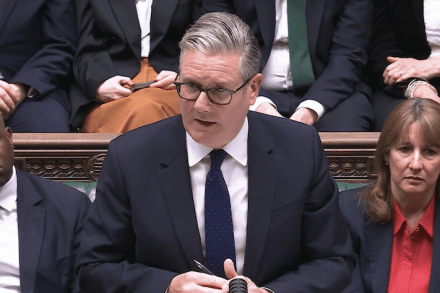
Keir Starmer is enduring perhaps his most uncomfortable afternoon in the House Commons since being elected Britain's Prime Minister. He promised in his opening remarks that he would set out the full timeline of Peter Mandelson’s appointment as US ambassador, which ended in Olly Robbins’s dismissal last Thursday. Carefully worded and legally precise, his statement contained another revelation: Chris Wormald, the ex-cabinet secretary, was not told Mandelson had failed the UK Security Vetting interview (UKSV), despite leading an official review. Starmer’s tone was one of scorned hurt and anger. He remarked repeatedly how various facts of the case were "staggering.

keir starmer

What would Katie Lam’s defection to Reform mean for the Tories?

From our UK edition

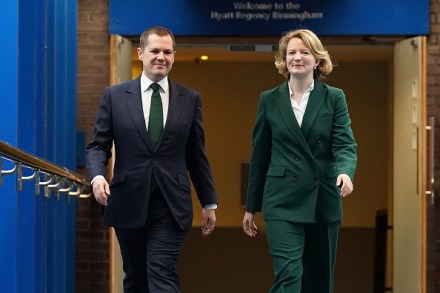
Fresh from chastising Labour for not involving Britain more deeply in another American misadventure in the Middle East, Kemi Badenoch is reportedly planning a ‘root and branch’ shadow cabinet reshuffle. Those most at risk are said to be her top team of Shadow Chancellor Mel Stride, Shadow Foreign Secretary Priti Patel and Shadow Home Secretary Chris Philp. For Lam, there are plenty of reasons to defect to Nigel Farage’s party The intention, the Daily Mail suggests, is to promote younger MPs ‘to energise the battered Tory brand’. Stride is said to ‘lack energy’, Patel ‘reminds voters of record levels of migration’, and Philp is believed to ‘no longer [be] fully focused on the job at hand’. None of these is a surprise.

Badenoch can show Polanski what a real green party looks like

From our UK edition

Freed from the burden of choosing a prospective government, by-elections are an opportunity for voters to tell the political class how they really feel. It is therefore no great surprise that the people of Gorton and Denton, until now a solid Labour heartland, have called on the uber-left Greens to give the status quo a kicking, with Reform coming in second. For the Conservatives, the more interesting story is not the Greens’ success in outer Manchester, but what the Green surge at the national level says about the voters who have been drifting into Zack Polanski’s orbit. The Greens have previously benefited from the agreeable vagueness of their brand. Green is a comforting word, smelling of cut grass and virtue.

Badenoch’s integration speech is too little, too late

From our UK edition

If Kemi Badenoch makes a speech during a war with Iran, does anyone hear it? Following the Gorton and Denton by-election – but seemingly before President Trump had decided to set fire to the Middle East – the Conservative leader had intuited that it was time to outline her party’s new approach to our fraught multi-racial democracy. For now it is all buzzwords and no bite Emphasis on multi-racial, not multicultural. Badenoch said she had seen what a true multicultural society looked like while growing up in Nigeria: a country divided, despite a shared skin colour, by religion, culture and priorities. A country that she had left to come to a Britain defined by fairness, the rule of law and a tolerance for minorities, especially Jews.

Is it still worth going to university?

From our UK edition

When self-styled ‘Money Saving Expert’ Martin Lewis gate-crashed Kemi Badenoch’s Good Morning Britain interview to reprimand the Conservative leader over her plans to cut the interest on student loans, he failed to mention that she was addressing a crisis for which he carries a little of the blame. For years, Lewis has encouraged prospective students not to be put off by tuition fees, arguing that the loans should be thought of as a ‘graduate contribution system’ rather than traditional debt. This was an investment in their futures, easily paid off through the higher earnings a degree would confer. But the system has become a tax on aspiration.

‘We know where the bodies are buried’: How Kemi put Keir on the ropes

From our UK edition

What does a dying government sound like? At 12.08 p.m. on 4 February we got an answer. Keir Starmer admitted to the House of Commons that he knew about Peter Mandelson’s relationship with Jeffrey Epstein when he made him ambassador to the US in 2024. There was a sharp intake of breath from the shocked Labour benches. It was the kind of moment that defines a premiership. And it was also testament to an effective Leader of the Opposition. In the drama of Mandelson’s disgrace, the Conservative party played its part well. After besting Starmer at Prime Minister’s Questions, Kemi Badenoch turned to coaching the Labour backbenches. She had put down a humble address, urging all correspondence be released between ministers and Mandelson. Would they back her or not?

I’ve fallen back in love with Kemi Badenoch

From our UK edition

Two years ago, I wrote an essay here called ‘In praise of Kemi Badenoch’. To say it was admiring is like saying that Abelard quite fancied Heloise. She sent me a nice message on X; I went mildly berserk one evening when drunk and sent her a poem I’d had ChatGPT write, basically saying that she was going to save the world. Our communication understandably dwindled after that, as she probably came to believe I was a crazy person. To be fair, I also became increasingly taken with Reform; the re-nationalisation plan in particular grabbed me. I wrote about my turncoat ways in the i Paper: ‘When I and millions of other former Labour voters choose Reform at the next general election, it’s not because we’re rabid right-wingers.

The real reason Farage wants Kemi gone

From our UK edition

The invitation came from Ewan Venters, a Scot who currently steers the Paul Smith brand, and the venue was Angela Hartnett’s Cafe Murano in Marylebone. Would I like to come to a ‘small, intimate’ dinner (which usually means a small multitude) to meet Anas Sarwar, the leader of the Labour party in Scotland, who obviously has his sights on Bute House come May? The aim was to understand more about the issues which affect the Union and the evening was reasonably subject to the Chatham House rule, although the meal was basically just to reassure us all that Sarwar thinks our unbeloved Prime Minister is a blithering idiot. Sarwar knows that if the Scottish election becomes a referendum on Sir Keir, he loses.