Karl marx

A tower of nonsense

Western civilization believes in increasingly few Big Things, as the Greek poet Archilochus and the 20th-century philosopher Isaiah Berlin called them. This includes the One Big Thing, God, the numerous philosophical proofs of whose existence many claim to find insufficient and unbelievable. Among those things the West does believe in are the numerous discoveries that scientists have claimed for themselves, such as the recent discovery that the universe is expanding at its edges – that is to say, it is receding from us – faster than the speed of light, owing to the cumulative stretching of space: a thing that seems to me to be far more unimaginable and unbelievable than the existence of a single triune God who created that universe and everything in it.

The Panic of 1873 seems eerily familiar

From our UK edition

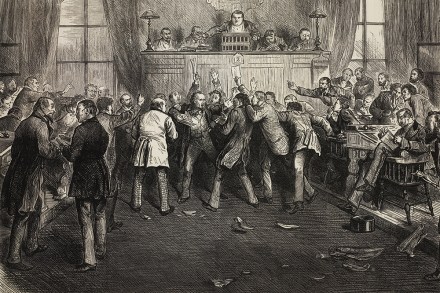
On 18 September 1873, the leading American bank Jay Cooke & Co collapsed after a disastrous bet on the railroad boom. Like the bankruptcy of Lehman Brothers in 2008, it was a watershed moment in an unfolding global financial crisis. Yet ‘the first Great Depression’, which lasted until 1896, is now mostly forgotten, despite some intriguing parallels to contemporary events and a fascinating dramatis personae, which includes the Rothschilds, Ottoman sultans and Otto von Bismarck. The Panic of 1873 and its aftermath took place in a period of financial globalisation and technological growth, with bond markets funding the epochal projects of America’s first transcontinental railroad and the Suez Canal. US railroads were the artificial intelligence investment of the day.

Will members of the intellectual class let AI rot their brains?

An adage dating at least from my adolescence: “You either use it or lose it.” This bit of folk wisdom, which refers principally – or so I understand – to the male procreative organ, has always been considered so obvious as to hardly need stating. Thus the recent discovery that the same principle goes for another human organ – the brain – should not surprise anyone.

labor

The journalist’s journalist: the irrepressible Claud Cockburn

From our UK edition

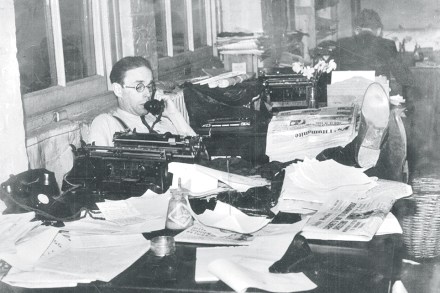
No one should be put off reading Patrick Cockburn’s remarkable biography of his father by its misleading subtitle. ‘Guerrilla journalism’ doesn’t do justice to its subject. The suggestion of irregular warfare from the left underrates Claud Cockburn’s great accomplishments in mainstream politics and journalism and doesn’t begin to embrace the romantic and daring complexity of his life and career. By late 1931, his eyewitness reporting at the start of the Great Depression convinced him that Marx was right Indeed, it is the journalist son’s signal achievement to have surmounted left-wing cliché and written a fascinating and subtle portrait of a paradoxical career.

What will we do when all our jobs are done for us?

From our UK edition

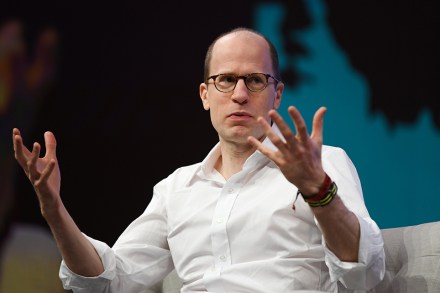
Laughs are in short supply in the academic world unless that world is serving as the victim of satire. So full marks to the Swedish philosopher Nick Bostrom for loading Deep Utopia – his reflections on life in a ‘solved world’, perfected by technology and science – with self-mockery and slapstick. Bostrom isn’t the first to fret about the travails of extreme leisure. John Maynard Keynes feared that economic abundance would produce more disgusting aristo-like behaviour. It’s nice to see how mighty minds can be so wrong. Bostrom cites John Stuart Mill being seriously depressed by the prospect, as humanity solved its problems, of there not being enough music to keep everyone happy all day.

The looming Lenin comeback

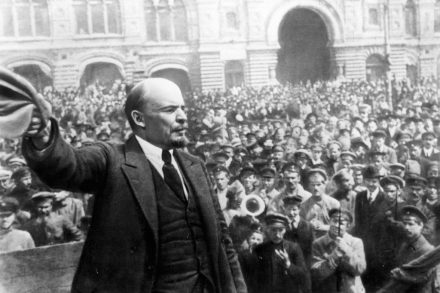
The year 2024 marks the centenary of Vladimir Lenin’s death. In April of that year, the consummate communist, having blighted as many lives as he could, finally shuffled off his mortal coil, aged fifty-three.“That was young,” you may say. But I reply, “Not nearly young enough.” As we embark on what is sure to be an eventful year, it is worth pausing to remember the hideous legacy of that ice-cold totalitarian. What I have in mind is not so much Lenin’s butcher’s bill as his more general modus operandi. Estimates of the number of people Lenin had tortured, maimed and murdered vary, but are always well into the millions. But what is somehow even creepier is his model of government.

lenin

The end of capitalism has been just around the corner for centuries

From our UK edition

These days the world seems to end with staggering regularity. From the financial crisis to Brexit to Trump to a climate apocalypse to coronavirus: new eras are born faster than old ones can die. And yet, despite it all, the proletariat still haven’t bothered to rise up and overthrow capitalism. Worse still, many of them voted for an old Etonian with the middle name ‘de Pfeffel’. When will the oppressed masses learn? Perhaps, just perhaps, such questions aren’t helpful. For the left-wing political scientist Francesco Boldizzoni, rather than banging on about class consciousness, it’s time that a new consciousness dawned on a class of intellectuals who have confidently predicted capitalism’s downfall for two centuries, only to see it adapt and thrive.

Lego quote accounts are the new front of the culture war

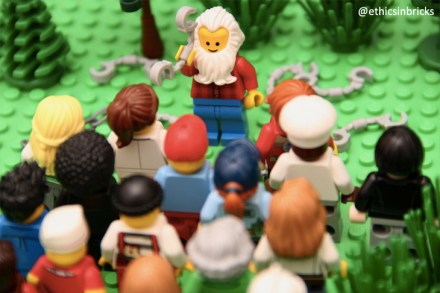
The fight between the far-left and the far-right has spilled over to a new battleground: Lego-themed social media quote accounts. This latest online trend has led to the creation of a dozen Lego-themed quote accounts which spread the wisdom of philosophical and political figures along with related pictures of Lego toy brick scenes. The fad seems to have started with the left-wing Ethics in Bricks account, which posts quotes from the likes of Karl Marx, Martin Luther King, David Hogg, Angela Merkel, and Jean-Paul Sartre to an audience of over 25,000 people across Facebook, Twitter, and Instagram. https://twitter.com/EthicsInBricks/status/1125005005457645568 https://twitter.com/EthicsInBricks/status/1134564760547205120 https://twitter.

lego