Justice

How Ray Tierney brought law and order back to Suffolk County

On the day I arrive at the Suffolk County District Attorney’s office, DA Ray Tierney is off meeting with an unnamed witness in the Gilgo Beach serial killer case. In February 2022, more than a decade after police first recovered the remains of eleven victims, then-Suffolk County police commissioner Rodney Harrison announced the creation of a joint task force dedicated to solving the case. The task force, which included investigators from the DA’s office, quickly zeroed in on a suspect as they chased down a tip from a witness that hadn’t been properly investigated the first time around. Fifty-nine-year-old Rex Heuermann was arrested in July on murder charges and police have linked his DNA to several of the bodies.


Tierney

Why ‘affirmative action’ doesn’t work

From our UK edition

This week’s truism: all top-down attempts at leftie social engineering end up causing rather more misery and injustice than the misery and injustice they were designed to alleviate. This is chiefly because they come up against that most un-leftie of things, reality – but also because liberals are incapable of looking at actual outcomes and are able only to wring their hands in despair and wish for stuff. The world is not an ideal place and attempts to pretend they can make it so are always misbegotten. When you politicise a crime, all kinds of problems occur The most obvious example of this is in that most explicitly iniquitous of things, affirmative action – or, as we call it over here, ‘positive discrimination’.

Can James Gunn deliver a pro-American Superman?

New DC head honcho James Gunn has found his Superman and Lois Lane, casting David Corenswet and Rachel Brosnahan in the iconic roles for his reboot of the franchise, Superman: Legacy. The choices seem surprisingly predictable for the off-the-wall Gunn, who reportedly had considered Nicholas Hoult for the cape. Instead, we get a rising star who has the physical look of Henry Cavill Jr. and an established actress in the Emmy- and Golden Globe-winning Brosnahan, who seems tailor-made to portray a wisecracking stronger Lois type. Cavill's tenure as Superman was frustrating for many fans and the actor as well. He seemed hampered by the movies built around him — Man of Steel with its controversial death toll, Batman v.

david corenswet superman

The Trump indictment is a political exercise

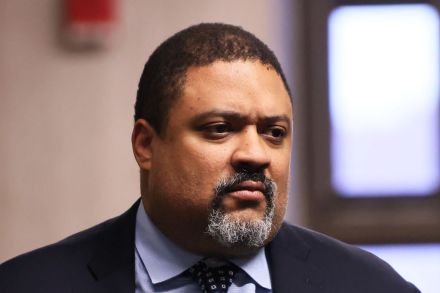
The first thing to understand about the indictment of Donald Trump by the Manhattan Grand Jury convened by the George Soros-funded District Attorney Alvin Bragg is that it is only incidentally a legal proceeding. Don’t be distracted by the avalanche of analyses that are poised to descend on the public. All the legal mumbo-jumbo is beside the point. At its core, the indictment of Donald Trump is a political exercise, not a legal proceeding. That is to say, it involves the deployment of state power against an individual, not the impartial application of the law.  Indeed, what is happening to Donald Trump is about the deliberate abrogation of the law in the service of power.

alvin bragg trump indictment

The horrors of lynching: The Trees, by Percival Everett, reviewed

From our UK edition

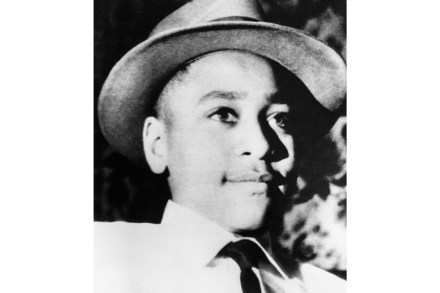
Percival Everett’s 22nd novel The Trees was that rare thing on this year’s Booker shortlist: a genre novel. Only which genre? Crime is its first claimant – the bickering Bryants of Money, Mississippi having stumbled straight off an Elmore Leonard page. Then it’s horror – the obscenity of the first Bryant death rivalling the grisliest of Stephen King. Then, with the flummoxing custody-elusion of the black suspect, it’s a locked room mystery. Then, with the arrival of two wisecracking black cops from the Mississippi Bureau of Investigation, Blaxploitation takes over. But the book is more than just an exercise in genre-hopping. Money, Mississippi was where 14-year-old Emmett Till was lynched in 1955. Carolyn Bryant was the woman whose false accusations led to that outrage.

Homage to Kyiv

It was 11:15 p.m. in Kyiv, just after the curfew, and the military had set up its checkpoints on the city streets. Finding your way home after hours can be a hazardous business. The city is paranoid about assassins and saboteurs, and in wartime few are above suspicion. Things were looking ominous until my friend Sasha declared: “we are late for breakfast.” The guards waved us through. This was the daily password, shared with those important enough to move around after curfew. Checkpoints and curfews were a few reminders of the war in Kyiv, where I was just before last week’s deadly air strikes. In the capital city, life was approaching some form of normalcy.

kyiv

Abortion distortion versus prenatal justice

“Abortion distortion” has been a serious problem for decades. And in our post-Dobbs moment, it's grown worse than ever before. This topic somehow manages to transform conservatives into energetic supporters of the kind of powerful government necessary to protect prenatal children, while at the same time making progressives worship at the altar of government staying out of the lives of autonomous individuals. It has caused reputable academic physicians to describe the four-chambered heart of a six-week old prenatal child with Orwellian euphemisms like "cardiac pole vibrations." It has even pushed Republicans to propose significant social programs to support vulnerable women and families — everything from paid family leave to help with child care.

abortion

Letters: What William Blake meant

From our UK edition

Procurement profligacy Sir: In response to Susan Hill’s query ‘Who allows the profligacy in NHS hospital procurement to continue?’ (‘Best medicine’, 16 July), it seems the national scale of public sector bureaucracy is just too great. Given the size and spending power of the NHS, no one should come close to achieving equal efficiencies in economies of scale, nor gain better prices from suppliers. But this is not the case. As a non-clinical procurement professional in the NHS, having come from the private sector, I’ve been surprised to consistently find the national purchasing authority of the NHS (formerly ‘NHS Supply Chain’, now ‘SCCL’) to be the worst pricing option available to us.

Who governs Britain? Not ministers, it seems

From our UK edition

Who governs Britain? It’s a dangerous question, as Ted Heath learned half a century ago. But while he was concerned with untrammelled unions, ministers today must contend with another unelected cadre calling the shots. The difference is that now, like in so many horror movies, the calls are coming from inside the house.  The Telegraph reports that the Ministry of Justice has appointed a ‘transgender employee support officer’. That in itself is hardly surprising. What does stand out is the reason for the appointment.

Kyle Rittenhouse and Ahmaud Arbery: a tale of two trials

From our UK edition

Two consequential trials are currently underway in America. Both in some way relate to the events of last year surrounding police and the public debate about racism. One trial is driving most of the media coverage online. One has been all but ignored. So why is the national media almost singularly focused on what appears to be fabricating racial components in the trial of Kyle Rittenhouse, who shot three rioters in Wisconsin, killing two, and not at all in the trial of Travis McMichael and his two accomplices, who stand accused of the killing of Ahmaud Arbery, a black man who was gunned down while jogging last February? We are being fed the fantasy that Rittenhouse was a dangerous, mass-shooting, pro-Trump militia member, out for blood on the night of the Kenosha riots in Wisconsin.

How Raab plans to fix the law

From our UK edition

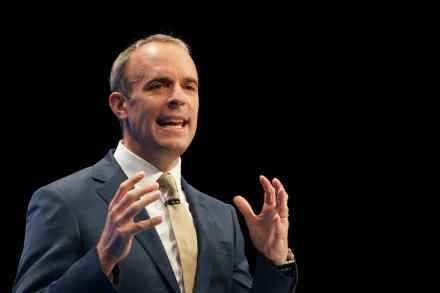
How do you solve a problem like Britain’s creaking criminal justice system? To the newly appointed Secretary of State, the answer involves ripping up the Human Rights Act, rolling out more electronic tags for convicts and pumping cash into preventative projects. At a Spectator event this morning, held at Tory Party Conference, Dominic Raab explained that rewriting the UK’s human rights laws was central to his reforming mission. He told editor Fraser Nelson: The Prime Minister was very clear when he appointed me deputy PM and Justice Secretary that he wanted this done… Overhauling the Human Rights Act is not just a good way of dealing with the foreign nationals that we can’t deport but also of ironing out our constitution.

We must stop treating juvenile offenders as lost causes

From our UK edition

At the end of October, just before I started as HM Chief Inspector of Prisons, the inspectorate and Ofsted visited Rainsbrook Secure Training Centre near Rugby. Rainsbrook was built by the Blair government to house the increasing numbers of children imprisoned as a result of policing targets and tough-on-crime policies and it was one of four centres contracted out to private providers. The great hope was that these better-funded centres would provide a more humane alternative to Young Offender Institutions. Rainsbrook holds children aged mostly 15 to 18, but on our inspection we discovered that for their first two weeks, new arrivals were being locked in their cells for 23½ hours a day.

The SNP may have overreached by planning to suspend jury trials

From our UK edition

The Scottish Government may have overreached for the first time in its response to Covid-19. Today MSPs will vote on the Coronavirus (Scotland) Bill, which grants Scottish Ministers emergency powers to tackle the outbreak and suspends or amends the legal status quo in some important areas. Physical attendance in court will no longer be required unless a judge specifically instructs it; instead, appearances will be made ‘by electronic means’. Ministers will be able to permit the release of prison inmates in the event of custodial transmission (lifers and those convicted of sex crimes will not be eligible).