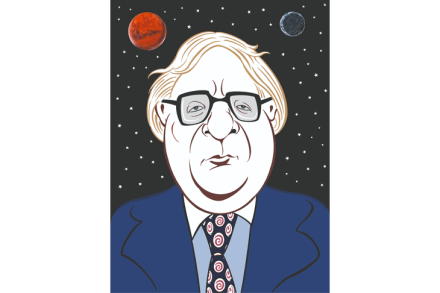
John updike

Suburbia’s irredeemable reputation in the American canon

"My God, the suburbs!” John Cheever, the short-story writer who has rejoiced in the nickname “the American Chekhov,” had what can only be described as ambivalent feelings about the twentieth-century housing developments that grew up on the outskirts of major cities. He said of them that “they encircled the city’s boundaries like enemy territory and we thought of them as a loss of privacy, a cesspool of conformity, and a life of indescribable dreariness in some split-level village where the place name appeared in the New York Times only when some bored housewife blew off her head with a shotgun.” Cheever was not wholly consistent himself.


suburbia

Why don’t men read novels?

It’s hard to move on the literary internet — or that nest of inky vipers, literary Twitter — without coming across a piece that expresses one of two opinions: the first, that men don’t read literary fiction and that this limits their understanding and experience of the world; and the second, that the figure of the heterosexual white man has been crudely and cruelly excluded from the literary debate. “Bring back our Roth, our Amis, our Updike,” these commentators cry, as if they hadn’t received enough acclaim and attention in the past few decades, and if reading them had become illegal rather than just moderately unfashionable.

Read Ray Bradbury before he’s canceled

I was 14 or 15 when I first read Ray Bradbury, which is not a bad age to enjoy the man fully. It was the short story ‘Boys! Raise Giant Mushrooms in Your Cellar’, in which a lad called Tom does just that and it doesn’t end terribly well. Superficially, it is a silly story, but what hooked me from the outset was the vague yet pervasive sense of unease running throughout this minor small-town saga, disturbing the comfortable ennui of family life. Nothing spelled out — just a deepening disquiet, the common thread in all of Bradbury’s finest little vignettes. Back then, in the 1950s, the Cold War and the possibility of nuclear annihilation were hovering in the background, just beyond the edge of our eyesight, which perhaps explains the author’s state of mind.

bradbury