John le Carré

Is Jack Carr behind the Department of War?

As a Navy SEAL for 20 years, who reached the rank of Lieutenant Commander and served in Iraq and Afghanistan, Jack Carr knows about warfare on an expert and visceral level. And as the New York Times bestselling author of The Terminal List series and writer of the Amazon hit show based on the books, starring Chris Pratt, he knows the power of words. He also has a tendency to succeed at whatever he turns his mind to (see the above). But, still, when he decided the Department of Defense should be renamed the Department of War, it seemed like a very tall order and he was a lone voice. Undeterred, he wrote in op-eds about how the department had lost its way and needed to refocus on warfighting by changing its name back to that it was given in 1789.
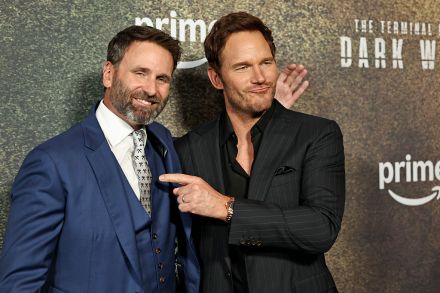
Jack Carr

John le Carre’s son resurrects George Smiley

Anyone reading this review will know a few fundamentals of the Smileyverse: spymaster George Smiley is podgy, spectacled, middle-aged, soft-spoken, wears ill-fitting clothes, can vanish in a crowd and is routinely cuckolded by his wife over the course of all “his” novels. Thanks to the success of John le Carré’s novels about him, the Smiley canon is now (we might assume) unchangeable: so, making a virtue of necessity, novelist Nick Harkaway has gone back to his Golden Age. Karla’s Choice opens in 1963, the year after the Cuban Missile Crisis, the era when the Berlin Wall went up, the aftermath of Suez, the “candle-end days” of Empire. In East Berlin, a charismatic young man is carted away by the Stasi.

Harkaway

Books to look forward to in 2024

Ah, welcome back. In our previous look at some of the major books of the year, I highlighted titles that went on to be acclaimed bestsellers and the most talked-about volumes of the past twelve months, as well — inevitably — as a few that failed to live up to the high expectations that we’d placed upon them. It is interesting that, just as Prince Harry’s Spare was indeed the most discussed book of last year, another hotly tipped memoir is undoubtedly the major release of 2024.

Adam Sisman’s new John le Carré biography entertains and disappoints

The fellow biographer for whom I always felt the most sympathy was James Atlas. Mr. Atlas, who has left an extensive account of his tribulations in The Shadow in the Garden: A Biographer’s Tale (2017), made the fatal mistake of writing a life of Saul Bellow while its subject was still alive. Bellow, you may not be surprised to learn, revealed himself to be a devious, shifty and manipulating old cuss. He interfered, blew hot and cold, disparaged his encomiast’s prose style, intelligence and research techniques and finally remarked, “I like you Atlas, but cut the crap.

le carré

The spy who loved me

I started reading Suleika Dawson’s The Secret Heart at a London bar, intending simply to skim through as I finished my beer. Six hours and many more beers later I was still at the bar, and still reading. The book, an erotically charged, no-punches-pulled account of her multiple affairs with the author John le Carré (or David Cornwell, as she knew him), is also a fascinating and important portrait of the man himself. The pseudonymous author, with her winking nod at Max Beerbohm’s femme fatale, offers a degree of insight and honesty which le Carré’s official biography (let alone his own memoir) and recently released collection of letters do not, and a character study of a London long since lost.

le Carré

Free expression after the Rushdie attack

In an interview with Stern magazine at the end of July, Sir Salman Rushdie was asked about the current circumstances of his life. Given that this is a question that he has faced since 1989, Rushdie might have been expected to respond with boredom, even irritation — as, understandably, he has done in other public conversations, when the subject of the fatwa that he has been under for nearly three and a half decades has been raised by an inquisitive or prurient journalist — but he responded with reasonably good cheer. Describing his everyday existence as “very normal,” he even ventured a light-hearted remark, saying, “A fatwa is a serious thing. Luckily we didn’t have the internet back then. The Iranians had to send the fatwa to the mosques by fax.

Rushdie