It's a Wonderful Life

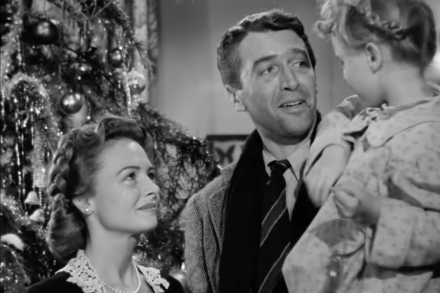
Karolyn Grimes looks back on her role as Zuzu in It’s a Wonderful Life

The title tells it all. It’s a Wonderful Life was first released back in December 1946, in the same week that President Truman was issuing Proclamation 2714, which officially ended hostilities in World War Two, and for that matter prefiguring Donald Trump by proposing that the US buy Greenland. The movie may be seventy-eight years old, but it’s one of those timeless classics, like Casablanca or The Searchers, that actually improve with familiarity. It’s also long since woven its essential message of good cheer into the fabric of our festive season. It’s an unusual plot for a film synonymous with feel-good family entertainment.
it's a wonderful life

How one bad scene can ruin an otherwise great movie

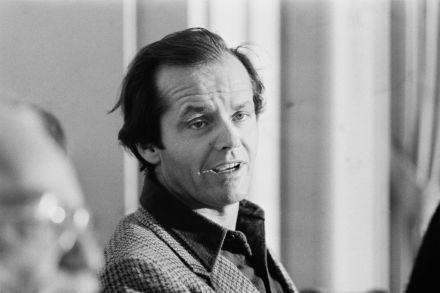
Can one egregiously bad scene ruin an otherwise great movie? When I go on an early 1970s jag — revisiting the golden age of American cinema — I can never bring myself to rewatch Five Easy Pieces (1970), in which Jack Nicholson plays an upper-middle-class piano prodigy turned downwardly mobile oil field worker. It’s a fine character study poisoned, for me, by the famous scene in which a petulant Nicholson berates a diner waitress who stubbornly refuses his request to add tomatoes to his omelet.

scene

With Flamin’ Hot, Hollywood again makes a hero of the businessman

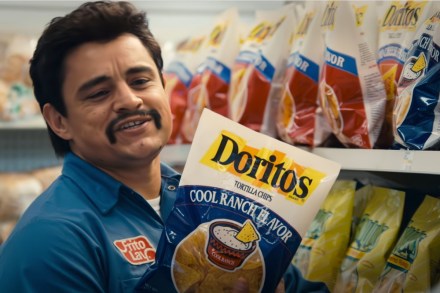
It always used to be that, in Hollywood movies, big business was seen as a force for ill rather than good. Leaving aside that the films themselves were financed by giant studios hellbent on making a profit, such classics as Frank Capra’s It’s a Wonderful Life and Charlie Chaplin’s Modern Times firmly took the side of the individual against the system and presented the corporate world as a faceless and uncaring one — if, that is, it wasn’t simply a criminal one altogether, as best expressed by Lionel Barrymore’s sneering robber baron Potter in Capra’s film. Today, things have changed immeasurably.

flamin’ hot

Seventy-five years of It’s a Wonderful Life

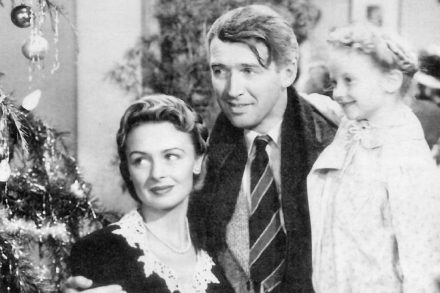
Frank Capra was almost too embarrassed to pitch his greatest film to Jimmy Stewart. At the time, both men were veterans in a post-war slump. Capra was losing his first confidence in a shelved Cary Grant vehicle-that-wasn’t, a script that had been torturously adapted from a short story by a fractious committee of writers. He stumbled through the premise for Stewart, trying to explain that the story starts in Heaven, and it’s about this fellow who thinks he’s a failure in life, so an angel named Clarence has to come down and stop him from jumping off a bridge, except Clarence can’t swim so the fellow has to save him… Here Capra paused, mopping his brow to confess, “This doesn’t tell very well, does it?

wonderful life

The problem with Christmas movies

The first time I saw Love, Actually was upon its release in 2003. I thought it was generally fine, with good and bad bits jostling alongside one another, and scene-stealing performances by Bill Nighy and Emma Thompson going a long way to counteracting the dreadfulness of some of the supporting cast and general Richard Curtis-ness of it all. But what I was unprepared for was that it would go from being a reasonably enjoyable portmanteau rom-com into a film that epitomizes "the contemporary spirit of Christmas," or some such rubbish. Every year, it becomes ever more ubiquitous, whether on streaming platforms, television or even in theater re-releases. And every year, something inside me dies a little harder.